Our 2024 road trip, which may include a short summer break in El Paso, has several themes: trying to reach our goal of seeing 90% of native plant genera in the Continental U.S. and Canada (hereafter, CUSC); getting in a good dose of canoeing after a lean year in 2023; visiting Civil War battlefields from Petersburg north to Gettysburg (the Civil War being a subject of intense interest to Eileen); and starting work on our newest natural history goal, to reach 10,000 distinct taxa of native plants and animals in CUSC (which was explained in our last blog post). Before heading out of El Paso, we took a one-night practice run to Dripping Springs in the Organ Mountains of New Mexico to check for any problems with the camper. There we found a new cactus, Escobaria orcuttii, and enjoyed birds such as Virginia’s Warbler and Black-chinned Sparrow.
We left El Paso on May 5, about two weeks after our Delhi debacle, and headed to Big Bend National Park, just for a night. There, in Boquillas Canyon, we finally located Bonamia ovalifolia, a member of the morning glory family, on our fifth try! This plant occurs in only one county in the U.S. and grows in soft sand. Unfortunately, the plants had no fruit or flowers, so we’ll need to return, but at least we know where they are now. We then crossed Texas fairly quickly, just stopping for a few plant genus searches, before camping for four nights at High Island, a bird migration hotspot on the coast east of Houston. We spent three weeks here in 2021 (link) but were interested in what it would be like later in May.

The answer was pretty poor, as we had no winds that would encourage birds to land on the coast, rather than overfly to inland areas with better food and shelter. We could see from the BirdCast website (link), which uses radar data to measure and predict bird migration, that reasonable numbers of birds were passing overhead but not landing. This was what we expected, but one can always hope. We had some nice waterbird photography and found one new plant, one new toad, and four new bird subspecies during our time there. The most interesting birds we encountered were Magnificent Frigatebird, Dickcissel, Gray-cheeked Thrush (common), Philadelphia Vireo, and Black-billed Cuckoo.

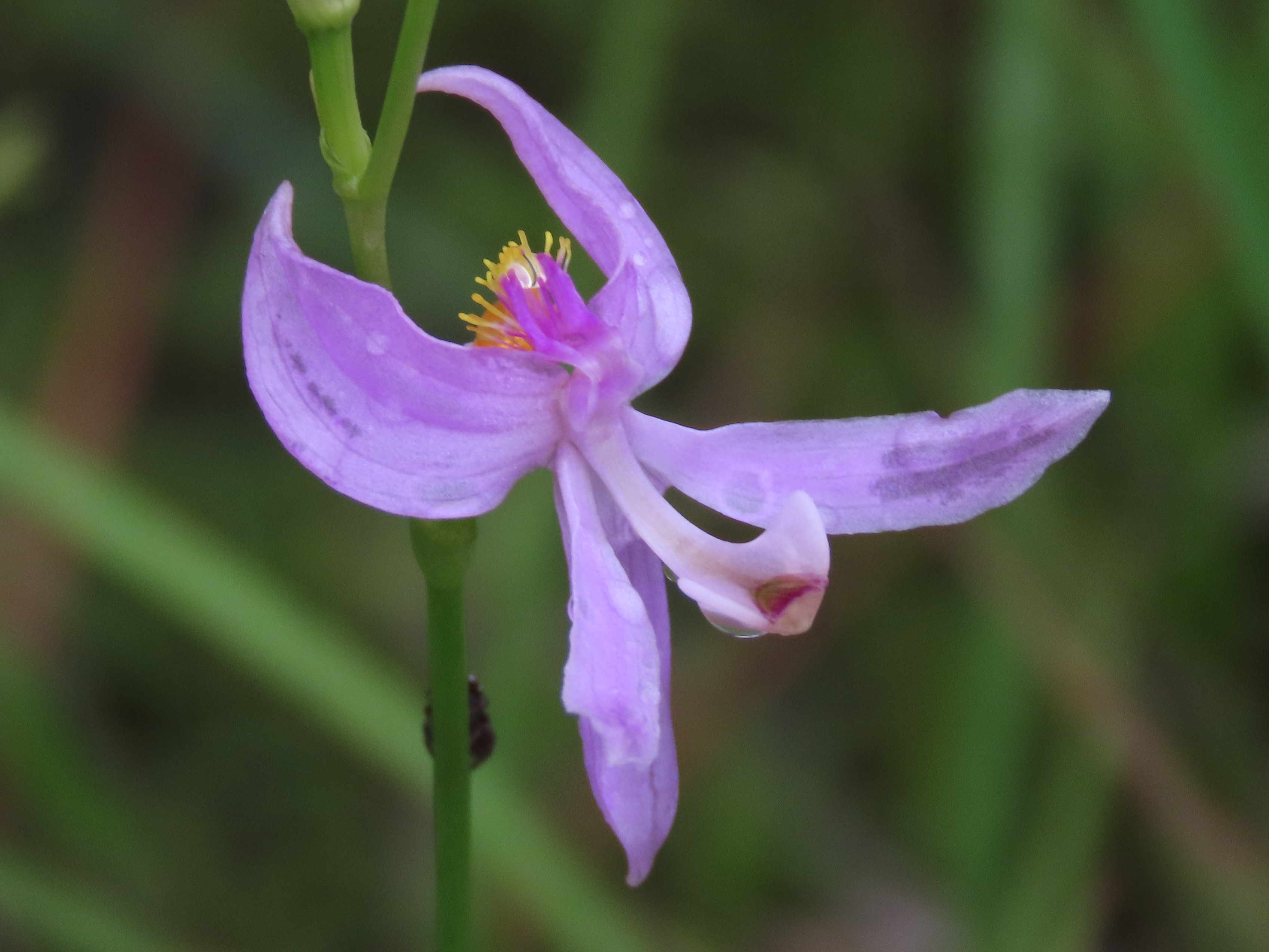
We took four days to traverse the Gulf Coast between the Texas and Florida borders. Our most interesting stop was at the Abita Creek Flatwoods Preserve in Louisiana, where we searched without success for an unusual aster family member, Stokesia. But we did locate a remarkable eight new plant species, apparently never having been in exactly this habitat at exactly this time of year. The most exciting find was a new orchid, Calopogon pallidus. I used iNaturalist to produce a pictorial listing of vascular plants in the area, sorted from most to least frequently reported (example here). This allowed me to make quick, tentative identifications of a number of species, and focus on plants that might be new for us. As a tip for those trying something similar, don’t define the area of interest by specifying a location name; instead, draw a rectangle on the map around the area, to avoid the variation and ambiguity of place names in iNaturalist.

Elsewhere in the gulf states, we looked for and found six new avian subspecies, the most unusual of which was the Mississippi population of Sandhill Cranes (ssp. pulla). This species has an extremely interesting distribution, with three migratory subspecies breeding in roughly latitudinal bands across Canada and the northern U.S., and three sedentary (non-migratory) subspecies, one occurring in Cuba, another in Florida and Georgia, and the third restricted to a very small area in Mississippi, where only about 110 birds persist (at one time the total population was down to 30 – 35 individuals). Fortunately, Eileen spotted a flying crane while we were having a picnic; it was the only one we saw. Our last notable experience in the gulf states was eating lunch at Lambert’s Café in Foley, AL, a unique restaurant where they throw their famous hot dinner rolls across the dining room to customers, rather than serve them more conventionally. Delicious!

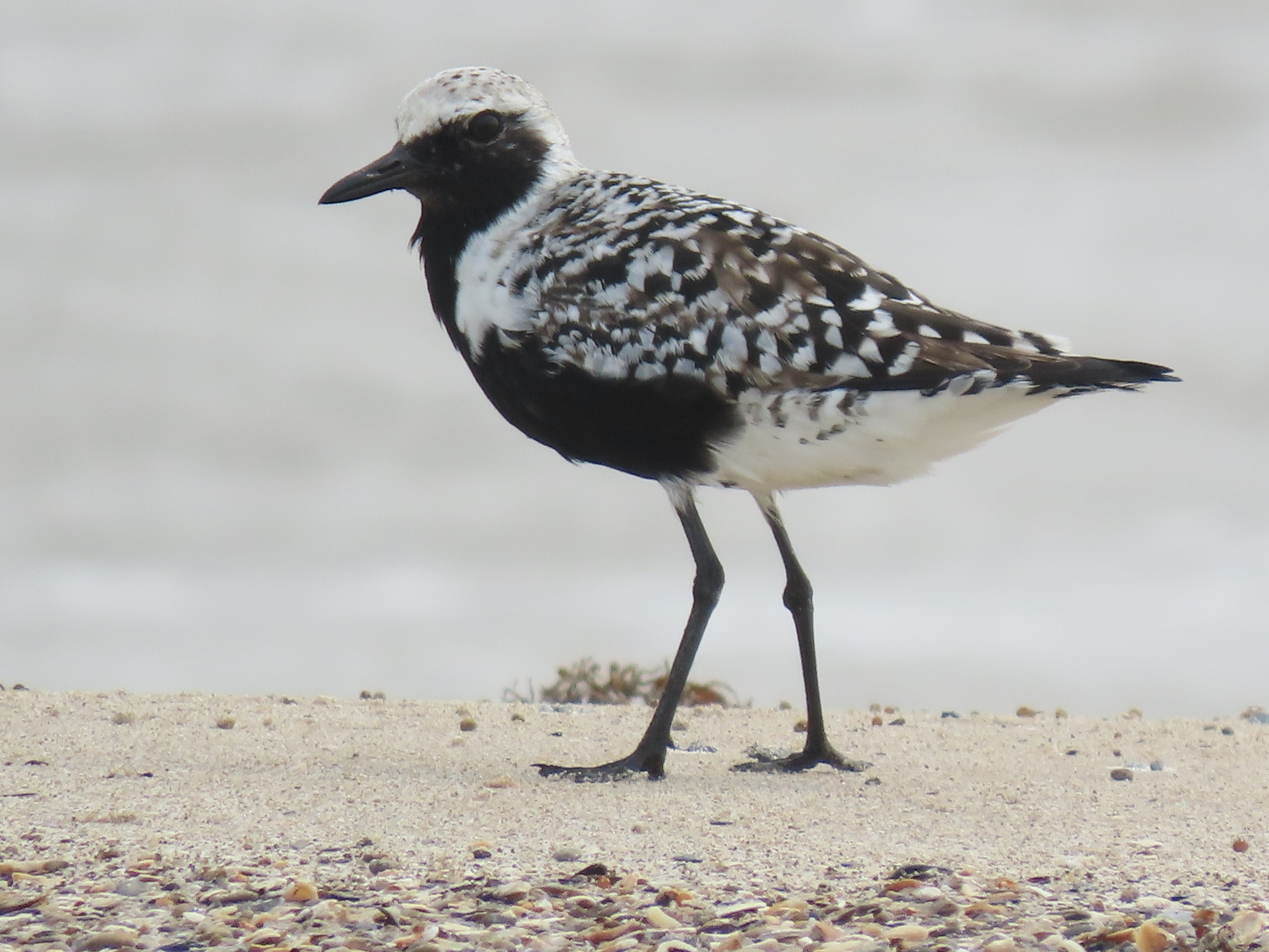
It may surprise readers that we were returning to Florida yet again to look for interesting plants, as we have spent so much time there since retiring (207 nights) and have botanized there so intensively, but it still harbors about 18 reasonably possible genera we have not seen, of which we would look for 15 this year. We spent an entire week camped at Ochlockonee State Park in the eastern Florida Panhandle, using it as a base of operations for day trips. This general area, south of Tallahassee, seems like a nice area to winter; it has excellent canoeing, birding, botanizing, camping, and civilization within a one hour driving radius. We paddled on four days, seeing Swallow-tailed Kite, Barred Owl, and Manatee. Another day was spent birding at St. Marks National Wildlife Refuge, where nice birds included Clapper Rail, Seaside Sparrow (both new subspecies), Gull-billed Tern, and Red Knot. We were excited to find native Canna flaccida, a spectacular yellow-flowered wetland plant closely related to garden cannas, in several places where we did not know it occurred; our two previous encounters were at sites found by other people.
A long drive brought us to the Orlando area, where Memorial Day weekend forced us to stay in a private campground as all public ones were fully booked. Fortunately, it was quiet, though it lacked in the scenery, trails, etc. one usually finds in state campgrounds. We spent three days in this region, where the most interesting site was the Three Lakes Wildlife Management Area, one of only two areas still harboring the endangered floridanus subspecies of Grasshopper Sparrow, of which only about 120 survive (the other area is the Kissimmee Prairie). We were not able to detect this species, probably in part because their singing tapers off this late in the season, but we really enjoyed seeing this new area. We added four new taxa here, and saw our first King Rail since 2017.

A drive south along the coast brought us to the Palm Beach area, where we were lucky to have snagged a campsite for four nights at Jonathan Dickinson State Park, our next base camp. Our primary activities here were paddling the lovely Loxahatchee River right from our campsite (the highlight being a pair of Barred Owls, one of which shared our dock shelter with us during lunch); exploring the Yamato Scrub Natural Area, a nice patch of native habitat surrounded by an urban sea; and snorkeling at Phil Foster Park to look for the seagrass genus Halophila. The latter excursion was complicated, involving renting gear off-site; timing the tides; navigating the parking; understanding the numerous buoys to figure out which areas were protected from boat traffic; and so on. In all of this, we missed one crucial detail – applying waterproof sunscreen – and this was rather catastrophic, as we each experienced our first serious sunburns as adults, which were painful for about three days and then itchy for another week. Our compensation – which was nowhere near enough – was seven new species of marine organisms, but none of the target genus Halophila.

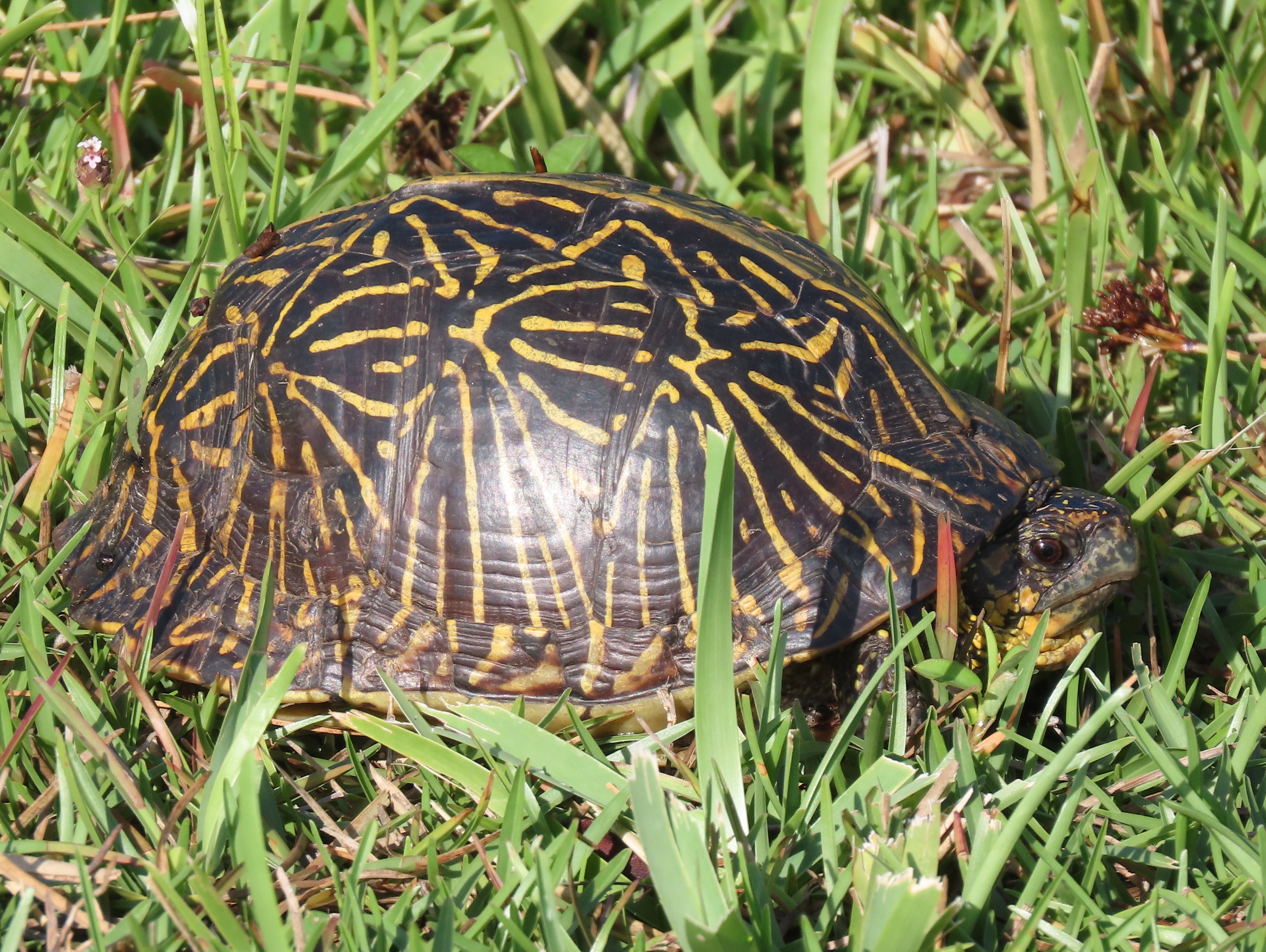
Our next base camp was Larry and Penny Thompson Memorial Park and Campground, just south of the Miami Zoo, which contains prime pine rockland (a rare and exceptionally botanically diverse habitat) as well as a nicely designed and maintained county campground. One day we spent in Everglades National Park, trying for the Cape Sable subspecies of Seaside Sparrow, which we could not find; it had been three weeks since any reports on eBird, suggesting that they had stopped singing for the year. But we did find three other targets, two bird subspecies and a plant genus, and lucked into a snazzy Florida Box Turtle, the only one of the three species of box turtle in CUSC that we had not seen before. We capped off the day with luscious shakes from the famous “Robert is Here” market – key lime for Eileen and vanilla for me.

Another day we visited Simpson Park Hammock, our top priority site of the year for plant genera. This tiny parcel, close to downtown Miami, is the only U.S. location where there is any realistic chance of seeing three rare tree genera, Crescentia, Licaria and Amphitecna. Experts differ on whether one or more of these might be from old plantings, but the authority we follow treats all three as native. In 2022 we found Crescentia and located Licaria but could not positively identify the latter. After arriving, we scanned treetops endlessly with our binoculars, looking for the diagnostic fruit of Licaria, and finally found a single example! We were then graciously invited by the preserve manager Gloria to meet the park staff, including past and present naturalists Etienne and Sebastian, who taught us a lot about the hammock and showed us two marvelous Amphitecna trees with both flowers and fruit. As a bonus, we found the invasive but apparently native vine Trichostigma, which we have looked for and missed several times before – our third new plant genus of the day!

The last area I’ll cover in this blog post is the Florida Keys. We tried a new campground in the Middle Keys, which was quieter and less crowded than those we’ve stayed at in the past, and less expensive at $120/night, about twice the cost of our average camping fee in Florida — the most expensive state we camp in. We ended up staying for six nights as the wind was low enough to permit some canoeing; we managed three paddling excursions. On the first day we searched for three plant genera and found one with fruit and one with no flowers or fruit (desirable for a firm identification). We could not reach the third one as it turned out that it was in a large gated community, spanning several islands – something we saw a number of times in the Keys. On the second day we visited a new site for us, the Key Tree Cactus Preserve in Islamorada. We enjoyed this small park a great deal; it preserves one of only about seven natural populations of Pilosocereus cactus in the Keys (the only place it occurs in the U.S.). Most if not all of the 45 or so individual cacti we saw were probably planted, however, as the populations of this species, never high, have crashed in the last two decades, necessitating reintroductions.
Our third day started at an obscene hour of the morning to look for five targets, all of which we found, these being subspecies gundlachi of Yellow Warbler (found on Geiger Key); ssp. hefneri of Marsh Rabbit (Boca Chica Key); ssp. insularum of Clapper Rail (ditto); ssp. incautus of Raccoon (Lower Sugarloaf Key); and Denisophytum, a new genus and attractive shrub in the pea family (Big Pine Key). After a disappointing gravy-laden lunch, we paddled the west side of No Name Key and were rewarded with a brief view of Mangrove Cuckoo, which we had not seen in the U.S. in ages.

On our fourth day we hiked at the north end of Dagny Johnson Key Largo Hammock State Park (quite a mouthful!), a new site for us, which we liked very much, though we had to douse ourselves with insect repellant. We’ve been to the south end of the preserve previously, which is also very good. Highlights were seeing a pair of Chuck-will’s-widows (nightbirds related to the more northerly Whip-poor-will) in broad daylight, and finding quite a bit of the scarce vine Dalbergia in flower – another new genus. On the way back to camp, we stopped at Key Tree Cactus Preserve to look once more for the rare shrub Vallesia, which has eluded us several times. We could not find it on our first visit to the preserve, but upon re-examining one of the photos accompanying the iNaturalist record, I realized we might be able to find the plant based on the blurred and partially obscured background – and I was right. This striking shrub has dark green leaves and small snow-white star-shaped flowers and oblong berries. It was a real triumph to finally track one down!

As we left the Keys, the rain started, and the forecast looked truly dismal – rain for a week. We nonetheless proceeded into the Everglades, where we had three nights reserved. I am writing this blog post from there, and while here, we have barely left the campsite. The forecast is now even worse as a tropical system is forming, which is expected to affect most of Florida for the next week, possibly dumping several feet of water in some areas. We had wanted to dawdle longer in southern Florida, doing more canoeing and botanizing, but clearly, it’s time to leave.
 Nomadic Naturalists