Our basic plan for 2025 was a spring road trip in the Southeast; birding tours to Angola and Papua New Guinea during the summer; and a fall road trip to Michigan and Minnesota for paddling, and Missouri for botanizing. After returning from South Africa last fall, we decided to winter near Tallahassee, in the Florida Panhandle, to take advantage of the excellent canoeing opportunities there and be well-positioned for our spring field work in the Southeast. Once there, we did some nice birding, mostly in St. Marks National Wildlife Refuge; some southeastern specialties we enjoyed included Red-cockaded Woodpecker, Anhinga, and Chuck-will’s Widow. We also botanized at Angus Gholson Nature Park in Chattahoochee, where Long-bract Trillium (Trillium underwoodii), with its lovely variegated leaves, was a favorite; Wolf Creek Trout Lily Preserve, just over the Georgia border, site of a massive occurrence of Dimpled Trout-Lily (Erythronium umbilicatum); and Florida Caverns State Park, where delicate snow-white Isopyrum (Enemion biternatum) graced the limestone outcrops and rubble.

Before leaving on our spring road trip, I finally undertook a job that I have wanted to do for years – removing the entire rear seat from our truck and building custom storage in the space freed up. This took several days, but has worked out extremely well. I also wanted to increase the length of time we could camp in one place without electrical power or driving to recharge the system. In cooler weather in a sunny site, our roof-mounted solar panel can sustain us indefinitely. But in very hot weather, the fridge runs continuously, and an electric cooler is needed to pre-cool drinks before they are added to the fridge so its temperature does not spike. The resulting power consumption can limit us to just a few nights without turning the truck on. To improve this situation, I installed in the camper a third lithium battery and a new port for a stand-alone solar panel with 50 feet of cable. These are only modest improvements but should allow an extra night’s stay in some cases.
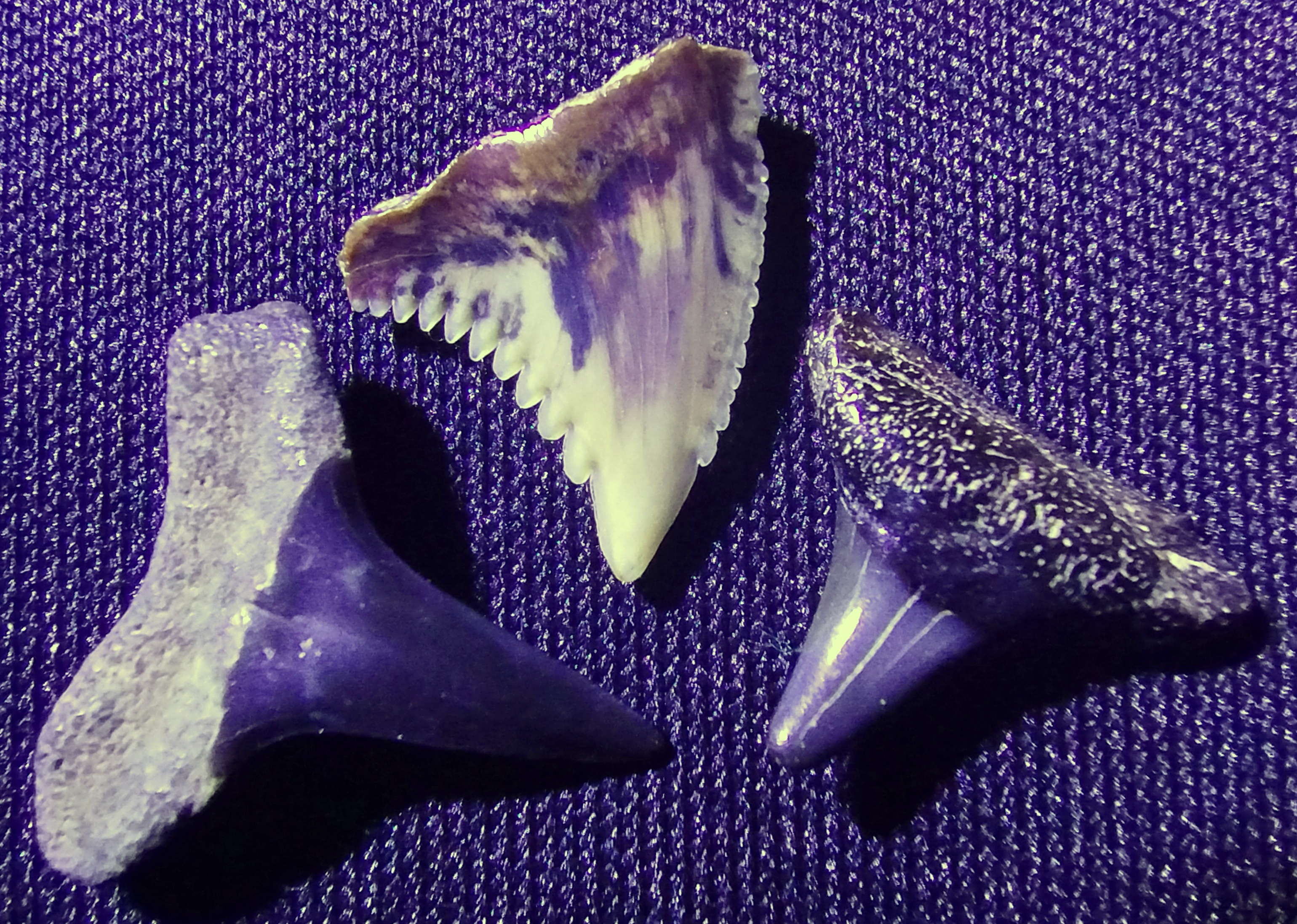
We started the spring road trip the last day of February, heading east to peninsular Florida. We canoed on the Santa Fe, Withlacoochee, Ocklawaha, Myakka, and Peace Rivers, of which the Ocklawaha, both upstream and downstream from Gore’s Landing, was our favorite. Eileen spent an afternoon in the Peace River sifting sand through wire mesh and was rewarded with finding six shark’s teeth from two species, Snaggletooth Shark (Hemipristis serra) and Lemon Shark (genus Negaprion).

We see Alligators all the time, occasionally reaching triple digits in a single paddle, but almost never hear them, so it was very exciting when one roared four times in a row while we were canoeing on Silver Run! Other favorite animal sightings on rivers were West Indian Manatees, Barred Owls, and a dark-phase Short-tailed Hawk. We had rather few new plants but one highlight was the epiphytic Green Fly Orchid (Epidendrum conopseum). One day we stayed in camp for a break, and took advantage of the perfect weather by opening every window, cabinet and storage area to fully air out the camper. Late in the day we noticed a Carolina Wren going in and out of an open hatch and discovered it had constructed a nest next to one of the batteries – that didn’t take long!

Although we were enjoying the road trip, we were finding it even more difficult than in the past to secure good camping sites in peninsular Florida without reserving months ahead. We also needed a doctor’s appointment and camper parts, and so decided to cut short the Florida segment of the road trip and return to Tallahassee for ten days. Though only out for 23 days, we paddled nine times, covering 63 miles. During our break, we did some local botanizing, adding 11 new species, including two fine azaleas, orange Rhododendron austrinum, and pink R. canescens.

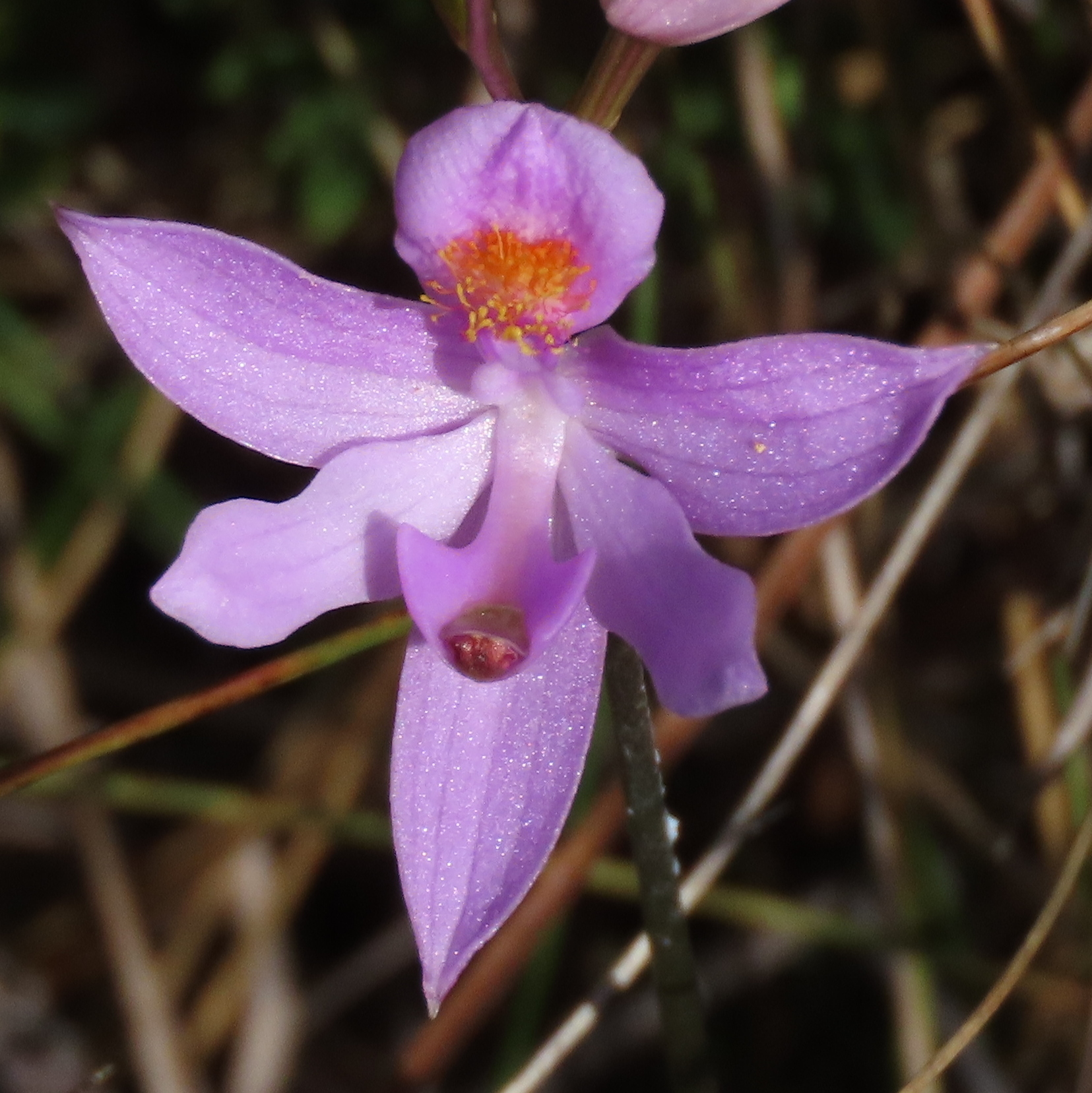
We resumed the road trip on April 2, heading for the wet Long-Leaf Pine savannas of the Sumatra area in Apalachicola National Forest, which contain many interesting plants. Here we found six new species in one day, including Bearded Grass-Pink orchid (Calopogon barbatus) and Yellow Butterwort (Pinguicula lutea). Butterworts are carnivorous plants that catch bugs with sticky hairs on their leaves, and nearly all species have flowers that are some shade of blue, so it was exciting to see a yellow one! After a couple nights of camping we headed for Georgia and rejoined our original road trip route.

On the coast we visited Fort McAllister and Fort Pulaski in Georgia, and Fort Sumter in South Carolina, all three well-preserved Civil War sites. While at the latter, we also toured the U. S. S. Yorktown, a World War II aircraft carrier, an astonishing engineering feat. We headed inland and claimed the last available site at the rustic Honey Hill campground in Francis Marion National Forest, where we stayed for a week, enjoying lovely weather. Each morning we heard a Swainson’s Warbler singing in the swampy area behind the site. We had noted in 2018 that this looked to be an excellent area for paddling, and it proved to be so; we canoed on four days, passing through beautiful swamp forests. We also found eleven new plants, one of which was a complete surprise — Narrow-Leaf Pond-Lily (Nuphar sagittifolia). I thought we had seen all the native yellow water lilies in North America, but this spectacular species, found only in about 30 counties from Virginia to South Carolina, had escaped our notice.

Farther up the coast in South Carolina, we had an interesting experience on the Little Pee Dee River. After watching a stunning Prothonotary Warbler bringing nest material to a cavity just a few feet above the water, we settled in our canoe for lunch (there being no dry land in the extensive bald-cypress forests). As we were finishing eating, suddenly we were splashed by a large fish that literally flung itself over some tree roots and then scrambled back into the water! It turns out this was a Bowfin (Amia calva), a fish that survives in oxygen-deficient water by “gulping” air at the surface!
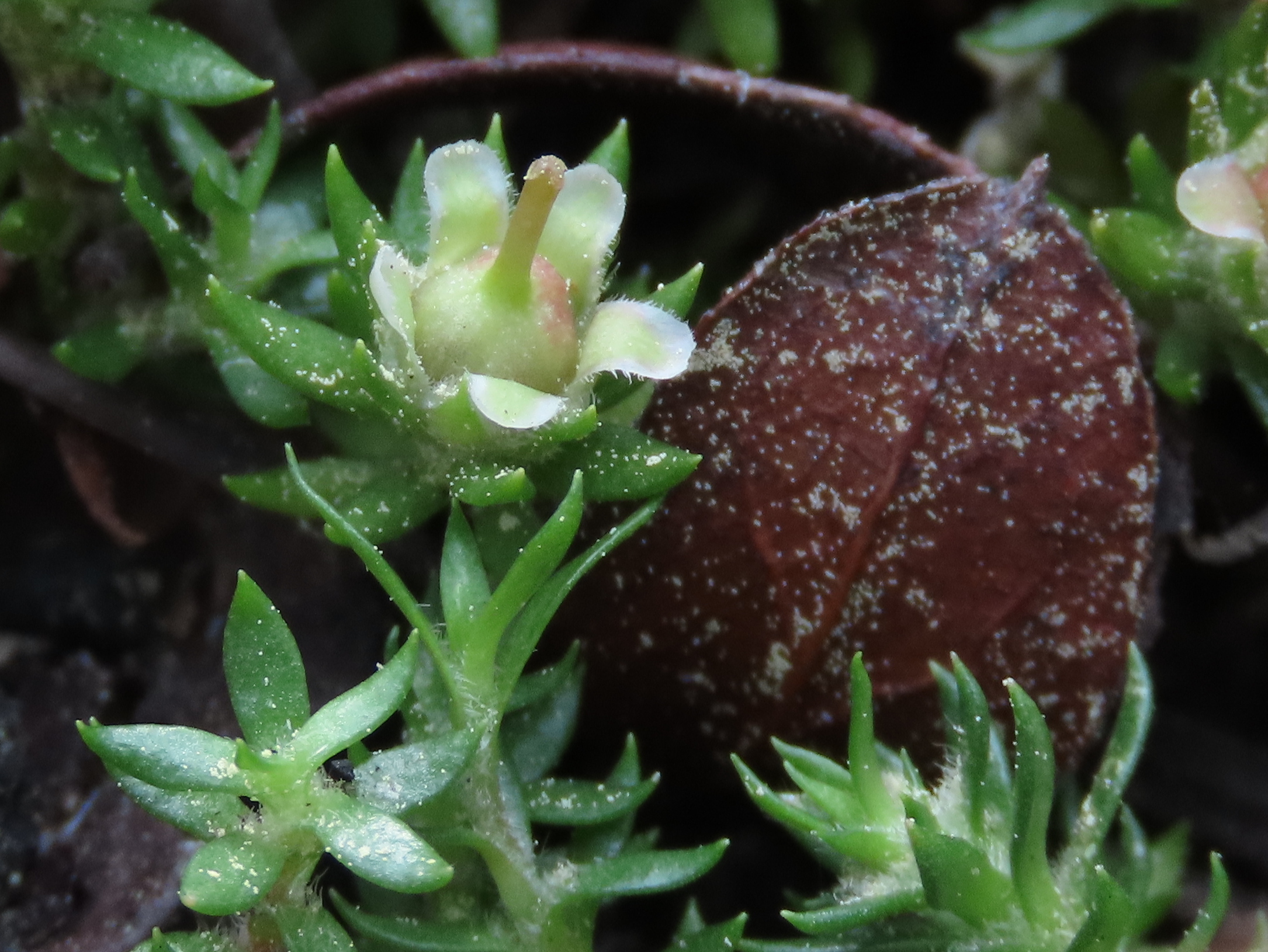
Turning inland, we stayed for four nights at Lee State Park, SC, a base from which we explored the Carolina Sandhills National Wildlife Refuge. The Carolina Sandhills are a geological formation composed of sand deposited by ancient rivers in what is now the inland edge of the Piedmont of North Carolina, South Carolina, and Georgia. As is so often the case with isolated occurrences of nutrient-poor soils, an interesting collection of locally-adapted species has evolved here. Our highest priority target here was Little-leaf Pyxie-Moss (Pyxidanthera brevifolia), which is not a moss but a miniscule flowering plant in the Diapensia family, found in only ten counties in the Carolinas. Thanks to directions from refuge staff, we were able to locate the species after about an hour of off-trail searching. In the refuge we also heard Pine Barrens Treefrog, a species of limited distribution, and found seven other new plants.

We swung south again over the Georgia border to visit the trails near the Sandy Creek Nature Center, in Athens, in hopes of seeing an unusual grape fern, Ophioglossum vulgatum (Southern Adder’s-Tongue Fern). Though quite widespread, like many grape ferns, this species appears to be extremely local in distribution, inhabiting only a small fraction of seemingly suitable habitat. This may be due to reliance on mycorrhizal fungi for nutrients, like orchids, many of which are similarly unpredictable in occurrence. We were thrilled to find dozens of these ferns in the rich woodland, some in prime fertile condition!
Our next target was a new genus, Monotropsis, a saprophytic member of the heath family. This plant is hard to find because it has no chlorophyll and blends in perfectly with the deep leaf litter in which it grows. It often does not even break through the surface of matted leaves, but its pollinators find it by odor. We were too late in the year to detect it by smell but were fortunate to find fruiting plants that did make it to the surface in two places along the Oconee Bells Trail in Devil’s Fork State Park, SC, a location we greatly enjoyed three years ago. This was our only new plant genus of the spring. Not far away we spent a day in The Nature Conservancy’s Nine Times Preserve in Pickens County, SC, at lower elevation and with a completely different flora. Here we had a fine collection of spring wildflowers, added six new plant species, and saw a colorful minnow species, Yellowfin Shiner (Hydrophlox lutipinnis) in the crystal clear waters of a stream.

After a day of transit, shopping, and laundry, we settled in for four nights in northeast Tennessee. We had excellent botanizing in Schoolyard Bog in Shady Valley; near the town of Erwin; in Cherokee National Forest; and in Laurel Run Park, southwest of Kingsport. In addition to ten new plants, including two trilliums, we saw one single Seventeen-Year Locust (Magicicada septendecim), the very beginning of the mass emergence of Brood XIV. The other periodical cicada has a 13-year cycle. It is notable that both 13 and 17 are prime numbers (evenly divisible only by the number itself and by one). This means that no predator can synchronize a shorter cycle to take advantage of their emergences, and also potential hybridization with other locust populations is minimized. A total of 12 broods of 17-year locusts and 3 broods of 13-year locusts are known; one brood of each species has become extinct in historical times.
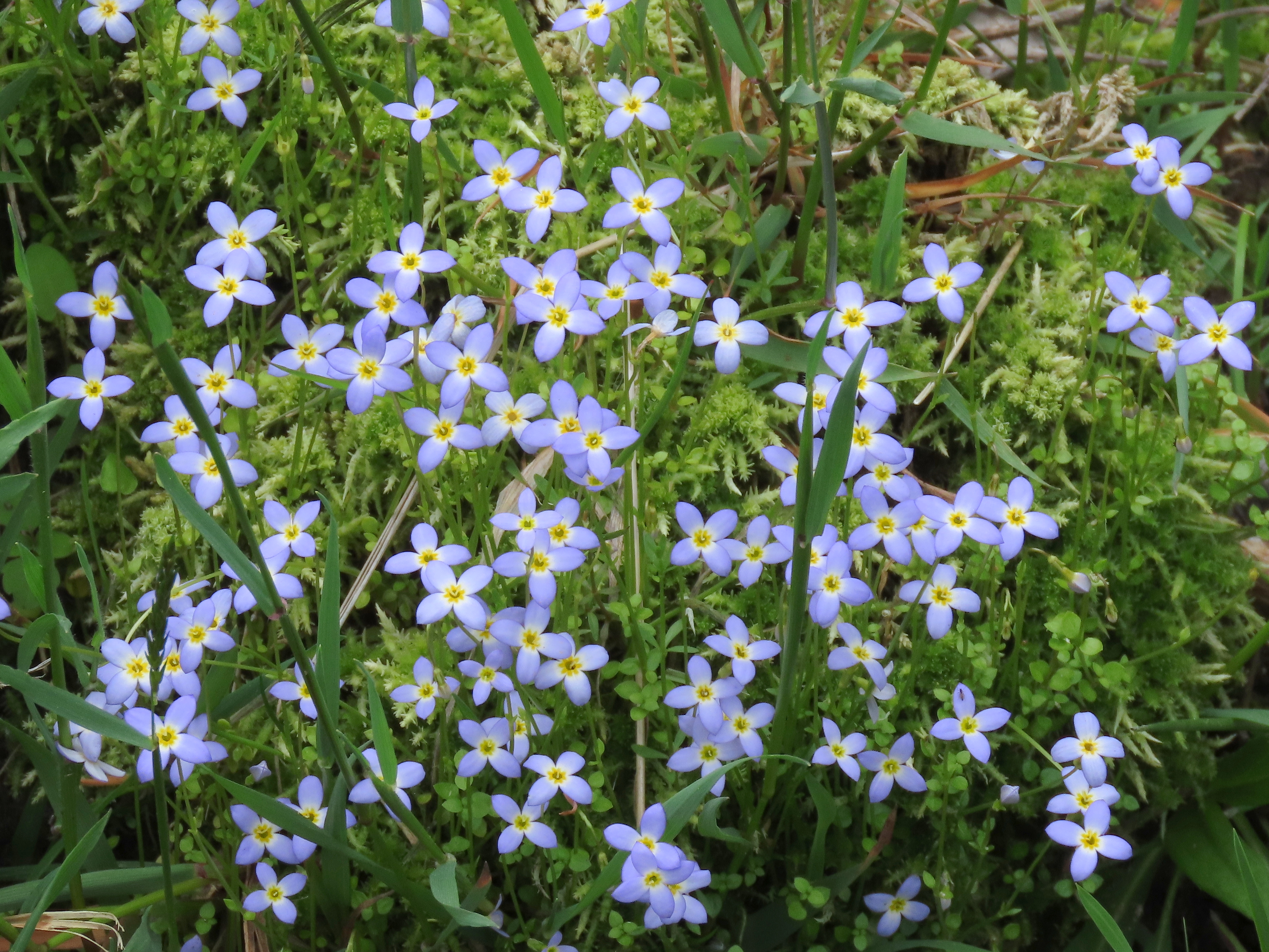
We finished our field work with three nights in Kingdom Come State Park in eastern Kentucky, an area we explored in 1997. The park is located along the Little Shepherd Trail, 38 miles of curvy, mostly one-lane road along the top of an astonishing, narrow ridge that runs about 125 miles northeast to southwest, broken only occasionally by narrow gaps. Despite cold, rainy weather we saw a nice selection of plants, and each night in camp we heard Mountain Chorus Frog (Pseudacris brachyphona). One of the most exciting aspects of the spring had been tracking down new species of trilliums, among our most elegant native plants. Along the Little Shepherd Trail we saw our tenth species of Trillium this spring, of which six were new! The only genus in which we found more new species this spring (13 of them) was Carex, which contains well over 500 species of sedges in the continental U.S. and Canada.

Finally, we spent two days visiting the Chickamauga and Chattanooga Civil War battlefields. Eileen had been studying the battles here for months in advance and loved seeing the actual landscape and individual places where key events occurred. We arrived back in Tallahassee 12 days before our departure for Angola. In this “second half” of our spring road trip, we were on the road for 38 days, staying in 12 different campgrounds, and driving 2980 miles (a refreshingly low average of 78 miles per day). We found 78 new species, an average of 2.0 per day, a very good result!
 Nomadic Naturalists
Thank you, Brian and Eileen for your great discoveries and photos of some which were great. It was a tough winter here at Eight Acre Wood, without Karen but I’m making do and watching Loons again this year, had three new babies just yesterday. A bald eagle nesting on fourth Lake that can be seen from the boat launch has been picking off ducks, herring gulls and loon chicks in the area. Safe travels for your next exploration,
Gary
The pad leaf orchids are blooming along the Mitchell ponds trail and the rattlesnake plantain are in bloom in the campsite at Lower Mitchell.
LikeLike