We spent three weeks in Angola on a birding tour in late May and the first half of June, not counting five days of travel. Angola is on the west coast of Africa, a bit over halfway from the Cape of Good Hope to where the continent bulges westward. It is roughly 800 miles north to south and 600 miles east to west. We sampled a region about 500 miles from north to south and 200 miles from the coast inland across the Great Escarpment to the Central Plateau.

This was our fourth trip to Africa, the previous being Kenya in 2006, Ghana in 2022, and South Africa just last year. (Madagascar, which we visited in 2019, does not count – it is biogeographically highly distinct from Africa, if not the rest of Planet Earth.) Angola has a modest number of bird species that are either endemic (found nowhere else) or “effectively” endemic (difficult/unsafe everywhere else – these are mostly species shared with the dangerous Democratic Republic of the Congo).
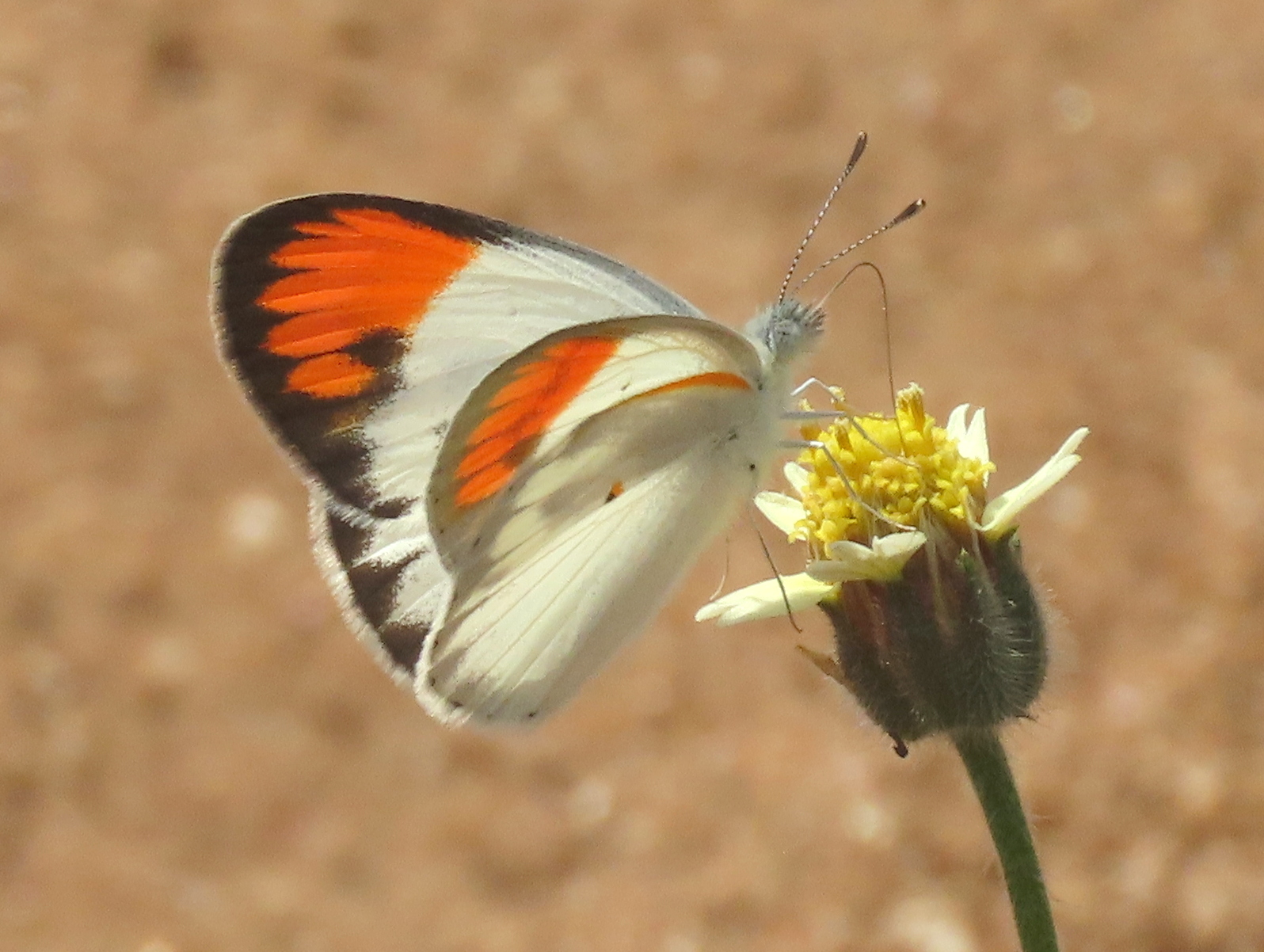
Getting to and from Angola was not easy. We and our travel agent spent tens of hours working on flights, and after multiple cancellations by Air France – which would have led to four unwanted extra days for us in the capital city of Luanda – we gave up and started over (and still await part of the refund). We ended up rebooking on Ethiopian Air, which took us quite a few miles out of the way, through Addis Ababa. Luanda is not really safe, and a half-day tour of the city was quite adequate to sample the culture, so we were glad not to be stranded there.

There are a number of challenges once in Angola, as well. Obtaining local currency is difficult; we were not able to use a credit card anywhere, even in the new international airport, and ATMs usually don’t accept foreign debit cards, and those that do are not reliable (they often are out of cash, and one ate our card, though we got it back the next day). The primary and secondary roads were the worst we have experienced; in the 2019 Quality of Road Infrastructure assessment, only two countries out of 144 scored lower. Given the great distances to be covered, and the low average speed achievable, a prodigious portion of the trip was spent driving. The roads are generally too rough or potholed to read while in motion, and perhaps half of the route was through relatively uninteresting areas, making for some long, uninspiring drives.

We felt the quality of birding, on average, was only fair. The coastal and more southerly areas were better, whereas the more northerly inland areas were generally below expectations — one exception being Pedras Negras, which was scenic and had fine birding. And there is not much compensation in the form of other animals; Angola suffered through 27 years of a complex civil war, ending in 2002, one effect of which was to decimate mammalian populations. We only saw nine species of mammals, a poor total for Africa, the largest being two fairly small monkey species.

On the brighter side, we liked our leaders, drivers, and fellow participants. The vehicles were very good other than having inadequate air conditioning. Accommodations were generally satisfactory and the food, though somewhat lacking in variety, was fine. Some parts of the country were quite scenic, and we enjoyed the daily picnic lunches in the field. We personally saw well a total of 350 species of birds, of which 85 were new. A brief narrative follows.

We started with a few days near the coast, south of Luanda. Mussulo Bay had a good assortment of waterbirds including Eurasian Curlew and Kittlitz’s Plover. In Kissama National Park (a designation providing almost no protection) we saw Angola Batis; batises are exceptionally cute black and white songbirds that are among Eileen’s particular favorites. We then headed north and inland toward Uige. Near Quitexe, we enjoyed Black-casqued and Congo Pied Hornbills and Black Bee-Eater, the latter perhaps my top bird from Ghana in 2022.
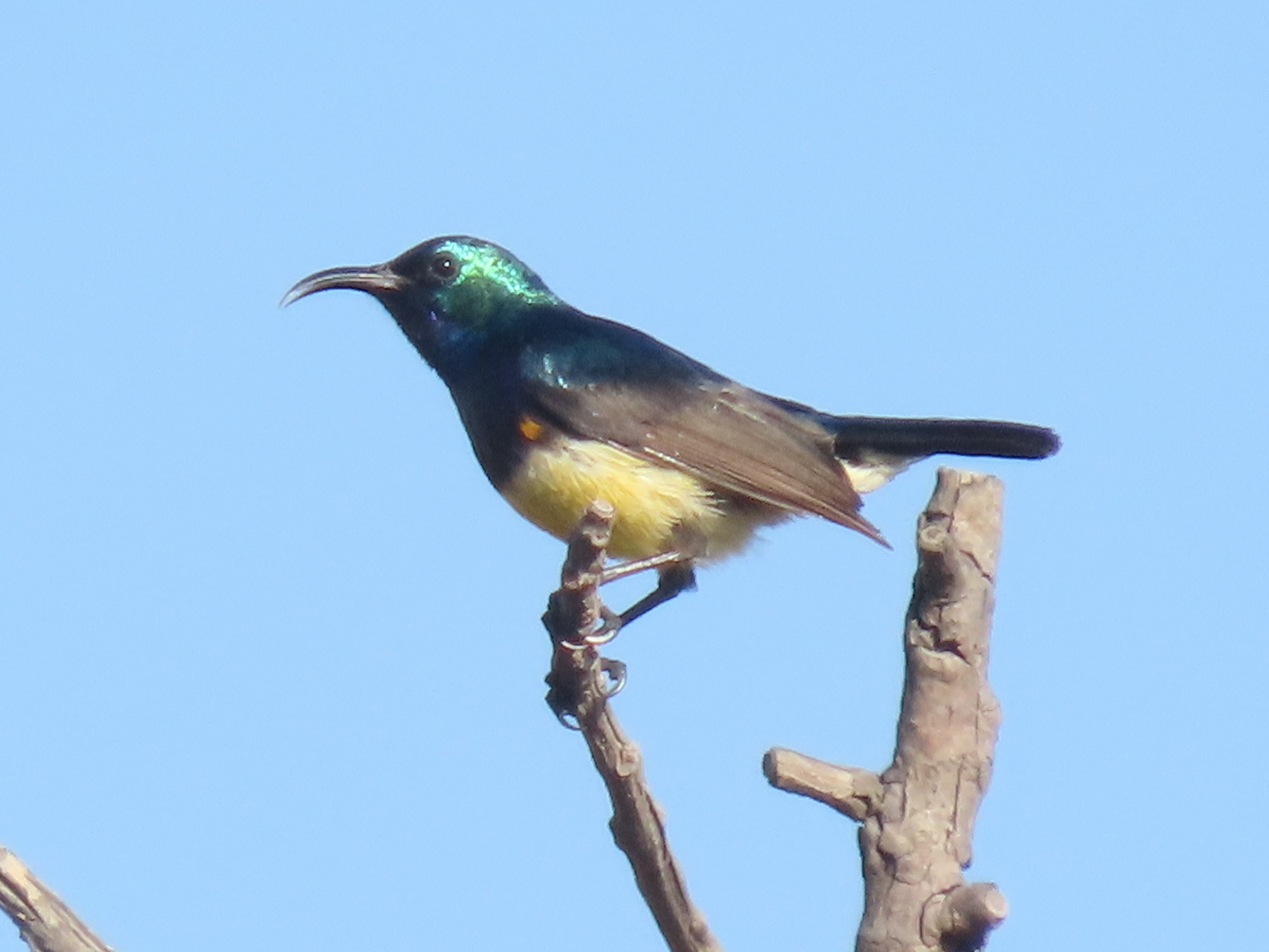
In arid woodlands near Camabatela, we saw one of the best birds of the trip for us, Yellow-bellied Hyliota. The hyliota family contains only four species, which are restricted to Africa, and our only previous hyliota, in Ghana, was seen rather poorly – so this was a huge upgrade! At Calendula, we enjoyed the magnificent waterfalls formed by the Lucala River, which we crossed many times during the tour. Nearby, at Kinjila Forest, we saw the striking and very rare White-headed Robin-Chat, known from only a few sites in the world, of which this is the only one that can be visited safely.

Our next destination was Pedras Negras (Black Rocks), a marvelous region of many dark rounded monoliths abruptly rising from the surrounding arid country. These monoliths are made of conglomerate, an uncommon sedimentary rock in which rounded pebbles and stones are encased in a fine-grained matrix, such as sand, and the mixture has been compressed into solid rock. We have seen small occurrences of conglomerate in a number of places, but the formations we saw in Angola were much larger and more dramatic than anything we had encountered previously.

A small amount of water was flowing through a stream and over a moss-covered cascade at Pedras Negras, and it attracted a fine selection of birds, including Angola Waxbill and Broad-tailed Paradise-Whydah. But the highlight of the day was seeing the national bird of Angola, the endemic Red-crested Turaco; we had telescope views of a perched bird that then flew past below eye level in perfect light, displaying its brilliant crimson wing patches! Turacos possess two copper-based pigments, one red and one green, which are found in few other birds (nearly all blue and green colors in birds arise from microscopic physical structures rather than pigments).

Turning west back towards the coast, Tombingo Forest yielded Chestnut Wattle-Eye along a shady stream with many butterflies. The Bon Amigos Resort had some of the best birding of any place we stayed, with highlights being Square-tailed Nightjar and Gray-striped Spurfowl. At Muxima, we saw the handsome and gregarious Angola Helmetshrike nicely. After a brief drive along the coast, we headed southeast and back inland. We birded for two days at Kumbira Forest, the first day a total bust, but the second very good. Nice finds included the rare Montiero’s Bushshrike and the colorful Yellow-bellied Wattle-Eye.
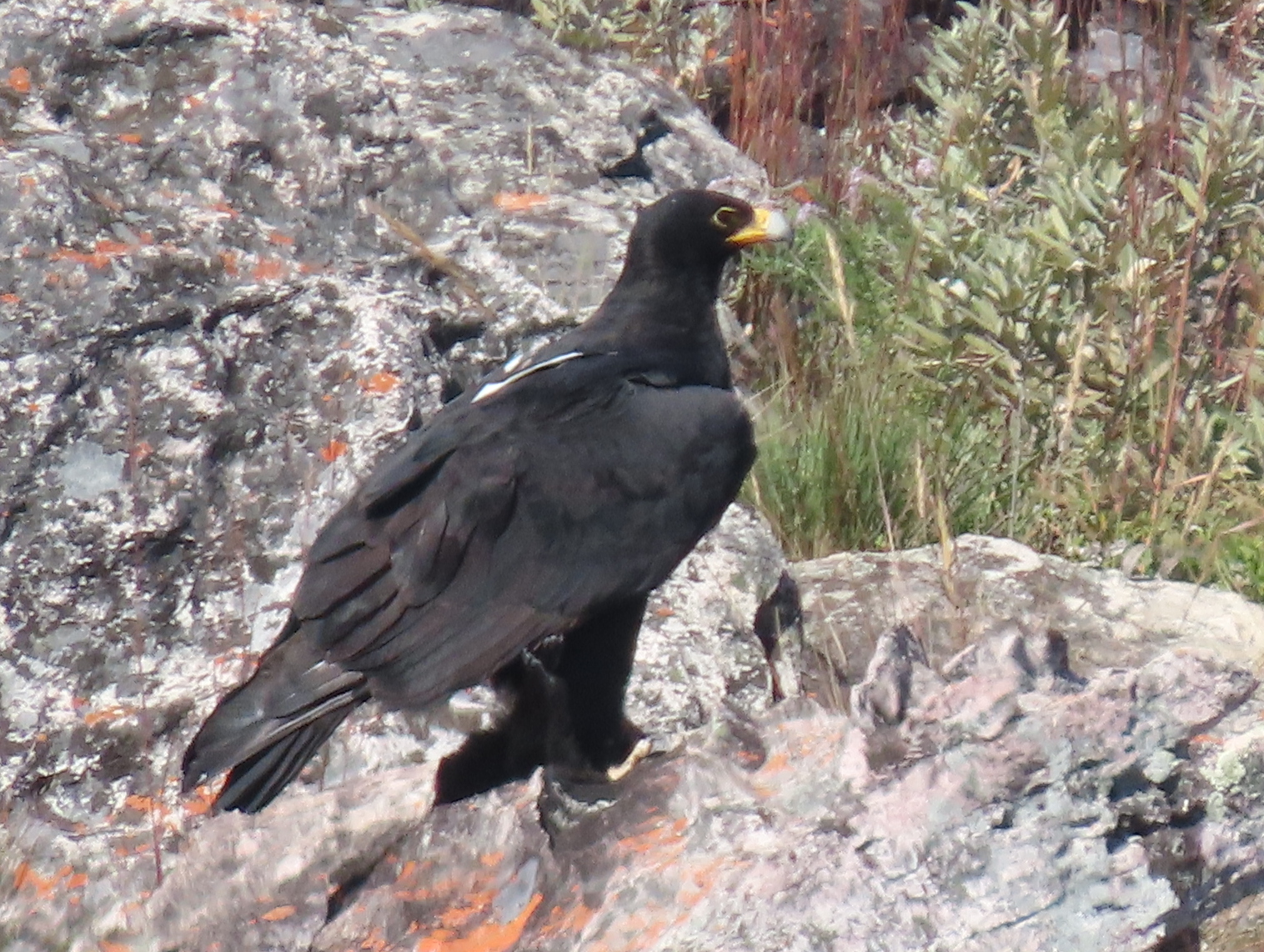
Near Amboiva, we birded in the only habitat we had not seen on previous trips to Africa, called miombo. This habitat is dominated by a few species of rather widely branched, flat-topped acacia-like trees. They form a fairly densely wooded savanna with minimal understory, which is the dominant habitat in a band across the continent from Gabon and Tanzania to Angola and Mozambique. Here we had excellent views of Green-capped Eremomela and I got a fleeting glimpse of the red, blue, and yellow Anchieta’s Sunbird.

Lupupa Lodge had fine birding, allowing us a one-day respite from being in the vehicles. Here we had an exceptional view of the usually skulking Bocage’s Akalat, and saw Schalow’s Turaco. Better yet, on the first night there, our driver, Bruno, found by far the best mammal of the trip for us, a galago (Otolemur crassicaudatus), our 16th and final primate family! Next was Mt. Moco, the highest mountain in Angola (8600 feet elevation). On the way in we enjoyed close views of White-fronted Bee-Eater, and on an interesting hike to the lowest patch of forest on the mountain, we saw Black-throated Wattle-eye well.

On the way to Lubango, and our final accommodations of the trip, we encountered White-tailed Shrike (actually a terrestrial batis) and Ruppel’s Parrot in a rocky canyon near Civite. From Lubango, we explored two interesting and scenic areas. The first was Tundavala Gap, where a very narrow defile at the rim of the escarpment has vertical cliffs approximately 3300 feet high! Here, we found the Angola Cave-Chat and the very challenging Swierstra’s Spurfowl. The second area was the Namib Desert below Leba Pass, where our favorite birds were Ashy Tit and Pririt Batis.
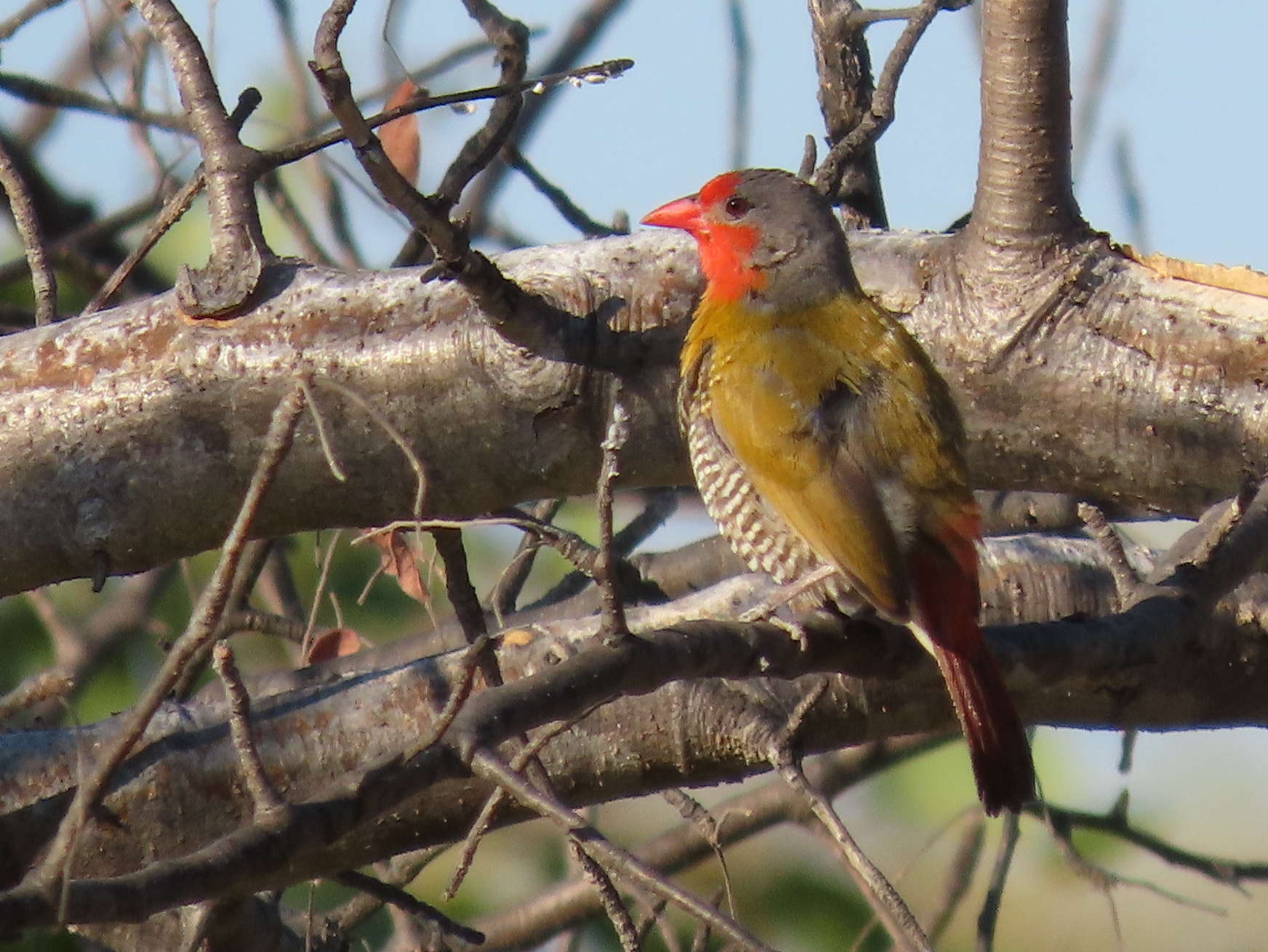
Overall, we considered the Angola experience to be somewhat disappointing, with just too small a fraction of the time spent doing really high-quality birding. We found Kenya, South Africa, and Ghana to each be outstanding, and many people we have talked to have enjoyed Botswana and Namibia. We’d recommend putting these African destinations, and probably Uganda, at a higher priority on your travel list.
 Nomadic Naturalists
thanks for the travel log and photos. Safe travels, Gary
LikeLike