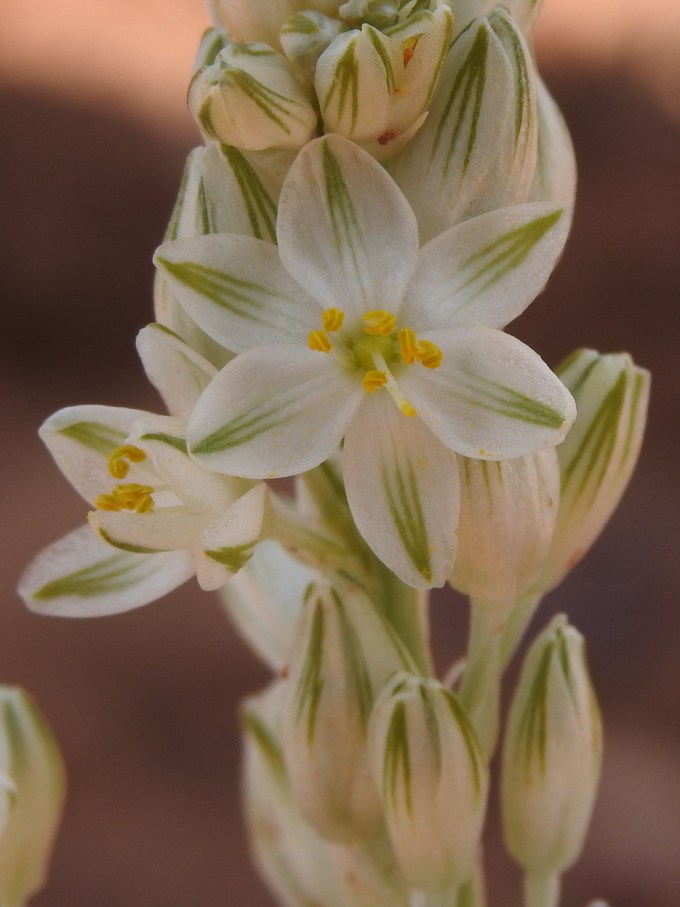
This blog post covers May 18 – 30, during which time we traveled through Utah, with short forays into the Arizona Strip. We had had good botanizing in northwest Colorado, but it got even better once we reached the Moab area, in east-central Utah. Our first stop was at Utahraptor State Park to look for Eremocrinum albomarginatum (Sand Lily), a lovely geophyte (a plant growing from a bulb). We quickly found this in a loose sand area with many other interesting looking plants, and we decided we should camp there and carefully study the habitat. This resulted in our finding six additional new species, including Sclerocactus parviflorus with its deep rose-colored flowers. Our success there may have been because these sands (like many of the soils in the region) were chemically interesting, potentially containing alkaline salts and/or trace elements like selenium.
We had a short drive the next day to the Mill Canyon area administered by the Bureau of Land Management (BLM), which features a dinosaur tracksite and a dinosaur bone trail, both with helpful interpretive signs. But our principal goal here was to search for Oreoxis trotteri (Trotter’s Alpine-Parsley), a carrot family member known only from Grand County, UT, and perhaps the rarest plant we would seek this year. Fortunately, a recent record with accurate coordinates got us to a fine bedrock dome where we found at least 20 plants, adding another genus to our list.

At this juncture, we faced an unusual situation: having had eight successful genus searches in a row (making it unnecessary to visit backup sites), we were now about a week ahead of our fairly fluid schedule. Not wanting to arrive too early in the season for subsequent searches, we needed to dawdle a bit. It was easy to construct a new plan because in 2020, due to COVID and weather, we had to skip a number of sites we hoped to visit in or near Utah. I brought up the 2020 map and notes, and decided we should spend some extra time near Moab, given the excellent wildflowers (resulting from unusually good spring rains); then explore the Capitol Reef National Park area; and finally do some bat recording on the North Rim of the Grand Canyon.

Looking over our revised route, it was clear that we needed to resupply before a long stretch with limited opportunities to shop. We also were very low on battery power after six nights of dry-camping (no power or water) with only four hours of driving to recharge from the truck alternator. Our solar panel contributed significant charge, but could not fully compensate for the fridge in such warm temperatures. So we back-tracked to Grand Junction, CO, taking very scenic Route 128, and after securing supplies, returned to Moab and camped in a campground for a night to top off the batteries. This attended to, we returned to dispersed camping, which we love. We were largely confined to campgrounds last year, being in the East, where there is no BLM land, and less Forest Service land than in the West. So it has been great to get back to serious remote camping in the West.
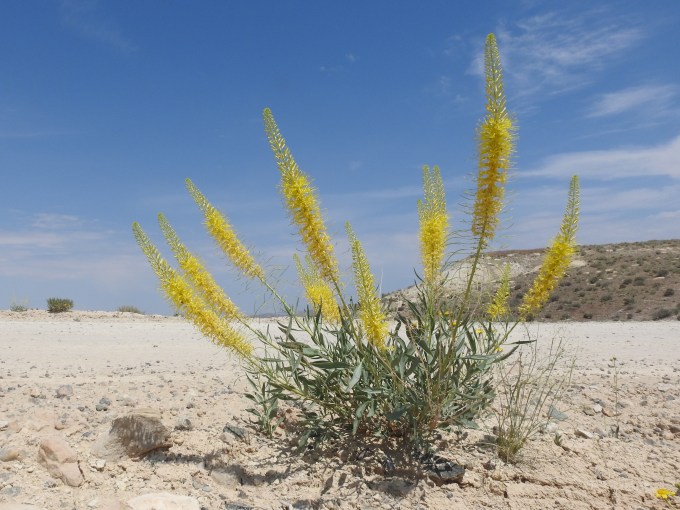
We spent one more day around Moab, tracking down a number of leads we had developed, yielding a gratifying eight new species, including Aquilegia micrantha, a faintly pink and yellow columbine growing on damp cliffs; and Calochortus ciscoensis, a Mariposa Lily found in only four counties, though sometimes abundant where it does occur. A few days earlier, I had noticed, just south of the airport, a small playa (a low basin where water accumulates from rain but then evaporates, leaving salts behind). It was colored greenish-yellow by a dense wildflower display, and as we headed out, we stopped to investigate. The dominant plant turned out to be Cleomella palmeri, related to bee-plants, and it and two other species in this specialized habitat were new for us.
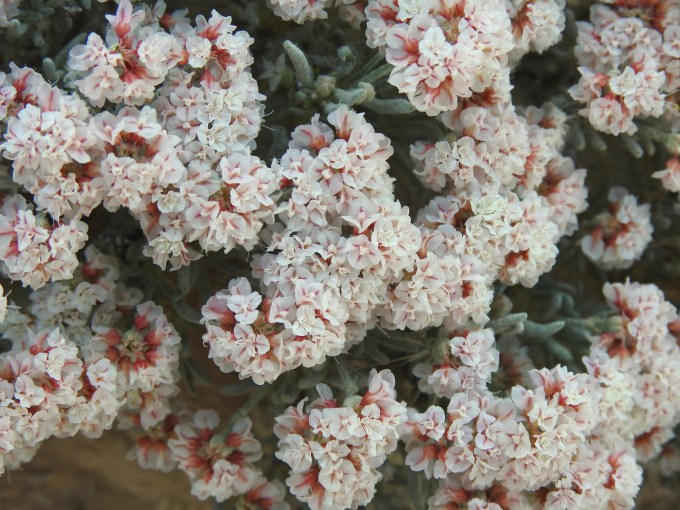
The drive on I-70 over the northern part of Capitol Reef (well north of the national park) was very scenic. We tried to reach Cathedral Valley in the national park from the west, but the Forest Service road was not yet fully dry from snowmelt and so was closed. We spent a crisp night camped by Forsyth Reservoir at 8000 feet of elevation, hoping to paddle it in the morning, but the weather was too threatening. Birds here included Sage Thrasher, Vesper Sparrow, and Common Merganser. Continuing south, we reached the Capitol Reef National Park visitor center just as a thunderstorm did, which closed some roads. But we enjoyed the portion of the Scenic Drive that was open, with its stunning geology. We then continued to the Notom-Bullfrog Road just east of the park and covered its paved portion, then dry-camped. We had an excellent collection of wildflowers at one spot along the road, including the stunning scarlet Aliciella subnuda in the phlox family. Following another day in the park, we headed south on Route 12 and camped at the base of a white bedrock dome.

The next day we drove most of the Burr Trail, a very scenic and uncrowded road through Grand Staircase-Escalante National Monument, where we saw superb examples of “fossilized” dunes, with the frequent changes in strata orientation indicating long-term shifts in prevailing wind direction during sand deposition. We camped at Escalante Petrified Forest State Park and in between thunderstorms managed to hike the trails to see the exceptional multicolored examples of petrified wood. Birds found over the last few days included a number of pinyon-juniper specialties like Gray Vireo, Gray Flycatcher, Black-throated Gray Warbler, and Pinyon Jay.

Although the portion of Grand Canyon National Park that tourists visit on the North Rim would not open until early June, due to damage incurred from high snowfall, a favorite area of ours farther west was accessible via Kaibab National Forest. We went here to make ultrasonic recordings of bat echolocation calls, hoping for a couple of rarer species that roost in the canyon but may fly over the rim to forage on the Kaibab Plateau. We were thrilled to get our favorite campsite and find nobody else there, despite it being Memorial Day weekend. And we were thrilled to see the stunning view from the rim; beautiful wildflowers; and a number of species of breeding birds (including Virginia’s Warbler and Plumbeous Vireo). But we were less thrilled to find that the 9-volt battery for the bat detector was dead, and so were both backup batteries. Every other battery we own is rechargeable, but not these.
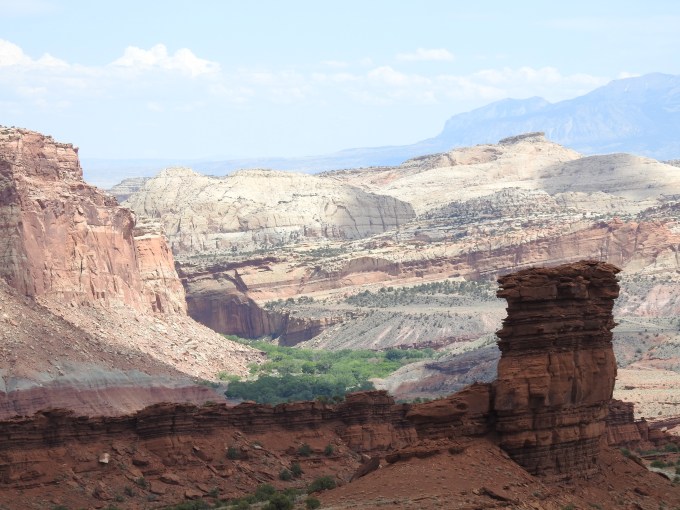
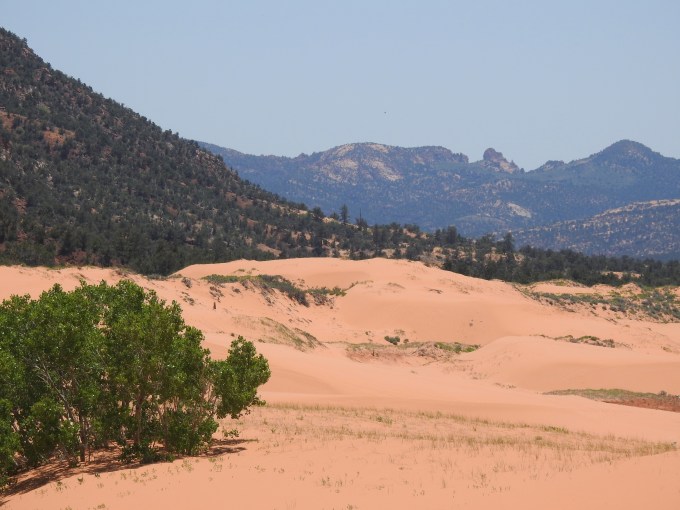
Still, it was a blissful two nights and day in camp. Returning to Utah, we conducted the first genus searches in a while. We found our target grass at Coral Pink Sand Dunes State Park. The dunes here are a gorgeous salmon color and although most areas are overrun with dune buggies, a small area has been set aside to protect an endemic tiger beetle, and there we found several interesting plants, including Asclepias welshii, a milkweed known from only four counties, and Sophora stenophylla (Fringe-leaf Necklace-Pod), with purple, lupine-like flowers. We then slipped into the east side of Zion National Park, and walked cross-country near Checkerboard Mesa to locate an unusual buttercup genus, Beckwithia. This was a real challenge because this species is the first to flower in the park in spring, so we were much too late for flowers, and it was apparently a bad year for them; the plants we finally located were small and desiccated, but fortunately identifiable. We’d really like to return in early spring in a good year and see them in flower. We camped in solitude on BLM land just outside the park, despite the long weekend, and even had a cell signal.
While in civilization, we bought two 9-volt batteries and two pizzas, and headed back to the North Rim for another attempt at recording bats. This time things went better, and we identified six bat species (Big Brown, Hoary, and Mexican Free-tailed Bats; Western Pipistrelle; California and Dark-nosed Small-footed Myotis), though we did not record either of the rarer ones we hoped for (Spotted and Big Free-tailed Bats). But we again had the place to ourselves, and it was idyllic. We also saw our second-ever Greater Short-horned Lizard, a “horned toad” of higher elevations.

Finishing up with some stats, in 2023, we have seen 111 new taxa (one snake and the rest plants) in 60 days, about 1.8 new species per day, a higher number than expected. We’ve done 72 genus searches, of which 46 were successful, a hit rate of 64%, which is good. Now on to Nevada!
 Nomadic Naturalists
Some people have all the luck! All it takes is a lifetime of study… Evelyn
LikeLike
Interesting neat shots also, going to the badlands and Yellowstone with my son next week for a ten day trip. Safe travels, Gary
Sent from Mailhttps://go.microsoft.com/fwlink/?LinkId=550986 for Windows
LikeLike
Hi, Gary,
Eileen and I hope that you have a great time in the Badlands and Yellowstone. You probably already know where to go in Yellowstone, but just in case, I wanted to mention that the Lamar Valley in the northeast corner of the park is the best area for mammals, especially wolves, and I recommend that you visit several times. Cliffs east of the valley, on the north side of the road, have Mountain Goats, but they are introduced.
If you continue going east on that road, about 50 miles past the end of the valley and out of the park, shortly before the Montana border, you reach extensive tundra habitat above 10,500 feet elevation. It can be a lot of driving depending on where you are staying, but makes a very interesting day trip and there could be good alpine wildflowers when you are there (hard to say, timing varies from year to year).
Have a great trip!
Take care, Brian
LikeLike
Fantastic report! Sorry to hear about your battery issues – both camper and recorder. I have had very good experience with the “HIXON” brand of rechargeable batteries available on Amazon. My experience has only been with the AA size in my trail cameras but they are working great – that’s not an easy application to do rechargeables. I noted they have a standard 9V application as well – here is the link:
LikeLike