We traveled with Field Guides, Inc. to Chile from November 9 – 30. The trip was led by Willy Perez and Eduardo (Lalo) Navarro and consisted of four legs sampling the country from south to north. Our latitude spanned a staggering 35 degrees, from 53.6 to 18.3 degrees south, covering about the same range as from Goose Bay, Labrador to Mexico City. The elevation varied from sea level to 15,100 feet, the highest we have ever been. We also saw rainfall extremes, visiting Valdivian forests with average annual precipitation of 69 inches, and the Atacama Desert, where some places have had no recorded rain in history. It was a trip of great contrasts!

The first leg of the tour visited extreme southern Chile. We flew from Santiago to Punta Arenas, where a nice wetland produced the first of three species of flamingos we would see. A ferry took us to the windswept island of Tierra del Fuego. We spent a few days birding on the Argentinian side of this island in 2009, before our Antarctic cruise departed from Ushuaia, so we had previously seen many of the birds of this region.

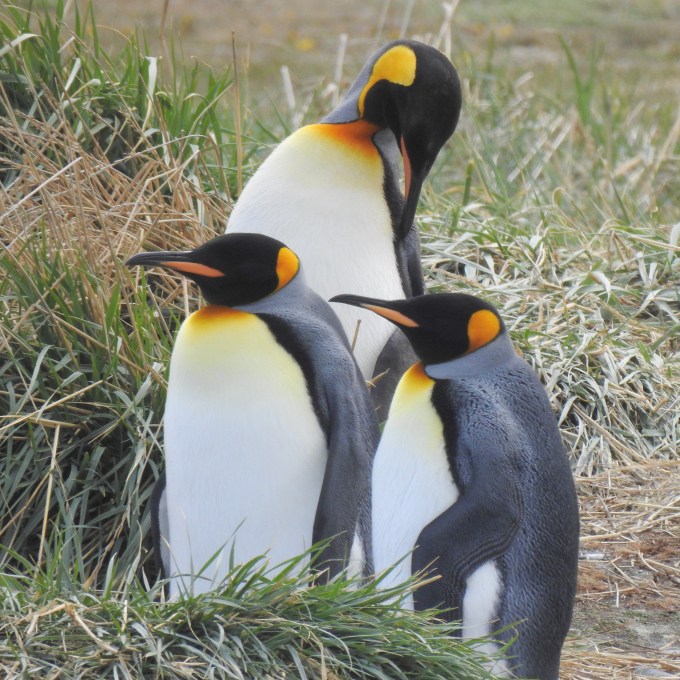
While on the island, we hiked along the stony shoreline of a playa lake, where we saw Magellanic Plover, an interesting shorebird that is the only member of its family. We next visited the northernmost known colony of King Penguins; we had seen the world’s largest aggregation of these elegant birds on South Georgia Island during our Antarctic cruise.
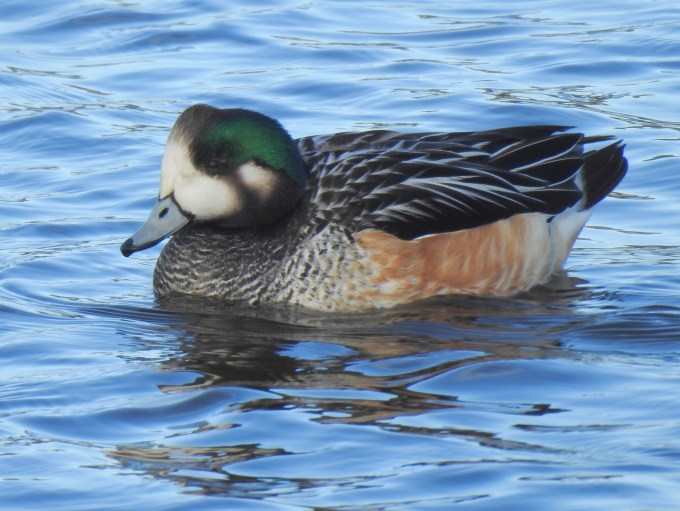
Returning to mainland Patagonia via another ferry, we spotted Commerson’s Dolphin and Magellanic Penguin. We spent most of a day driving through lonely landscapes, where the winds were so strong that you could stumble during the rare lull, and our telescope and tripod would blow over if not held down. We reached an elevation of about 800 feet, where the hilly terrain held new species such as the beautiful Tawny-throated Dotterel; the native camel family member Guanaco, precursor to the domestic llama; and Lesser Rhea, an ostrich-like bird belonging to an ancient lineage.
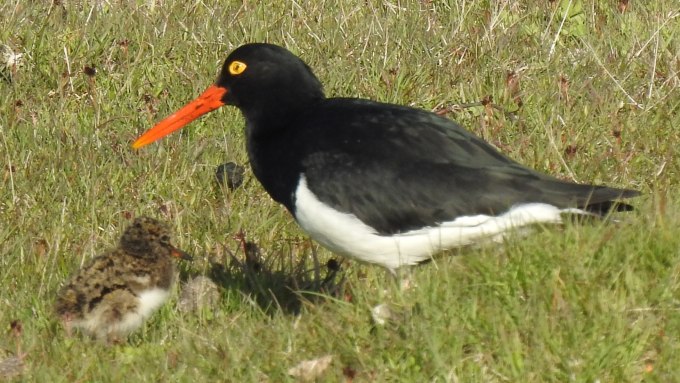
A snowstorm prevented us from getting as high in the Sierra Bagueles as desired, so we headed to magnificent Torres del Paine National Park a bit early. There we saw one of my most wanted birds, Spectacled Duck, which has an exquisite wing patch that varies from emerald to magenta depending on lighting angle. High water levels helped us see Austral Rail, a rare species that went undetected for decades before being rediscovered. One of the highlights of the trip was seeing a resting Mountain Lion in the park, our fourth sighting of this species.
The second leg of the trip commenced by flying from Punta Arenas north to Puerto Montt in the Lake District, a bit less than halfway “up” Chile. Our first stop was at Lahuen Nadi Natural Monument, a prime example of Valdivian forest (a temperate rainforest). Several species in genus Hymenophyllum, known as filmy ferns, were prominent here. These ferns are adapted to low-light environments by virtue of being only one cell thick, so each cell has direct access to the light incident on the frond. But the high surface-area-to-volume ratio makes them susceptible to dehydration, so they are usually found in very moist situations. The best bird here was Black-throated Huet-Huet (pronounced wet-wet, for its call), a large tapaculo (a group of exceptionally difficult-to-see, often mouse-like birds).

We spent a full day birding a bit farther north in beautiful Southern Beech forests (Nothofagus dombeyi) in the Las Trancas Valley. Our most exciting finds here were the magnificent Magellanic Woodpecker (in the same genus as Ivory-billed); the rare Chestnut-throated Huet-Huet; and Rufous-legged Owl, called in at night using a recording.
We flew again, this time to the capital, Santiago, to start the third leg of the trip. This put us a bit over halfway up the country. This leg sampled both the coast and high Andes. Upon arriving at the coast, north of Valparaiso, we quickly added seven life birds in 45 minutes from our hotel, perched over the rocky shoreline of the Pacific Ocean! These included the charismatic Inca Tern, the elegant Red-legged Cormorant, and plunge-diving Peruvian Boobies. The next day we took a much-anticipated 6-hour pelagic trip offshore into the cold, rich Humboldt Current. We got three lifers on this trip: Humboldt Penguin, Buller’s Albatross, and Peruvian Diving-Petrel. Late in the afternoon we visited a park with good bulrush stands, where we saw the snazzy Many-colored Rush-Tyrant and the secretive Stripe-backed Bittern.
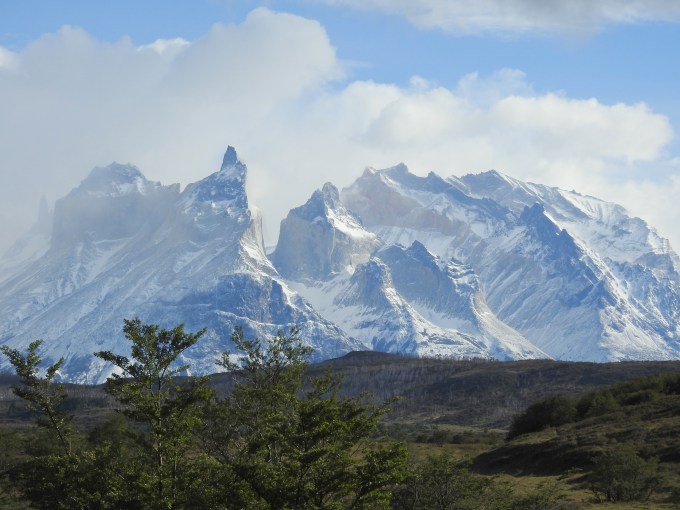
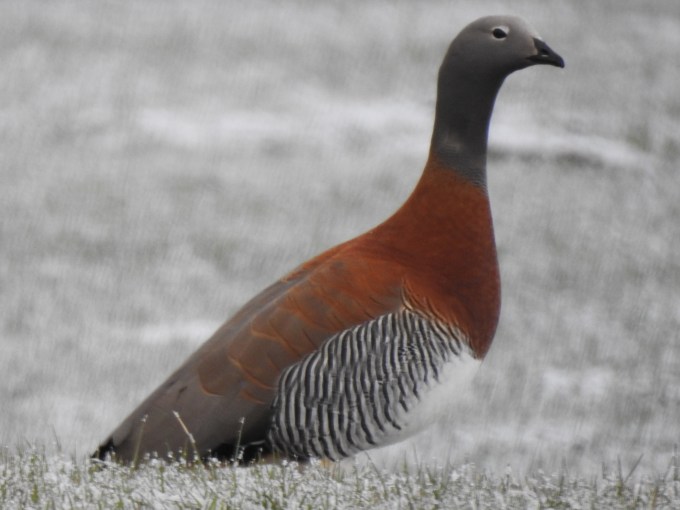
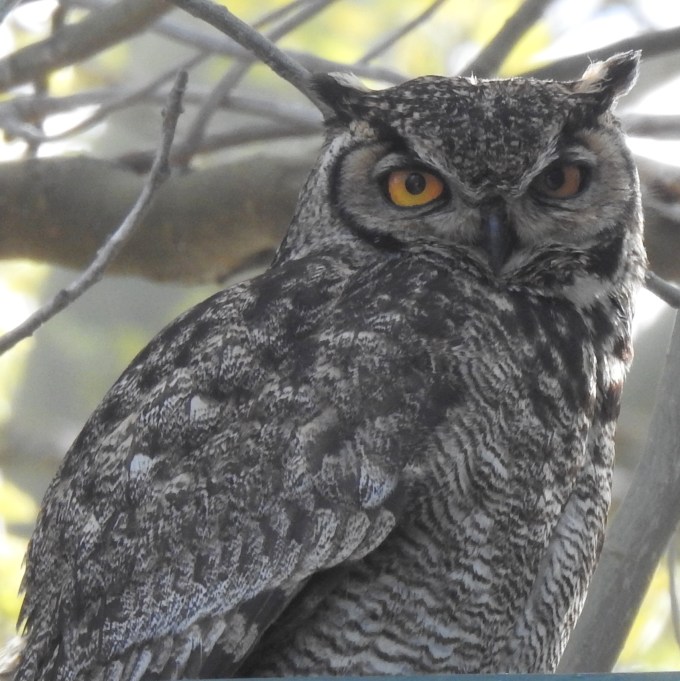
The last two days of this leg were mostly spent in the Andes east of Santiago. We reached 9900 feet of elevation and added 18 life birds with a backdrop of dramatic mountain scenery! Although the landscape was mostly barren, the number of birds inhabiting these areas was impressive. Some favorite species were White-sided Hillstar, Crag Chilia, Gray-breasted Seedsnipe, Andean Goose, Andean Gull, Mountain Caracara, Lesser Horned Owl, and Mourning Sierra-Finch. At a city park on the way back the second day we had phenomenal views of Plumbeous Rail (a bit of a nemesis for us) and Spot-flanked Gallinule.

For the fourth and final leg of the tour we flew to Arica in the far north of Chile, on the Peruvian border. During breakfast at a beach-side hotel after the early flight, we saw a pod of Dusky Dolphins. After seeing Peruvian Thick-Knees (nocturnal shorebirds) roosting in coastal dunes, we headed up Rte. 11, which goes all the way over the Andes to Bolivia. We birded in the Lluta Valley, essentially an oasis in the Atacama Desert, where we found several rare migrants that even the local guide had never seen in Chile (Peruvian Martin, Chimney Swift, Eastern Kingbird, and Red-eyed Vireo — the last three being familiar birds in the eastern U.S.).
After climbing out of the valley to intermediate elevations, the landscape was remarkable, consisting of sedimentary rock covered by sand and alluvial fans with no vegetation whatsoever, a habitat called absolute desert. This area receives no rain and has practically no visible life, although two seabirds, Markham’s Storm-Petrel and Gray Gull, nest here and commute daily to the ocean, tens of kilometers away. The advantage of nesting here is the complete absence of predators and nest parasites. We reached our destination, the town of Putre, late in the afternoon; here we spent two nights at 11,600 feet of elevation.

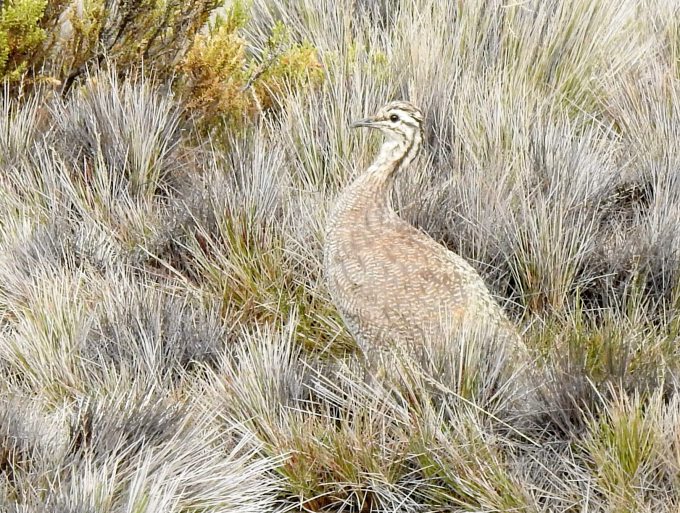
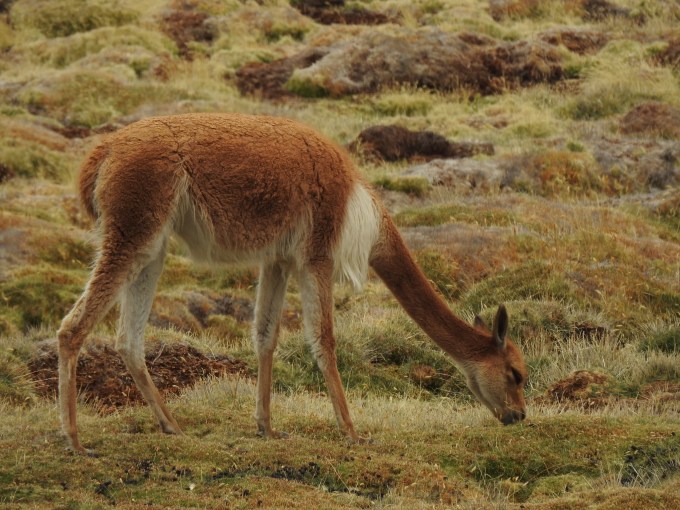
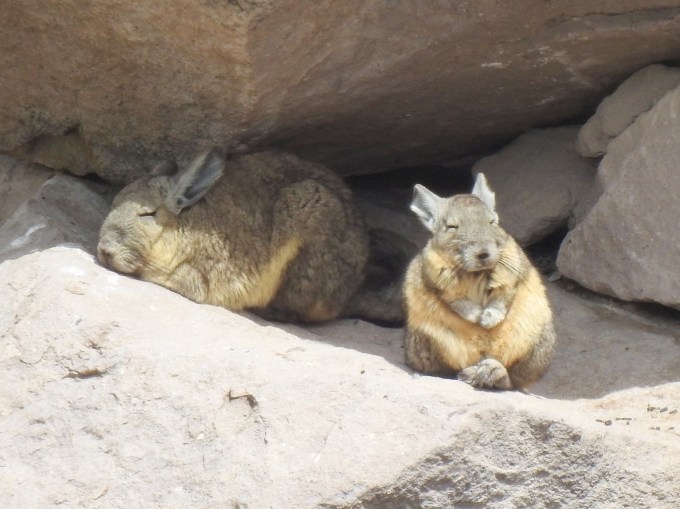
Our 16th day of birding was a memorable one, as we explored Lauca National Park and reached our maximum elevation of 15,100 feet, the highest we have ever been (our previous high was around 14,200 feet in the Colorado Rockies). We added an impressive 28 trip birds, of which 21 were lifers (much the highest day total during the trip), and also three native mammals, all of which were lifers: (1) Vicuna, the source of domestic alpacas; (2) Common Mountain Viscacha, a rabbit-like member of the chinchilla family, which was a new family for us; and (3) Bolivian Big-eared Mouse, a charming, large, diurnal rodent that often occurs in viscacha colonies, which are usually situated in rocky areas adjacent to wetlands. Some of our favorite birds this day were Andean Avocet, Puna Tinamou, Puna Teal, Black Siskin, and Andean Flicker.

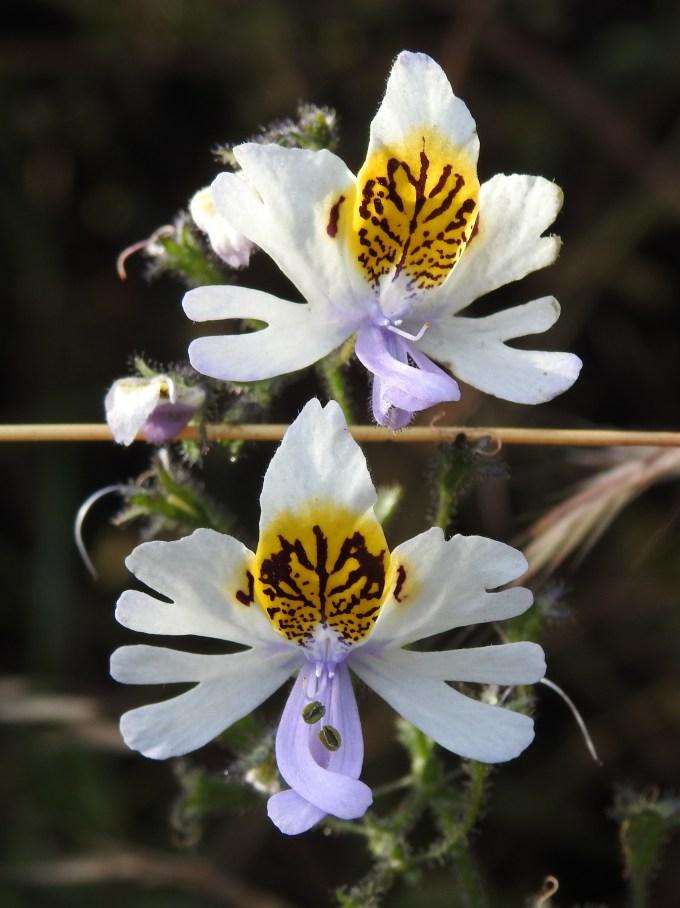
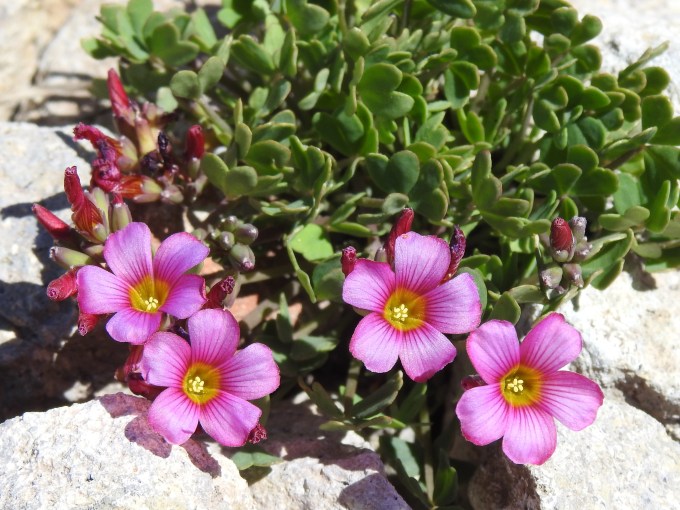
At these very high elevations, several special habitats were encountered. The plateau-like altiplano featured puna, an arid shrub-steppe/grassland habitat, as well as slightly alkaline/saline playa-like lakes, where we saw three species of flamingos. But most remarkable were the bog-like wetlands known as bofedales, their green cushion plants contrasting with the yellow to brown surrounding arid lands. These bofedales contained a number of interesting plants, several of which were flowering during our visit.
The next morning we birded on foot around Putre, finding a nice selection of species, including Spot-winged Pigeon, Blue-and-Yellow Tanager, Bare-faced Ground-Dove, and Streaked Tit-Spinetail. We returned west and descended into the Azapa Valley for lunch and two species of hummingbirds. Back in Arica, we enjoyed large flocks of gulls and terns along the rocky coast, seeing our last new water bird of the trip, Belcher’s Gull. A night-time foray yielded a great look at Tschudi’s Nightjar, which we also heard repeatedly. On our final day, we visited just a few locations: the Lluta River Estuary (where Gull-billed Tern was notable for Chile), the Camarones Valley (for Chilean Woodstar and Tamarugo Conebill, the only two lifers of the day), and a Markham’s Storm-Petrel colony. These latter birds were underground and so we did not see them, but we found fragments of dead birds and a broken egg.

The checklist for this tour listed 338 possible bird species, of which we saw 282, or 83%, an exceptionally high percentage. The checklist contained 150 potential life birds, of which Eileen saw 121 and I saw 122 (81%), a good result. We found 11 native mammal species, 5 of which were new, leaving Eileen hanging at 499 lifetime species! The trip was very fast-paced so we had little time to dwell on other groups, but we did manage to identify 41 plant species on the run.
Finally, I’d like to take this opportunity to give a brief synopsis of the year, as this will be our last blog post of 2023. In total, we took five international birding trips, to Northeast Brazil, Guyana, Borneo, Central Amazonia (from Manaus, Brazil), and Chile. We did two road trips, a two-week foray to the southern parts of New Mexico, Arizona, and California; and a 6-month tour of much of the U.S. from the Rockies west. The latter was interrupted by the Borneo and Amazonia trips, and so actually involved only a little over four months of field work in the U.S.
I never had a chance to report on the tail end of that road trip; in brief, after our explosive flat tire in northeast Colorado, we spent four days driving to Chippewa National Forest in Minnesota. There we spent Labor Day weekend in a nice dispersed campsite, canoeing three times, twice on the Mississippi River close to its source. We then headed for the Twin Cities, where we tracked down three new genera and camped at Lebanon Hills Regional Park, our home for the five nights preceding, and the four nights after, the birding tour in Central Amazonia.
From there we headed to Superior National Forest in northeast Minnesota for some year-end canoeing; we had hope to spend several weeks here, as we did in 2020. We had a couple of nice paddles from a great campsite (which both Spruce and Ruffed Grouse walked through), but we were still recovering from the birding tour, and fall color had peaked early, so when the entire next week’s weather forecast was unsuitable for canoeing (high winds, cold temps), we caved in and headed back to El Paso early. Our road trip ended 3.5 days later.
Our two road trips were focused on finding new plant genera, and in total our statistics were 141 searches conducted, 96 of these being successful; and 115 genera sought, with only 19 of these missed. Thus the success rate for individual searches was 68%, and we found 83% of the genera we targeted. When we made a similar effort in 2012 in California, our corresponding success rates were only 45% and 69% — we have gotten better at doing this over the years, and, of course, a lot more information is available now than was the case eleven years ago.
Unlike in previous years, we did not find a single new genus serendipitously (while not actively looking for it) – the genera we are missing now are just too uncommon or localized in occurrence to have much chance of simply bumping into them. For comparison, in 2012 there were 23 serendipitous genera, and in 2021, a whopping 41! We now need just 19 genera to reach our goal of 90% of those in the continental U.S. and Canada, and we have travel planned in 2024 to accomplish that.
During our two road trips we found a total of 197 new species in 142 field days, an average rate of 1.4 per day. Since retiring seven years ago, this rate has varied from 1.0 to 2.9. Nearly all these new species were plants; the few exceptions were Rio Grande Cooter (a turtle), Western Shovel-nosed Snake, Yosemite Toad, Common Checkered-Skipper (a butterfly), and Aplodontia (a rodent). Finding our last vascular plant family in the continental U. S. and Canada (Molluginaceae, north of Phoenix in March) and seeing our greatest mammalian nemesis, Aplodontia (on the Olympic Peninsula of Washington, in August), were the two most notable accomplishments on our road trips.
Including both road trips and international birding tours, during 2023 we saw 867 new species: 506 birds, 241 plants, 47 mammals, 34 herps (reptiles and amphibians), 19 butterflies, and 20 species in other groups. The herp and total increments were our best ever. This brings my lifetime worldwide total to 12,638 species: 7036 plants, 4375 birds, 528 mammals, 262 butterflies, 225 herps, 83 odonates (dragonflies and damselflies), 43 fish, and 87 others.
Looking ahead, we expect to take three international trips and two road trips in 2024. The fun will start in February, visiting the Dominican Republic and Jamaica, our first time ever in the Caribbean, so you can expect the next blog post in March. Happy holidays!
 Nomadic Naturalists
Has anyone ever done what you are doing? There will be at least five books, correct?
Your text is excellent–all important info with explanations when necessary.
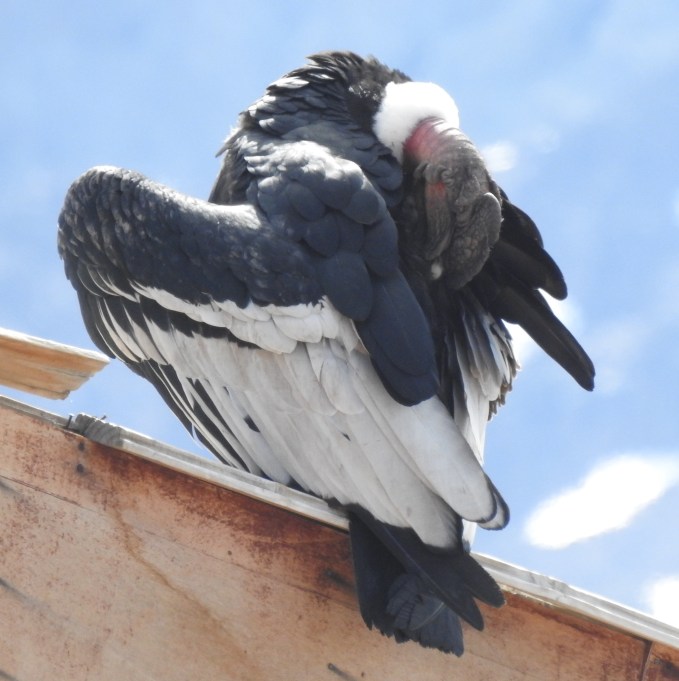
I was lucky to cross paths and water with you in our barren Moose River Plains. I am hoping to get to Bryce and Zion in May, with my major bird to see being the CA condor. Do you happen to know of a field guide (love that name!) which covers from geology to all types of living things there? I had a great one in the Sierras by a Muir descendant.
I still like to get out with a few nature nuts to see what we can see here. And we see a lot that is interesting to us… Two inches of glorious snow on every twig today and no wind. My best, Evelyn G.
LikeLike
Thanks Brian, Sounds like a great trip with lots of new birds and animals. Stay safe, Gary
Sent from Mailhttps://go.microsoft.com/fwlink/?LinkId=550986 for Windows
LikeLike
Sounds like your Chile trip was every bit as memorable as remember ours being…. so much covered in such a short time! And you have lots on your plate again this year… no moss growing under your camper!!
All is well here – the lovely sunshine is following us all the way into December – in the 70’s – so we can be outside most of the day. Busy here – lots of activities we don’t normally do, but are finding fun and entertaining.
Take care – wherever you spend these holidays!! Connee and Bob ________________________________
LikeLike