On our birding tours we often ask other participants what some of their favorite destinations have been, and a surprising number of people have named Bhutan as one of the best trips they have ever done. Factors often mentioned, in addition to the fine selection of birds, are the beautiful Himalayan scenery and the interesting Buddhist culture.

Three years after our originally scheduled departure, canceled due to COVID, we finally made it to Bhutan, and it was indeed one of the most enjoyable trips we have taken, although we had very stressful flight situations in both directions. We traveled with Field Guides, Inc., and the tour was led by Jay Vandergaast.

The trip started badly with our not being allowed to fly out as scheduled because I had failed to obtain a needed Indian visa for our brief time in New Delhi, the primary gateway to Bhutan (Bangkok being the principal alternative). After rebooking our flights for the next day, we came back home and I used an expediting service, globalvisacorp.com, to obtain the visa as quickly as possible. They were highly efficient, but our visas would not be e-mailed until we were in the air between New York and New Delhi.
I was well-prepared the next morning but it was challenging convincing the airline agent to let us fly, as we did not yet have the issued Indian visa. But she eventually manually entered our flight information to Bhutan into her system so that it, rather than India, showed as our final destination, and we were on our way. It was a risk, but we otherwise faced missing the entire tour, and when we landed, the promised visas were in our inbox – a moment of supreme relief.
We stayed in the airport overnight for our 4:00 a.m. flight, rather than joining our group at the hotel, as we would have had so little time in a room. The flight from New Delhi to Paro, Bhutan, is one of the best in the world for mountain scenery, perhaps surpassed only by the flight from Kathmandu, Nepal to Paro. From the plane we saw Mount Everest (the highest peak in the world at 29,032 feet); Kangchenjunga (#3, 28,169 feet); Lhotse (#4, 27,940 feet); and Makalu (#5, 27,838 feet). Only a few pilots are qualified to land at Paro, Bhutan, due to the difficulty of the approach, which is generally considered the most difficult of any international airport in the world.

The trip started with a bang as we saw the unique Ibisbill just a few minutes from the airport, on the way to the lodge! This classy shorebird, which was my most wanted species in Bhutan, is in a family of its own, which is most closely related to oystercatchers. Ibisbills occur along the cobble banks of fast-flowing rivers from Afghanistan to China, mostly at higher elevations. After a morning of birding northwest of Paro, the group had the afternoon to recover from what was one missed night of sleep for most, though we had not seen a bed in 45 hours and were quickly comatose.

Our first full day of birding took us southwest of Paro to the highest point of the tour, Chele La, also written Chelela (“la” is a pass in the local language). This is also the highest point reached by any road in the country, usually quoted as having an elevation of 13,083 feet. We were fortunate to have sunny and remarkably calm weather here, and in fact had generally nice weather for the whole trip, sometimes cold but with rather little rain or wind. The highlight of the day was Eileen seeing her 500th native mammal, a Maned Serow! This darkly colored goat-like animal was peacefully resting on a shrubby slope, allowing telescope views.
On this first day we became familiar with the meal pattern that would be followed nearly every day of the trip. We had a large ground crew that rode in separate vehicles, and camped each night near where we would be in the morning. We would start around 5:00 a.m., bird for a few hours, and then find them set up in an often very scenic spot, with a full breakfast (and later in the day, lunch) set up and served on a table with chairs. The food was excellent and a great variety was available at each meal, so that even a picky eater could always find a number of appealing dishes. These al fresco meals contributed greatly to our enjoyment of the tour. The ground crew also set up tents for us on the several nights we had to camp due to the remoteness of our location.
Perhaps the most spectacular bird group in southeast Asia is the pheasants, some of which are astonishingly colorful and ornate. We encountered two species below Chele La: Blood Pheasant (the male gray with patches of crimson and apple green) and Himalayan Monal (the male with extraordinary iridescent blue back and wings, the female intricately patterned in brown). Later in the trip we saw two more species, Kalij Pheasant and Satyr Tragopan, the latter a truly lurid orange male covered with small white spots, one of the most sensational birds of the trip.

The plants in Bhutan were surprisingly familiar because at one time a continuous forest extended across the northern hemisphere’s supercontinent Laurasia. But as climate changed and the supercontinent began to break up, this forest fragmented in a complex process, ultimately leaving significant remnants only in what is now southeast Asia, the southern Appalachian Mountains, and, sparingly, Europe. In Bhutan, we saw 18 genera of plants that also occur in the southern Appalachians; the most spectacular example was Rhododendron, which forms world-famous floral displays in spring in both locations. On this trip we saw 6 species of Rhododendron in flower, only a small fraction of those occurring in the Himalayas. Otherwise, our loveliest displays were of primroses, particularly the pink Primula denticulata.

We toured two interesting dzongs (a combination of monastery and government offices, housed in a complex, temple-like structure). Our first dzong was the iconic one at Punakha, of which one often sees photographs; it was originally built in 1637. Bhutan has strong ties between the state (a monarchy) and religion (Buddhism), reinforced by the presence of both in each of the dzongs. The architecture of these building is distinctive, and, remarkably, the best modern examples of the genre are found right in our backyard, at the University of Texas at El Paso. After the university was seriously damaged by fire in 1916, it was relocated and at the suggestion of the dean’s wife, who had seen a National Geographic article on Bhutan, the new buildings were constructed utilizing many elements of the dzong architecture, a practice that has continued to this day.
After leaving Punakha, our route was essentially an irregular counter-clockwise loop through the country, giving us access to a range of habitats: from tropical broad-leaved forests along the southern border with India, at elevations as low as 300 feet; arid Chir Pine (Pinus roxburghii) woodlands; temperate broad-leaved forests; drier mixed forests featuring Blue Pine (Pinus wallichiana); subalpine coniferous forests; and finally, very sparingly, subalpine scrub. On the eastern leg of the loop, we traveled for a whole day on a very narrow road with precipitous drop-offs; no roads whatsoever, nor even any trails, show in this whole region on Google Maps. I only recall our meeting one other vehicle on that drive, which gave a marvelous transect of the lower Himalayas (1000 – 4900 feet).

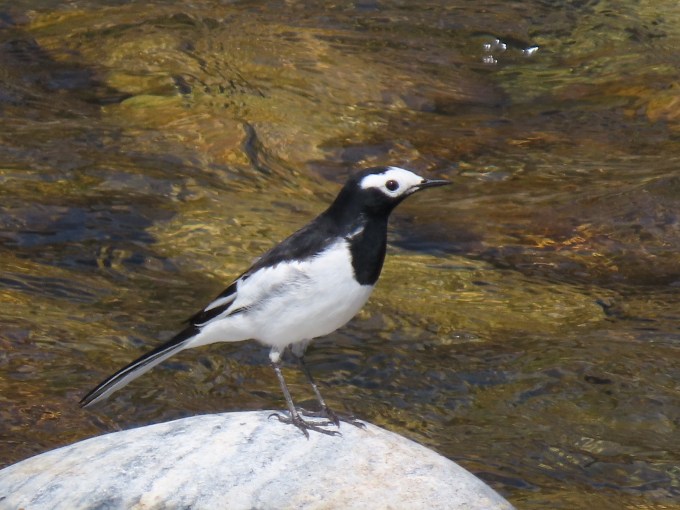
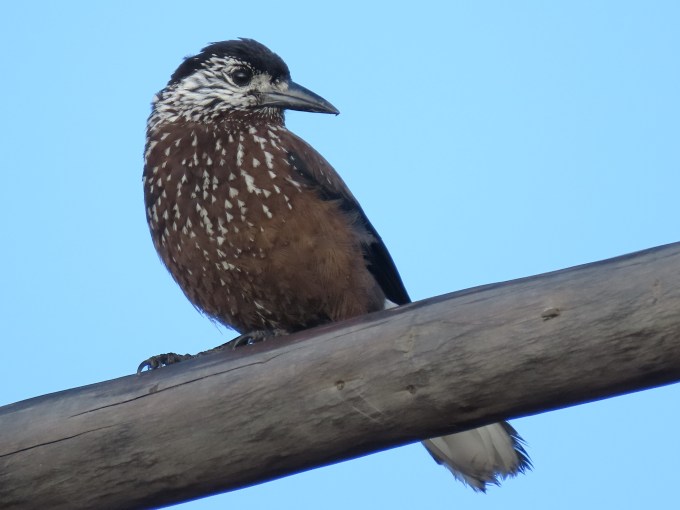
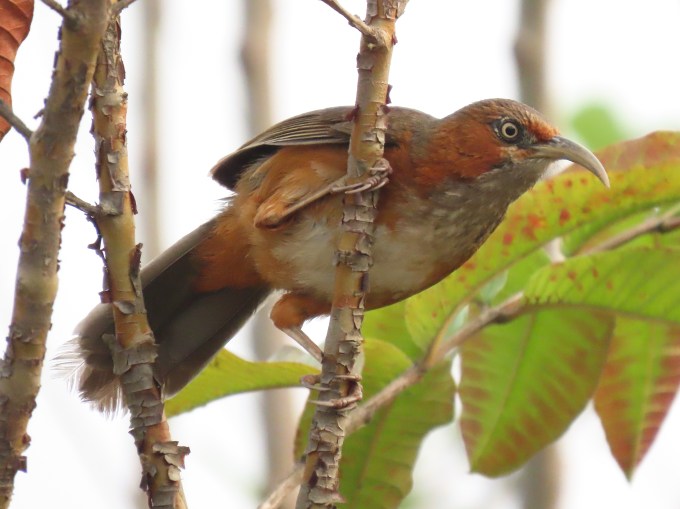
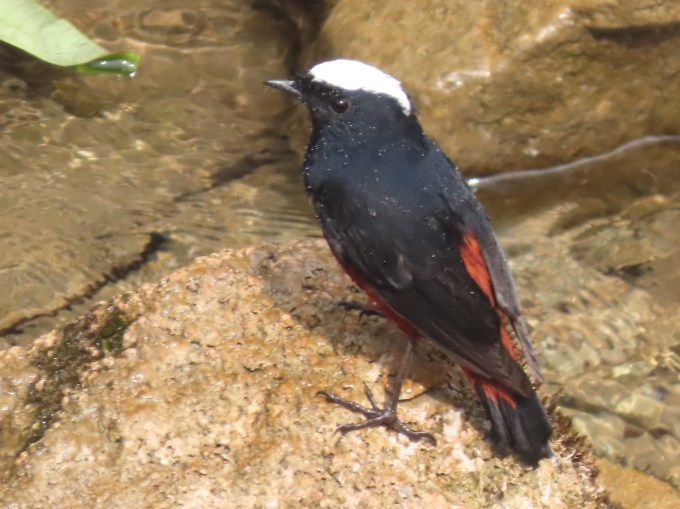
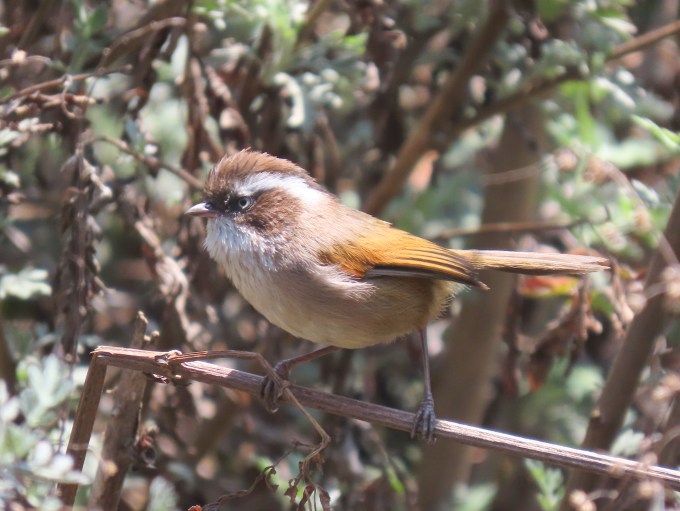
In our 16 days of birding, we tallied 303 bird species, of which 130 were new for us. We had so many favorites that the list could go on forever, but I’ll just note a baker’s dozen that were not already mentioned earlier and are not shown in the photos: Green-backed Tit, Collared Falconet, Little Forktail, Green-tailed Sunbird, Snow Pigeon, White-browed Rosefinch, Red-crested Pochard, Rufous-necked Hornbill, White-throated Laughingthrush, Himalayan Cutia, Yellow-rumped Honeyguide, Golden-breasted Fulvetta, and Darjeeling Woodpecker.

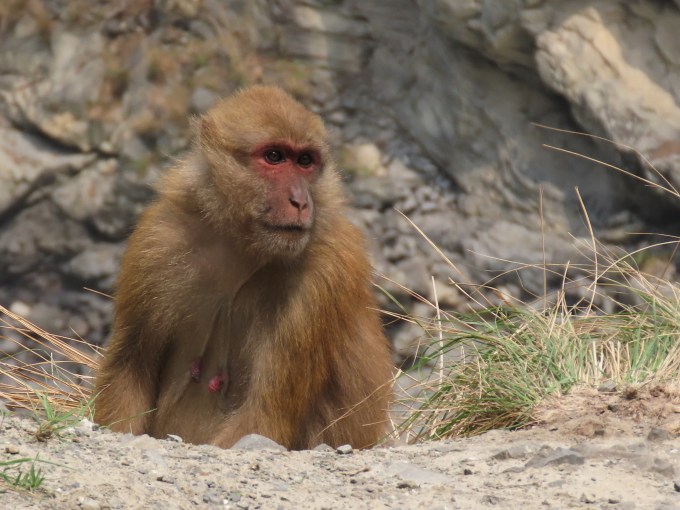
In between birds, we managed to identify 41 species of plants, 18 species of butterflies, 14 mammals, and a smattering of other life-forms. The mammal list was decent, including 11 entirely new species; 5 primates; and 5 squirrels. Aside from the Maned Serow, Eileen’s milestone species, the most memorable mammalian encounter ocurred as we were walking along a road in Royal Manas National Park. Upon coming around a slight bend, were confronted with an Asian Elephant bearing down on us, at a distance of perhaps only 50 yards! The group started to scatter, but fortunately the elephant veered off the road onto a footpath.

When we started the long voyage home from Paro, I turned on the timer on my phone to measure the total door to door travel time back, expecting it to be somewhat over 40 hours. Everything was going according to plan until we went through security at the New Delhi airport, where our Garmin InReach, a satellite texting and emergency device we carry, was confiscated as they apparently are restricted in India. I was detained for 9 hours, but our tour company asked a local business contact to come help us, and he met us at the police station and valiantly argued our case. Ultimately he told us that I would have to appear in court no matter what, but that the process could be “expedited” with an outrageous $2500 (!!) bribe. This of course had to be in cash, which we could hardly raise, but his supervisor agreed to bring the money and further negotiate my case.

Ultimately I had to sign a paper saying I would appear in court 8 hours later, and the police released me. I also had to be available for a possible interview with Counter-Terrorism, allowing me only three hours of sleep, but they passed on the opportunity, as was supposed to be the case given the bribe. Our local contacts kindly picked me up and brought me to court, where I was not the only unwitting tourist appearing for this offense. The fine was $12, half a percent of the bribe.
I immediately purchased new airline tickets at a steep price and we crammed everything we could into checked luggage, so we were taking almost nothing through airport security in our carry-ons. We expect a partial refund on our unused return tickets, but even so it appears that this incident will ultimately cost us something like $5500. If it were not for the extraordinary efforts of the two local businessmen to help us, we might still be there. We had plans to take a birding tour to India in the future, but we have now foresworn ever visiting the country again.

When we finally arrived back in El Paso, I checked my timer, and it said 68 hours, during which time we had just 3 hours of proper sleep in a bed, and some unsatisfactory subconsciousness on the Delhi to New York flight. And so we slept.
 Nomadic Naturalists
Dear Friends – That sounds like the beginning and end of a terrible nightmare… thank goodness you had a successful middle! That part was quite amazing!
India was such a spiritual happening for us…. but we didn’t have to deal with passing through the airport – just landing and taking off which was uneventful which now we know was a blessing!!
Hopefully you are recovering and digesting all you saw and experienced. That is the rewarding part! Take care, Connee and Bob ________________________________
LikeLike
Indian temperate coniferous forests are invaluable ecological assets that support a diverse range of species, regulate environmental conditions, and sustain local communities. Protecting these forests is essential for maintaining ecological balance, ensuring the continued provision of ecosystem services, and preserving the natural heritage of the region. Conservation efforts must focus on sustainable management practices, habitat restoration, and mitigating the impacts of climate change and human activities.
https://www.indianetzone.com/40/indian_temperate_coniferous_forests.htm
LikeLike
The Forest Owlet is a remarkable bird with unique physical characteristics and a very limited distribution in central India. Its survival depends on concerted conservation efforts aimed at preserving its natural habitat and mitigating threats from human activities. By understanding and protecting this rare species, we contribute to the biodiversity and ecological health of India’s forests.
https://www.indianetzone.com/75/forest_owlet.htm
LikeLike