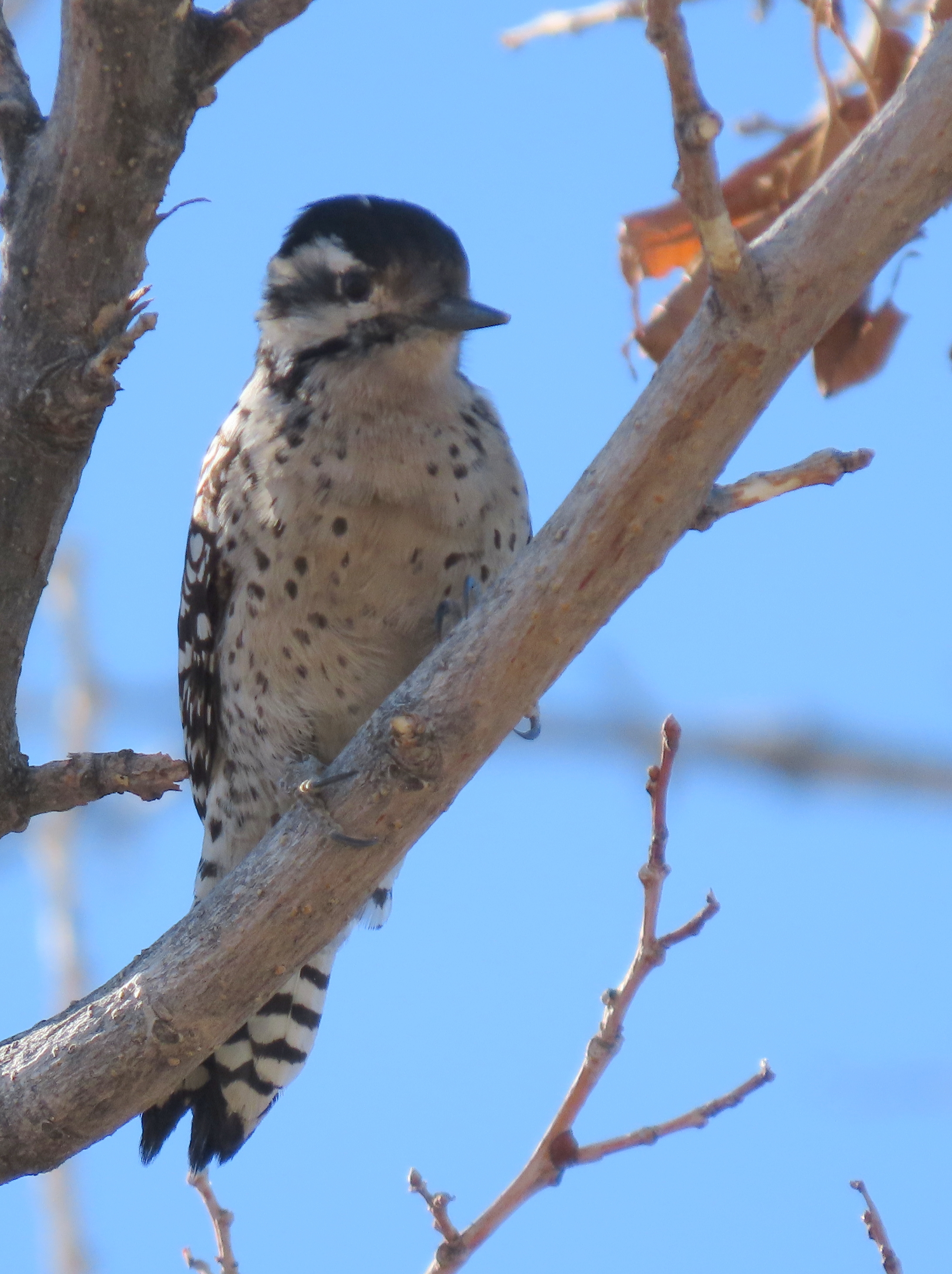
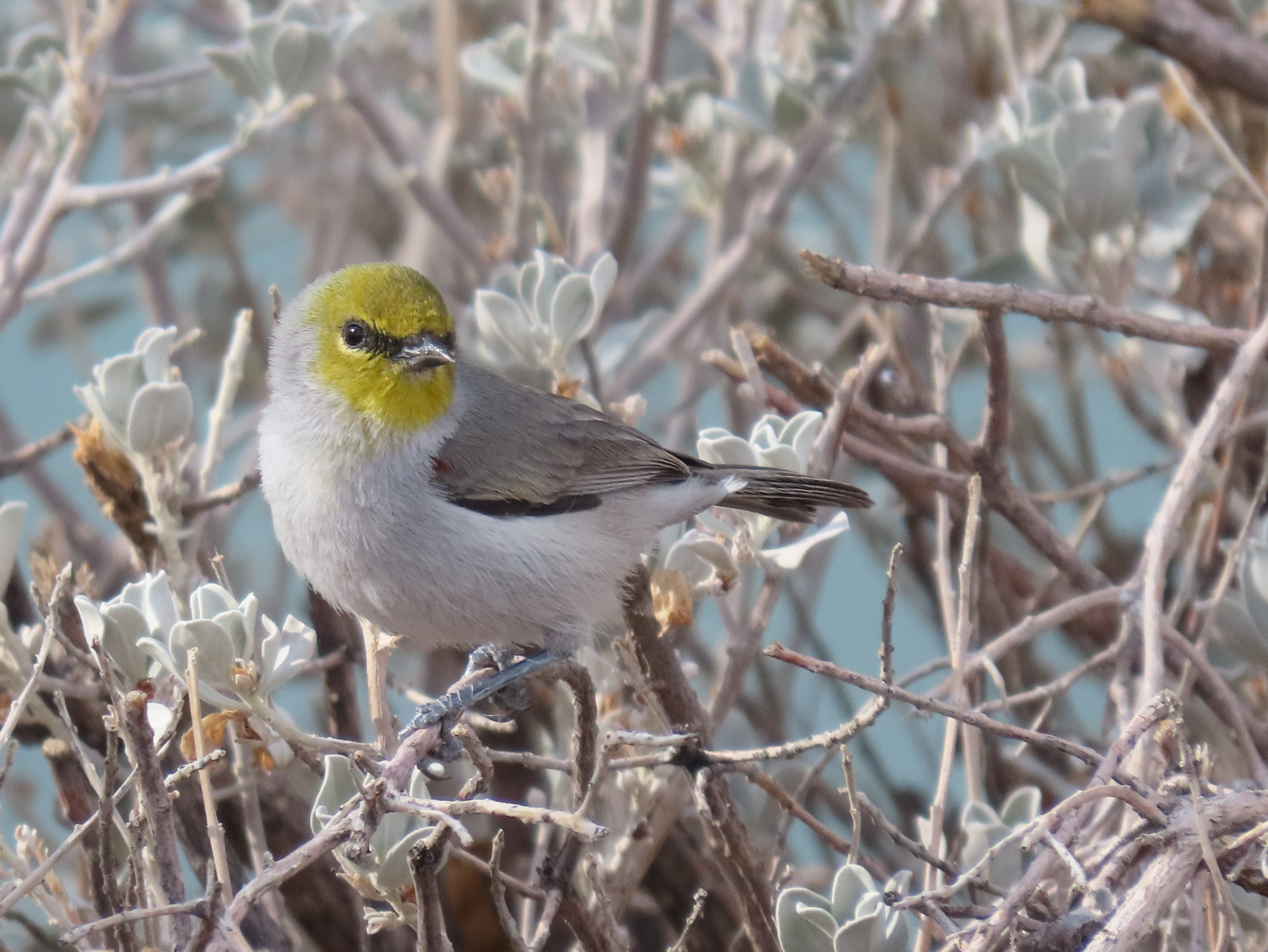
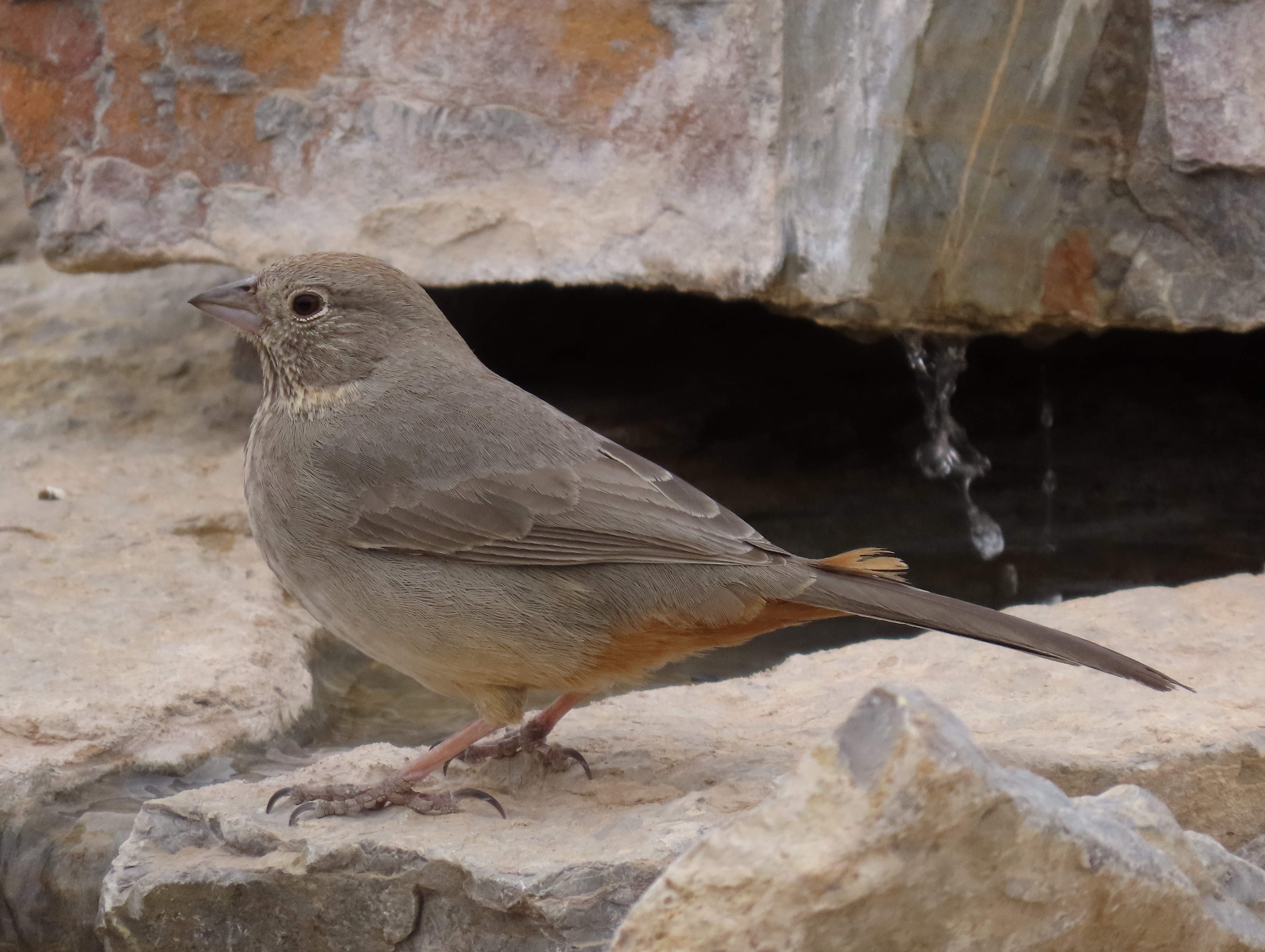
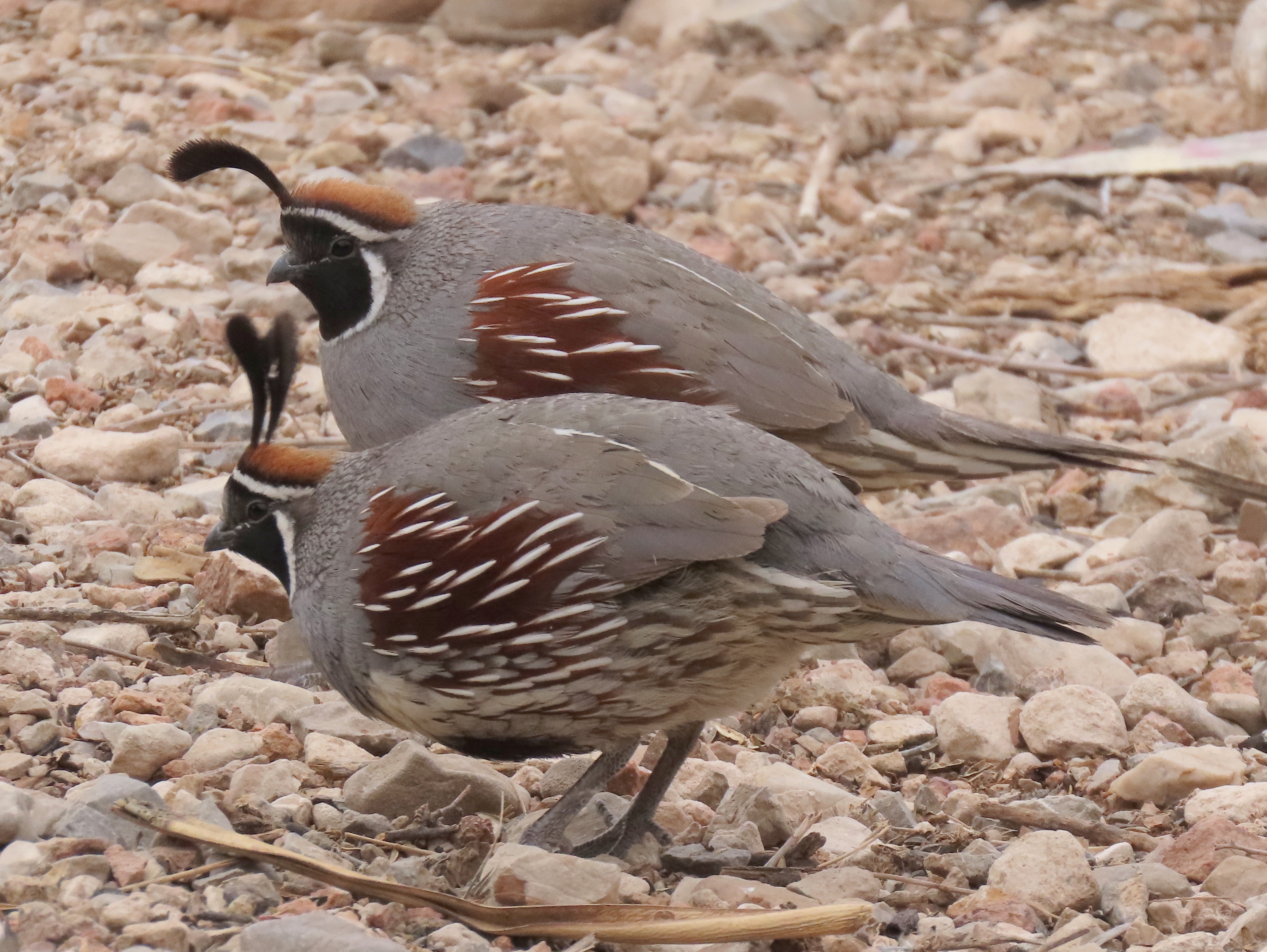
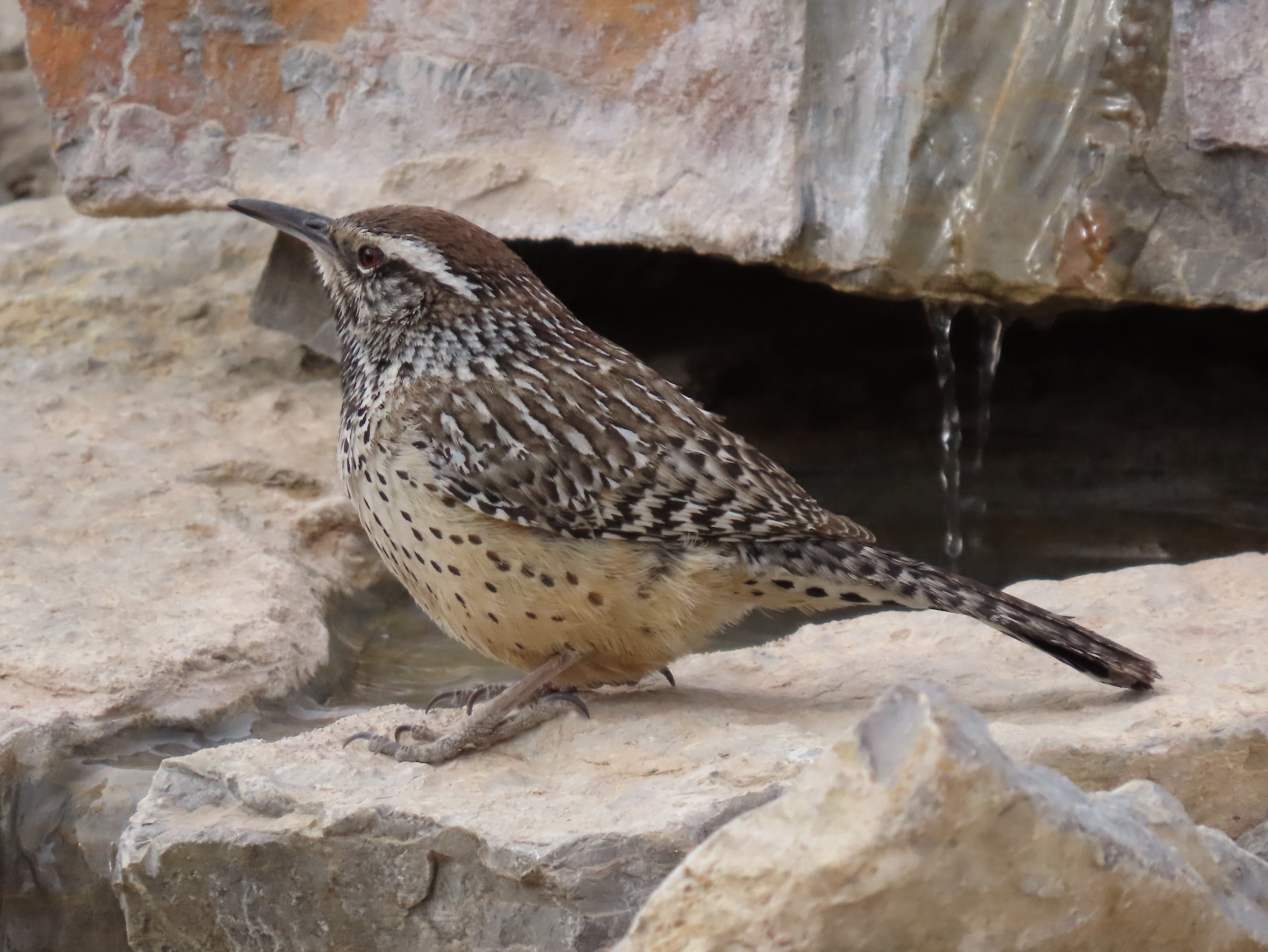
I am writing this blog post while camped in the Flamingo Campground in Everglades National Park, Florida. As a testament to how hot, humid, and buggy the region is at present, only six of over one hundred sites in the campground are occupied, whereas it fills to capacity in the winter. We left El Paso and started our road trip on May 5, so when we took our first “day off” in camp today, I figured it was time to write a blog post about our first month on the road. But by the time I finished writing the background material, the account was already nearly as long as a typical posting, so I will wait until next time to talk about our travels. But I’ve included some of the bird photos Eileen took over the winter in El Paso, while testing out our new Canon PowerShot SX70HS, which had been working well. Frankly, if you are not interested in taxonomy, now would be a good time to stop reading and just peruse her pictures instead. 🙂

We like having goals that guide us in planning our field work, particularly our road trips in the Continental U.S. and Canada (hereafter, CUSC). We expect to reach our only current regional goal, seeing 90% of native vascular plant genera, later this year, so we needed to start ramping up a new goal. As part of an effort to define such a goal, I spent a good part of the winter of 2023 – 2024 reviewing our past records to assign infraspecies (explained below) where we had not already done so, and where they were possible to determine. This involved my considering not only roughly 29,000 computerized records from CUSC, but also rereading all my hardcopy field notebooks, which I kept continuously from 1977 until a few years ago, when I migrated to electronic form. This was quite an undertaking, which I enjoyed very much – it was quite a jaunt down memory lane!

As background, there can be significant variation within a species that is not related to age or sex, and in such cases, biologists often define a taxonomic entity (taxon) below the level of species to categorize this variation. The most general term for such a taxon is infraspecies. Initially, botanists used the term variety (abbreviated var.) for such infraspecies, and essentially the only criterion for naming a variety was recognizing some sort of observable differences between individuals, usually a morphological difference. For example, some authorities have recognized four varieties of Cut-Leaf Grape Fern, Sceptridium dissectum, based on the shape of the leaf and its segments. We have seen two of these varieties, var. dissectum and var. obliquum, growing right together in the Moose River Plains (Adirondack Mountains, New York), where they were very different in appearance.

Zoologists developed a different infraspecies concept, the subspecies (abbreviated ssp.). Like a variety, it required some sort of observable differences between individuals, but in addition, there had to be some degree of geographical separation between the different subspecies of a species. To be more precise, if a species is broken up into subspecies, then the distributions of the subspecies should meet two ciriteria: (1) the breeding ranges of the subspecies must add up to the full breeding range of the species (with no gaps); and (2) the breeding ranges of the subspecies should not overlap excessively, so that there is some degree reproductive separation between them. Narrow zones of intergradation between the subspecies are expected and acceptable. For example, the Palm Warbler (Setophaga palmarum) has two subspecies that are usually readily distinguished by the extent of yellow on the underparts. Subspecies hypochrysea breeds from Quebec and Labrador to New York and Maine, whereas ssp. palmarum breeds farther west, to the Northwest Territories and Alberta. There is a narrow zone of intergadation in western Quebec, and they overlap some in migration and significantly on the wintering grounds.
Scientific names must contain a genus (capitalized) and an epithet (lowercase, often just called the “species”), and they are frequently referred to as binomials. Consequently, we often informally refer to infraspecies as trinomials; as an example, the Grizzly Bear found in most of western Canada is Ursus (genus) arctos (epithet) ssp. horribilis (trinomial). Now to confuse matters, eventually some botanists decided that the zoologists’ subspecies concept was also useful, and began naming some infraspecies of plants as subspecies. So plants can have either varieties or subspecies, although many taxa named as varieties actually meet the narrower definition of subspecies, and some subspecies would probably have been more accurately considered varieties. To make matters worse, though it is rare, a plant subspecies can have varieties, but not vice versa. For example, the Common Hoptree (Ptelea trifoliata) can be divided into four subspecies, one with four varieties, and one with two. We don’t normally keep track of “quadrinomials”, but I do know that we have seen Ptelea trifoliata ssp. pallens var. confinis in Colorado.

We started routinely identifying plants to infraspecies around 2007, but we still had well over 20,000 regional plant records with no trinomials noted. Many of these would be for monotypic species (having no infraspecies), but this still had to be checked. For this, I used the indispensable Floristic Synthesis software from the Biota of North America Project (BONAP; link), the taxonomic authority we follow. I wrote Perl code to check all our plant records against the BONAP database to flag records of polytypic species (those with infraspecies) for which no trinomial was assigned, and then I manually checked these against the BONAP range maps. This was a lot of work but also fun as I find biogeography (the study of organism distributions) to be fascinating.

Unlike with plants, we had never gotten in the habit of regularly noting animal subspecies. Herps (reptiles and amphibians) were pretty easy because the Peterson Field Guides have good maps showing the ranges of subspecies. Mammals were more difficult; the “Illustrated Checklist of the Mammals of the World”, published by Lynx, has word descriptions (not maps) of subspecies ranges, but these vary in specificity and often do not allow assignment of a trinomial. In addition, some mammals have too many described subspecies to have much chance of determination; for example, the common pocket gopher of the southwestern U.S. and northern Mexico, Thomomys bottae, has had nearly 200 subspecies proposed, though the “Illustrated Checklist of the Mammals of the World” conservatively accepts only 128! For comparison, I believe that the bird having the most subspecies in CUSC is the Horned Lark with 20 infraspecies, of which we have seen 11. In some cases, the Global Diversity Information Facility (link) has range maps for subspecies, but their data is harvested from many sources and must be used with caution.
For bird subspecies, my primary reference was the venerable 1957 “Check-List of North American Birds” (Fifth Edition). However, when available for subspecies, I used Paul Lehman’s excellent maps in National Geographic’s “Field Guide to the Birds of North America” (Seventh Edition), my favorite bird book for the region. I also used Cornell’s “Birds of the World” website (link), which requires an annual subscription fee for access to detailed information such as subspecies. Many of the “Birds of the World” subspecies accounts are works in progress, but are still often helpful and frequently very interesting.
Determining bird subspecies can be very difficult as so many species are migratory and the subspecies may overlap substantially in range except on the breeding grounds, creating a narrow window during which they can be assigned with any confidence. But an even larger problem for me was that so few of our CUSC bird records were computerized. Back in the early 1990s, we had no digital records at all. One winter, Eileen worked through about fifteen years of my field notebooks, typing all the records (except of birds) into a text file using a customized text editor and file format I created to make the process as efficient as possible. There were simply too many bird records to attempt to transcribe them. Later, we acquired AVISYS software for keeping track of bird records on our international birding trips (the first one being to Costa Rica in 1994). So we ended up with a rather strange situation, having all our natural history records computerized except for birds in CUSC. I did have my life list of birds (dates and locations of first sightings only) in a hardcopy book, the first edition of the Clements Checklist, and I did enter these into AVISYS, but otherwise, bird records were simply dispersed across hardcopy field notebooks.

This situation has irked me for decades but the infraspecies project last winter provided an ideal opportunity to address the situation. While reading through all my field notebooks, I looked for bird sightings that were either a first record of a subspecies and/or a first record in one of sixteen subregions I defined in CUSC. This approach allowed me to transcribe a diverse subset of bird sightings of particular interest, rather than entering hundreds of records of a common species. Ultimately, I added about 3600 bird records from CUSC to our database, a very satisfying result.
Once all the data entry was done, it was time to compile statistics. Answering the seemingly simple question “How many distinct taxa have we seen?” requires a bit of thought. Suppose our life list contains five sightings: we have seen Species A twice, and Species B, which has four infraspecies, three times. The first time we saw Species B we were uncertain which infraspecies was represented; the second time we identified it as Infraspecies 1; and the third time as Infraspecies 2. This list of sightings could then be represented as A/A/B?/B1/B2. Because the first sighting of Species B could be Infraspecies 1 or 2 (or 3 or 4) – we don’t know – the first sighting of Species B may not be distinct from the other sightings. So there are only three taxa in our list of five sightings that are guaranteed to be distinct – A, B1, and B2.
As of the end of the 2023 field season, our records contained 8824 distinct taxa of native plants and animals in CUSC. During the course of the winter project, I was able to add 535 new infraspecies through research, and thus we started our 2024 road trip with 9359 independent taxa. So, as you have probably guessed, our new natural history goal in CUSC is to reach 10,000 distinct native taxa. One nice aspect of this goal is that it gave us some bird taxa as targets. I’ve only seen seven new bird species in CUSC since retirement in 2016 (Common Greenshank, Golden-crowned Warbler, Bristle-thighed Curlew, Falcated Duck, Cassia Crossbill, Crescent-chested Warbler, and Rufous-capped Warbler), and Eileen has added these and three more species (Bar-tailed Godwit, Kittlitz’s Murrelet, and Berylline Hummingbird). Only the curlew and crossbill resulted from long-planned searches, the others being more opportunistic events. So we have not spent much time in recent years focused on tracking down specific birds in our homeland, and it is fun to have some avian targets this year for variety.

There are roughly 740 species of native birds that occur regularly in CUSC, of which about 45% are monotypic; 21% are polytypic but with only one subspecies in the region (others occurring elsewhere in the world); and 34% have multiple subspecies occurring in the region. The roughly 250 species in the latter category have about 950 subspecies in aggregate, of which I had seen about 660 as of 2023, leaving about 290 potential new subspecies in CUSC. This sounds like a lot but many breed in areas that are problematical to reach, and there are no areas where missing subspecies are really concentrated. There are a fair number along the Pacific Coast from San Francisco Bay to Anchorage, but quite a few of these are restricted to offshore islands with no or difficult access. As a calibration, in 2024, with the breeding season spent traveling principally in coastal states from Texas to Virginia, we’ll only have opportunities to try for about 30 new subspecies of birds – but the searches will be fun! I’ll report on those and other aspects of our travel in the next blog post.
 Nomadic Naturalists
From Evelyn: Yikes, I read through most of it and do not envy your feather-splitting problems! But those pictures–scaled quail! White-winged Dove!
My son, his wife and I took a trip to the Zion and Bryce area a few weeks ago. It was a blast, my Last Hurrah. I will certainly never fly again. I had studied up on the natural history and did ID lots of things. I did not get to see a condor, however. But let me run one bird by you–ignore if you can’t tell. A maybe grackle-sized totally black bird in an open field full of fruiting cheatgrass, moving back and forth to some brush in the middle. It had a very long narrow tail (not like the great) which he kept raising abruptly, high!, weirdly, as it moved around. I have never seen a bird do anything like this but nobody mentions it!
Good to know grapefern can vary so much. — Now I have a big fern which I can’t figure out but I am taking Steve Young (retired Nat. H rare plant man) and his wife to a local pond tomorrow and will show it to him. We all have solo boats, and there should be 1500 rose pogonia there around all the edges. It’s a magical place. We have to carry on a bushwhack trail for a short way,
Evelyn G.
LikeLike
You guys are amazing!
LikeLike
I really enjoyed this one. Thank you!
LikeLike