Since retiring in late 2016, each of our annual road trips have had some sort of theme that strongly influenced the broad itinerary, and to some degree tied together the field work being done that year. In 2017, the theme was grasslands; in 2018, new vascular plant families; in 2019, the western Arctic; and in 2020, the Great Basin and adjacent Rockies. From 2021 to the present, the overarching goal has been to find 90% of the roughly 2100 native vascular plant genera in the Continental U.S. and Canada (CUSC).
When this project started in 2021, we had seen 71% of the genera, and a year of intense botanizing in Texas, New Mexico, and Arizona brought us nearly to 80%. In 2022, we focused on the Southeast, including Appalachia, and increased the total to 85%. 2023 found us primarily in the interior West, reaching 89% at year-end. A careful review of the remaining genera we had not seen revealed that to reach 90%, we would have to return to Florida or Southeast Arizona, or more likely both, in warmer months.
So our 2024 plan was to travel around Florida and the Southeast in the spring and early summer, return to El Paso for a birding tour to Papua New Guinea, and then cover Southeast Arizona to West Texas in the early fall. We needed to find 19 genera to reach 90%, and our route would provide chances to look for about twice this number. The previous blog post covered our travels through the Florida Keys, during which we searched for 20 genera and found 12. But plans changed when we learned, while on the road, that the Papua New Guinea trip was cancelled due to an insufficient number of participants, an indignity to which we had not been subjected previously in about 20 tours. This left a large hole in our schedule.

Eileen is a serious Civil War afficionado, studying it daily and reading primary literature. As there were a number of key battlefields she had not seen in Virginia, we decided to break from our planned route in South Carolina, and spend 3 weeks exploring those sites, as well as Antietam and Gettysburg, which she visited in the late 1980s. But once as far north as Gettysburg, it seemed a good idea to continue to Rochester, NY to visit friends, and do some canoeing in Canada, before picking up the original route again in Alabama. So this blog post spans the rather lengthy period from June 10 to August 16 and covers our travels north from Florida to Canada.
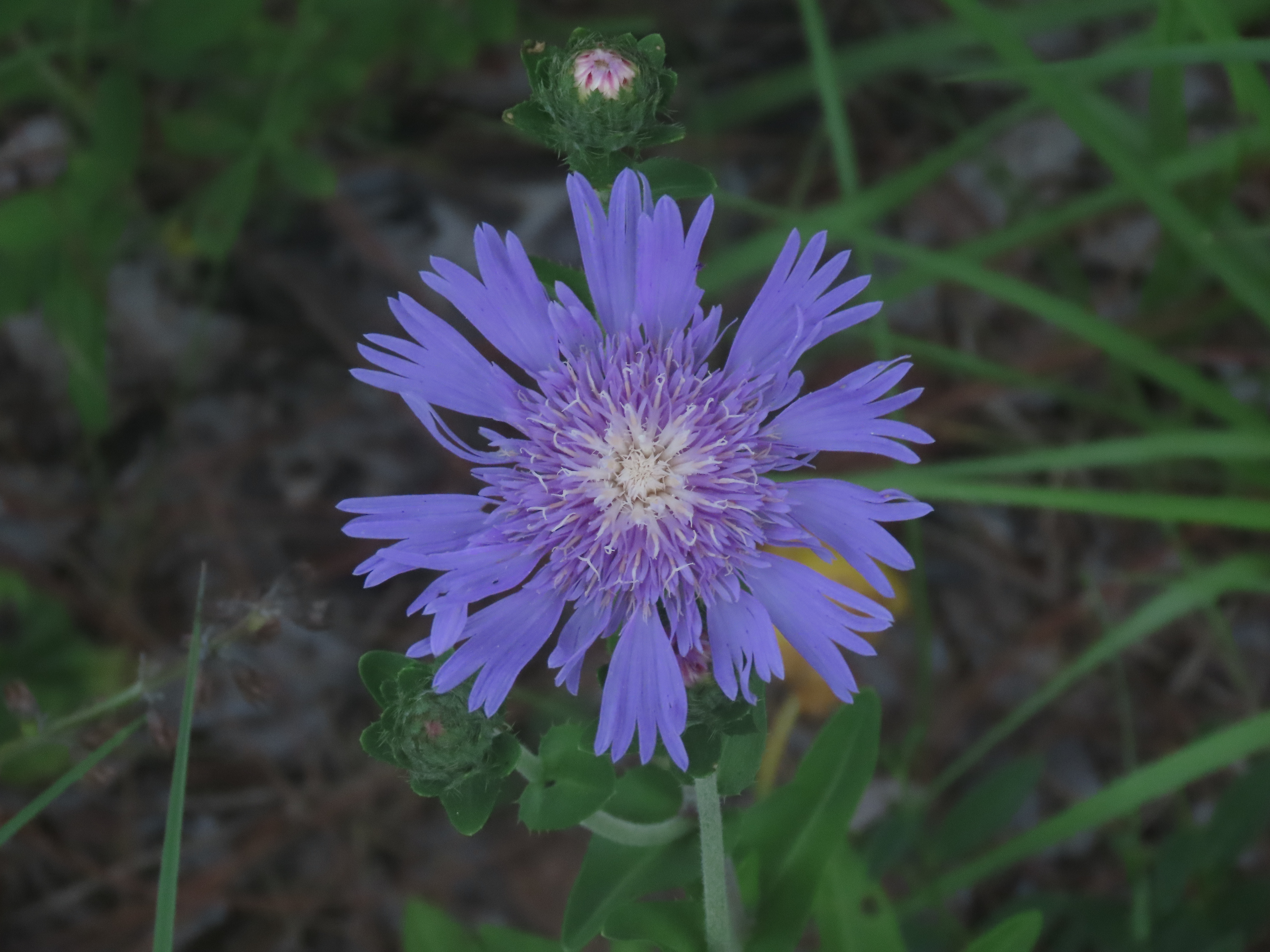
On June 12, we fled the Everglades and drove to Tampa to escape a tropical depression predicted to massively flood southern Florida, which it in fact did, so we were glad we absquatulated. Along the way we made one quick stop to look for an unremarkable orchid in the new genus Triphora, which we quickly found during a brief lull between thunderstorms. A second full day of driving, to the Tallahassee area, put us out of range of the storm system. We had just enough time before camping to check a location where, 23 days earlier, we had seen foliage we believed belonged to the unusual aster family genus Stokesia. At that time there were no buds even, so it seemed like it would be a while before the plants flowered, but we thought we’d check anyway. You can imagine our shock at finding multiple colonies producing swaths of azure in wet depressions along the road! We have sought both of these genera previously, and it felt great to see them at last.

We had a lovely 6.5-mile paddle up the St. Marks River on our 38th anniversary, with a singing Swainson’s Warbler a pleasant surprise. The next day we finally saw our first Black Bear in Florida, in Tate’s Hell State Forest. We next headed to the Georgia and South Carolina coasts to look for bird and mammal subspecies missing from our records, and were pleased to add trinomials of Raccoon, White-tailed Deer, Clapper Rail, Seaside Sparrow, and Marsh Wren. There are quite a few deer subspecies isolated on offshore islands; we found hiltonensis on Hilton Head Island and venatorius on Hunting Island.
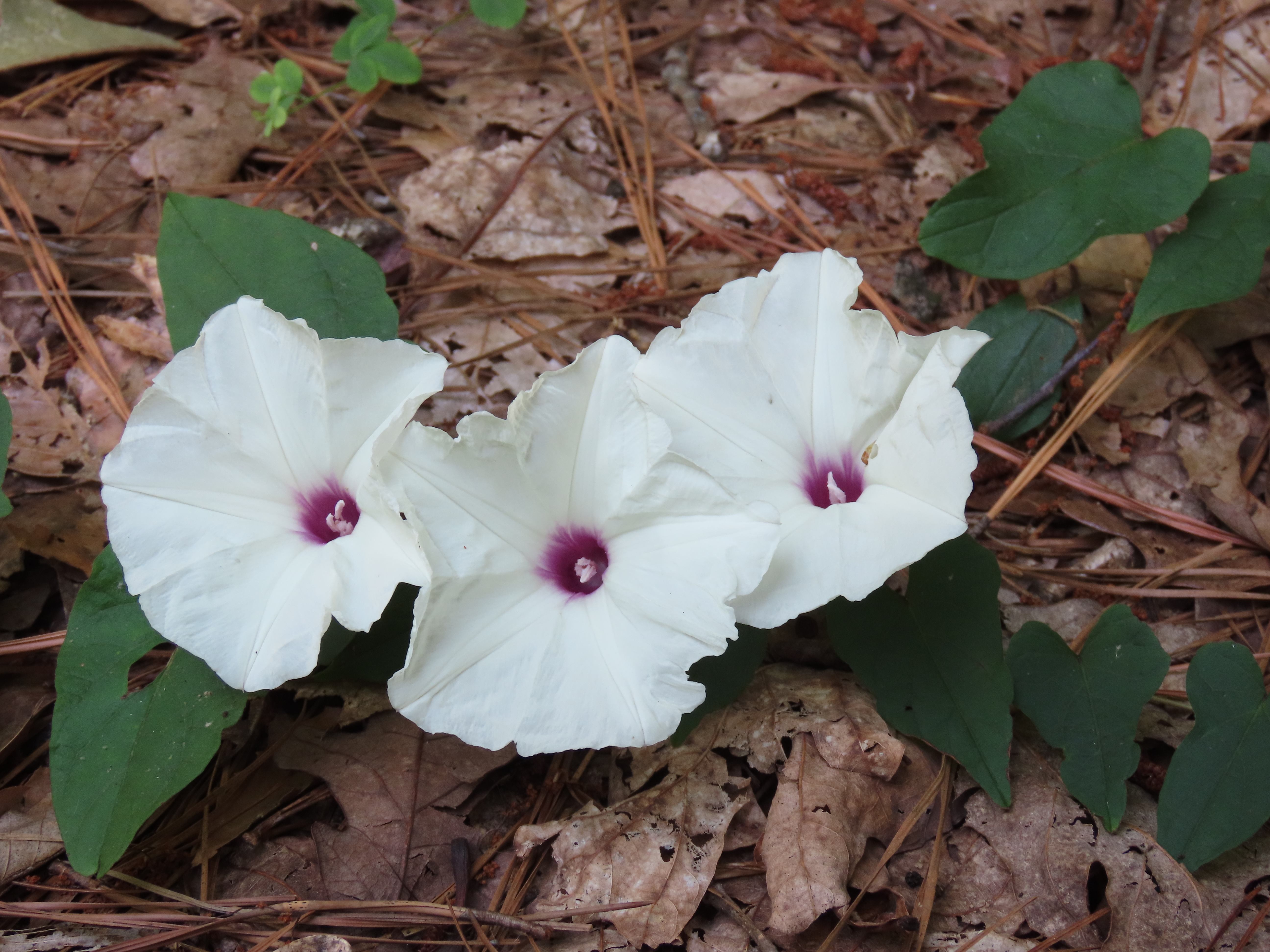
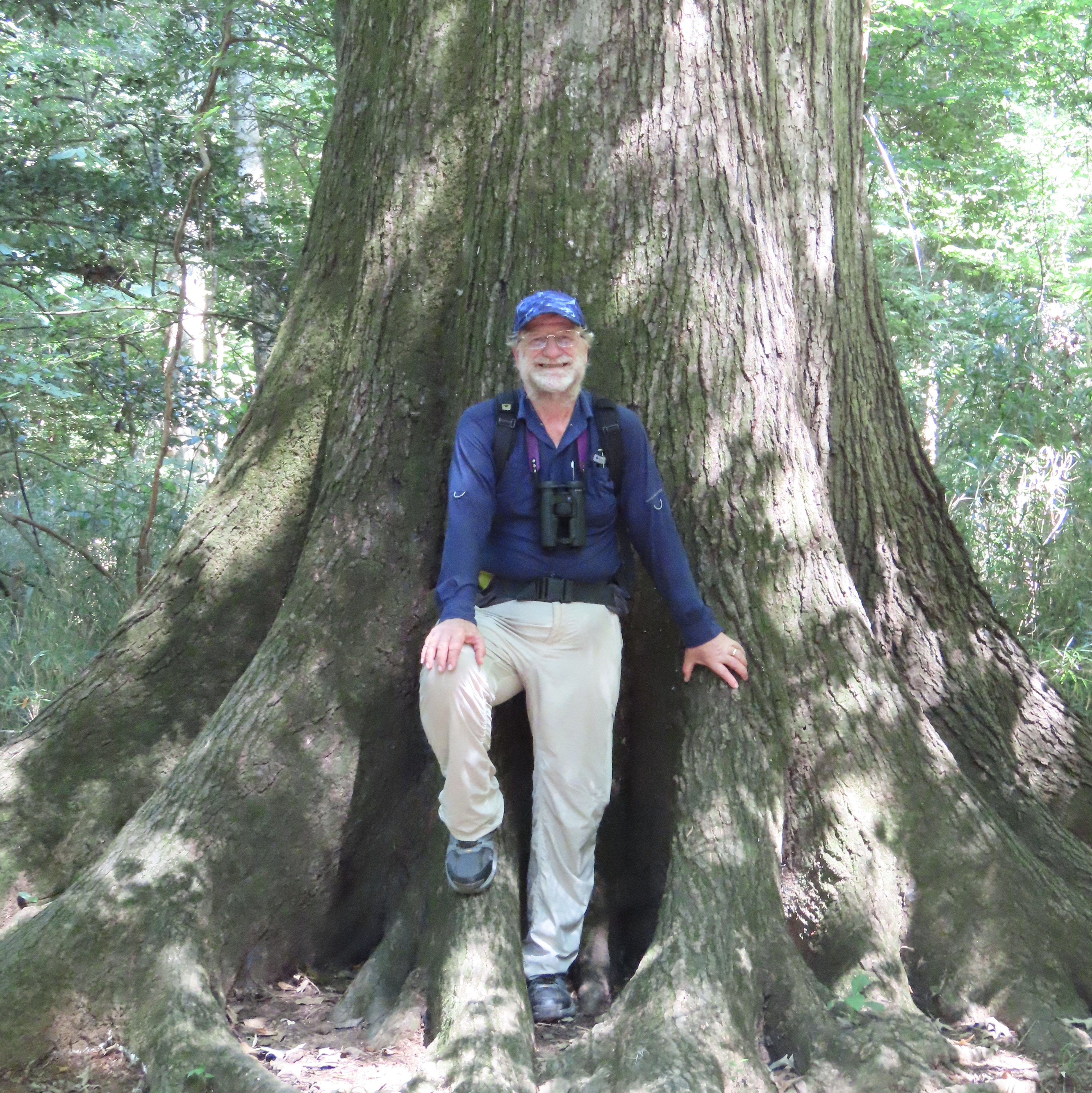
Cutting inland towards Congaree National Park, we stopped at some sod farms to see the practicola race of Horned Lark, our 12th of 20 subspecies in CUSC. I wonder where these obligate short grassland birds bred in the Southeast before Caucasians cleared the land? At Congaree NP, we tracked down two more new genera, Cayaponia (a gourd family member) and Macbridea (a very uncommon mint), as well as seeing two new oaks. This park is most famous for its synchronous fireflies (there is a lottery to get in) and its exceptionally tall forest canopy, with many champion trees (world’s tallest for a particular species).

The next three weeks were spent touring Civil War sites, including: Petersburg, City Point, Drewry’s Bluff, Sailor’s Creek, Appomattox, Five Forks, Cold Harbor, Gaines’ Mill, Malvern Hill, Manassas, Fredericksburg, Chancellorsville, Spotsylvania Courthouse, The Wilderness, Cedar Creek, Antietam, and Gettysburg. The Gettysburg Visitor Center deserves special mention; constructed in 2008, is very impressive and does a good job of explaining the entire war in an unbiased fashion. I snuck in one plant genus search during this time, for the grass Greeneochloa, which we found, leaving us just two genera to go to reach 90%.

Eileen became the most recent casualty at the infamous Bloody Angle, on the Spotsylvania battlefield, as her left knee, which had slowly become inflamed over several days, flared up dramatically there, leaving her unable to walk at the end of the day. We visited an emergency room, where they tentatively diagnosed the culprit as the medial meniscus, and gave her a knee brace, crutches, and Ibuprofen. As of now, five weeks later, she is no longer using any of these, but she still is walking hesitantly and minimizing steps per day, in hopes of being fully healed in time for a birding tour to South Africa in October.
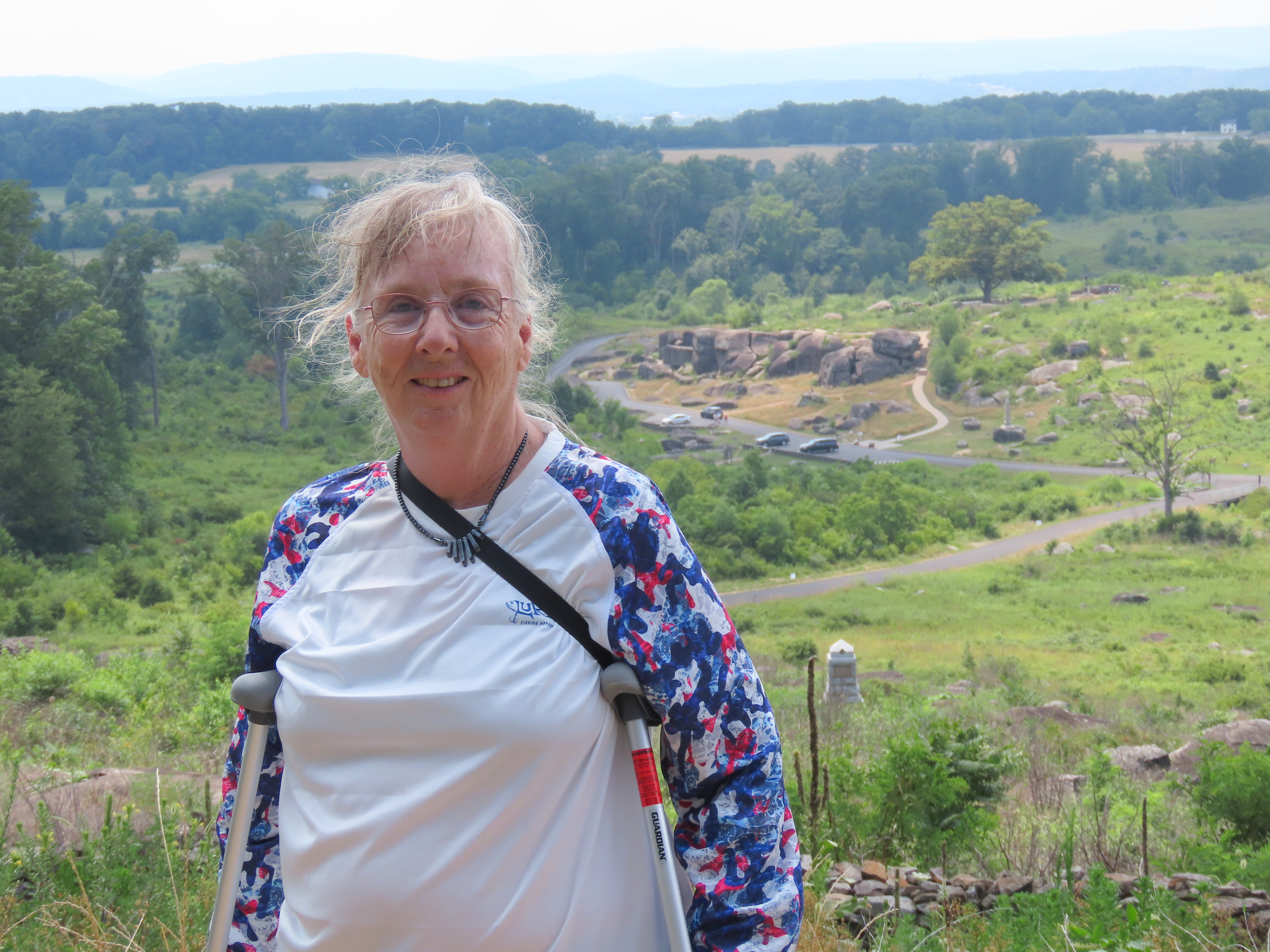
At the end of 2022 I wrote a blog post entitled “A Year of Profoundly Uncomfortable Camping”, but I should have reserved that title for this year, when we experienced crushing heat and humidity for over two months, with only a few days of respite. My daily notes reveal that on July 1, we turned off our air conditioning while in camp, for the first time in 55 days. While touring the battlefields, we had heat advisories nearly every day, with heat indices reaching 109.
We met up with many friends while in Rochester for a week, which was great fun. Allan and Andrea again kindly allowed us to camp in their driveway, which we greatly appreciate. From there, we took a 3-week foray principally for canoeing, which Eileen could do if we avoided portages. Allan joined us for the first couple of days, during which we stopped at the Clark Reservation State Park, near Syracuse, NY, to look for another grass genus, Patis, which always occurs on calcium-bearing rocks. This we readily found, leaving just one genus to go. Clark Reservation is notable for fern diversity and its interesting Glacier Lake, an outstanding example of a plunge basin, a pool created by a massive waterfall of glacial melt hollowing out a depression at its base. Equally remarkable, Glacier Lake is meromictic, meaning that its shallower and deeper waters never mix, a very rare condition.

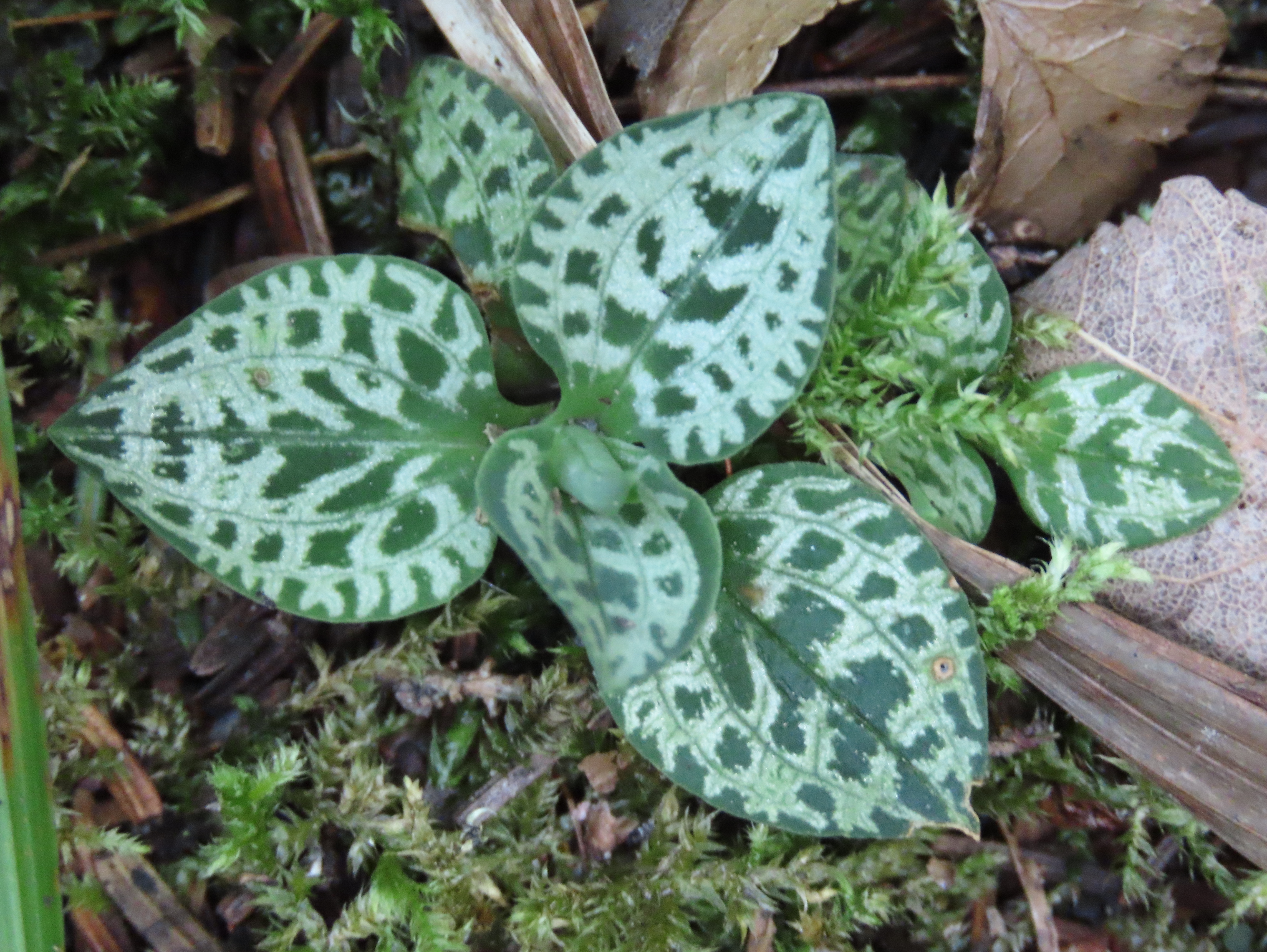
We then camped at Helldiver Pond in the Moose River Plains, the heart of the area in which we did our 6-year study of vascular plants starting in 1995 (link). We ultimately found 522 species in the area and collected just under a thousand specimens plus duplicates, all of which have been donated to museums in New York State. A surprise here was finding the small orchid Goodyera repens, one of the rarer plants in our study site, which has beautifully variegated leaves. We also started working on learning some of the mosses and lichens that are so prevalent in boreal habitats, which was fun.
On the way out of the Plains, we were pleased to catch up with our friend Gary, a retired forest ranger. We next camped and paddled on Lake Champlain to look for a new sedge genus, but water levels were too high. The next 20 days were spent visiting a series of Canadian parks. We started at Algonquin Provincial Park (PP) in Ontario, a favorite destination, which we have visited 20 times. Here we paddled for three days, seeing Beaver and Merlins especially well; the latter is a small falcon that specializes in catching songbirds as they fly across bodies of water.
Next were Esker Lakes and Kettle Lakes Provincial Parks, both north of 48 degrees latitude in Ontario and new for us. These parks contain a number of small lakes formed when blocks of ice separated from glaciers, then were at least partially buried by glacial debris, and finally melted, filling their depression with water. Such lakes have no streams or rivers flowing into or out of them and so are hydrologically isolated. We had some nice flocks of migrating songbirds in these parks, with 8 species of warblers in Esker Lakes on August 3. But at the same time and place, Red-eyed Vireos were still feeding young, probably from second broods. When I was first birding, in the 1960s, conventional wisdom was that songbird migration started around Labor Day, but it is now known that there is considerable movement in August.

Crossing into Quebec, we made our way to another new park for us, Opemican National Park, established in 2013 and opened in 2018. Bizarrely, although it is called a national park, it does not appear on the Canadian national government’s official list of national parks, but only on Quebec listings, so I suspect it was named “national park” by the province without actually being one. We did two nice paddles here, one crossing the Ottawa River (here broadened into Lake Temiscaming), the other exploring many lovely islands in Kipawa Lake. We had a nice selection of lichens where granitic cliffs plunged into the water and could be closely approached by canoe. I hiked several short trails in the Inukshuk area as well.
On our return trip, we again stopped in Algonquin for a few days, to break up the drive. On our last day, our 25th day of paddling this year, the parking lot at the boat launch was full, so I dropped Eileen and the canoe off at the launch, and drove the camper to overflow parking. Walking back, I was thinking about some maintenance I should do on the canoe afterwards, and watching the road for vehicles, when a botanical alert neuron fired. I turned, expecting to see some non-native weed that should not be growing there in the forest … and instead, in the course of no more than three seconds, thought: family Asteraceae; bluish, axillary heads; tribe Gnaphalieae; holy *&%!, it’s a new genus – Omalotheca! To absolutely nail the identification, I dissected a flowering head under the microscope that evening, confirming that only a few central flowers in each head had stamens, but there was no doubt in my mind that it would be our 90% milestone genus.
Though a generally unremarkable plant, it actually was a very exciting way to reach 90%, as it was found in one of our very favorite places, and was a serendipitous find – I was not looking for it at a known location, but just stumbled upon it. I was aware that there were records from elsewhere in Algonquin, and we had looked for it several times unsuccessfully in the past, but it was not top-of-mind. To put this in perspective, we had not found a new genus serendipitously since 2022 – all 96 new genera in 2023 and the first 18 of 2024 were all seen at specific sites where we knew they occurred and we were actively looking for them. I drove Eileen there after our canoe trip and we admired this milestone plant, an unexpected and very satisfying culmination to four years of field seasons of work.

 Nomadic Naturalists
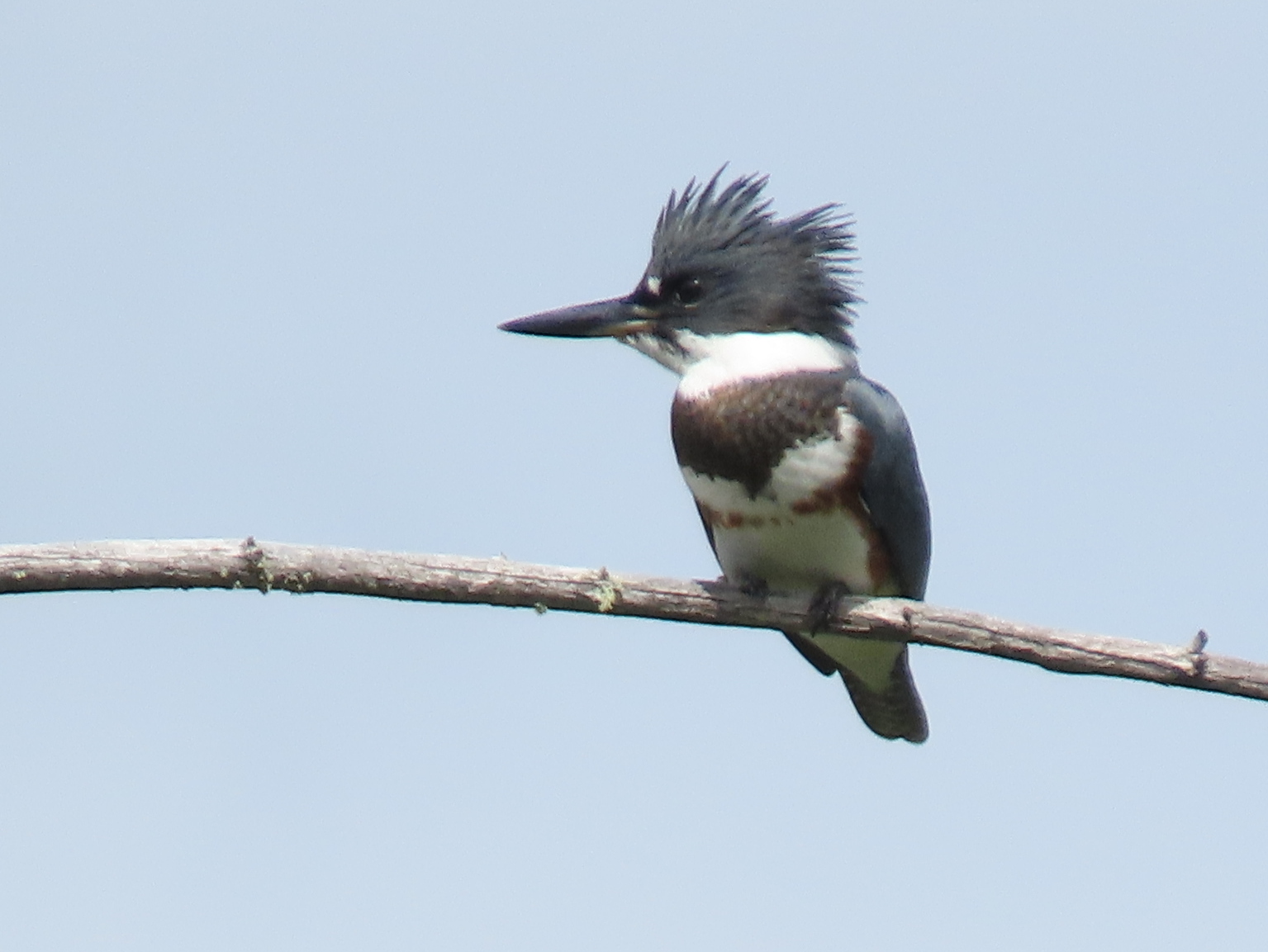
Wonderful, as always. I hope Eileen recovers rapidly (or rapid-li-er). I would love to see your itinerary in the Cape Town environs as I have botantist friends who are heading there in December and they need ideas! Love the Belted Kingfisher, well, I could list all the things I love about this post (except the heat, humidity, and the knee), but then it would be as long as your original! Thanks for keeping me informed.
LikeLike
I enjoy receiving your travel logs. You mentioned Southeast Arizona as a place where you may find more genera to make it to 90%. Specifically which genera are you in search of in this region? I’ve conducted rare plant surveys in much of the Sky Island region for species within genera like Hexalectris, Manihot, Amoreuxia and Graptopetalum.
Let me know If I can help!
Saludos,
Myles
Myles Traphagen
Borderlands Program Coordinator
Wildlands Network
(520) 991-6368
300 E. University Blvd. Suite 264
Tucson, AZ 85705
http://www.wildlandsnetwork.orghttp://www.wildlandsnetwork.org
LikeLike
Congrats on all the new finds and here’s to 90%!…. And so glad Eileen is recovering and hopefully, ready for your next new adventure.
Happy Travels, Connee and Bob
LikeLike
Wow! 90%!! I hope Eileen recovers quickly so you can have a great tour. I’m so glad to get your blog. I’m retiring from the Dallas Symphony at the end of this season and Ralph and I will move away from Texas immediately. We are debating between Philly and Portugal at the moment. We will probably be in Philly for a bit even if we decide on Portugal. Please let us be on your list of people to breeze by when we get to the East Coast. Happy Travels, Valerie and Ralph
LikeLike
It’s good to hear from you, Valerie and Ralph! Eileen says hi; she’s doing a lot better after a cortisone shot. Congratulations on your upcoming retirement — I am sure you both will enjoy it! For whatever time you are in Philadelphia, you can enjoy fabulous birding at Cape May and Brigantine Refuge (now Edwin B. Forsythe NWR). We’re leaving for a 3-week tour to South Africa — at long last — on Friday. Take care, Brian
LikeLike