We traveled from October 4 – 27 to South Africa with Field Guides, Inc. The trip had two excellent leaders, Terry Stevenson, with whom we visited Kenya in 2006; and Tarry Butcher, who we met on this tour for the first time. We enjoyed generally good weather except on one day of blustery rain in mid-elevation grasslands, which cost us several bird and mammal species. We even managing to take a pelagic trip out of Cape Town under what locally passes for fairly calm conditions, though I probably would have been seasick without Scopolamine. We had a very nice group of ten participants, two of whom we already knew from a past tour. Accommodations, food, and the vehicles were all good. Many areas we visited were experiencing droughts, so we encountered virtually no insects, though we might have had better floral displays had there been more rain (though we were also a bit late in the season). All in all, it was a very comfortable trip.
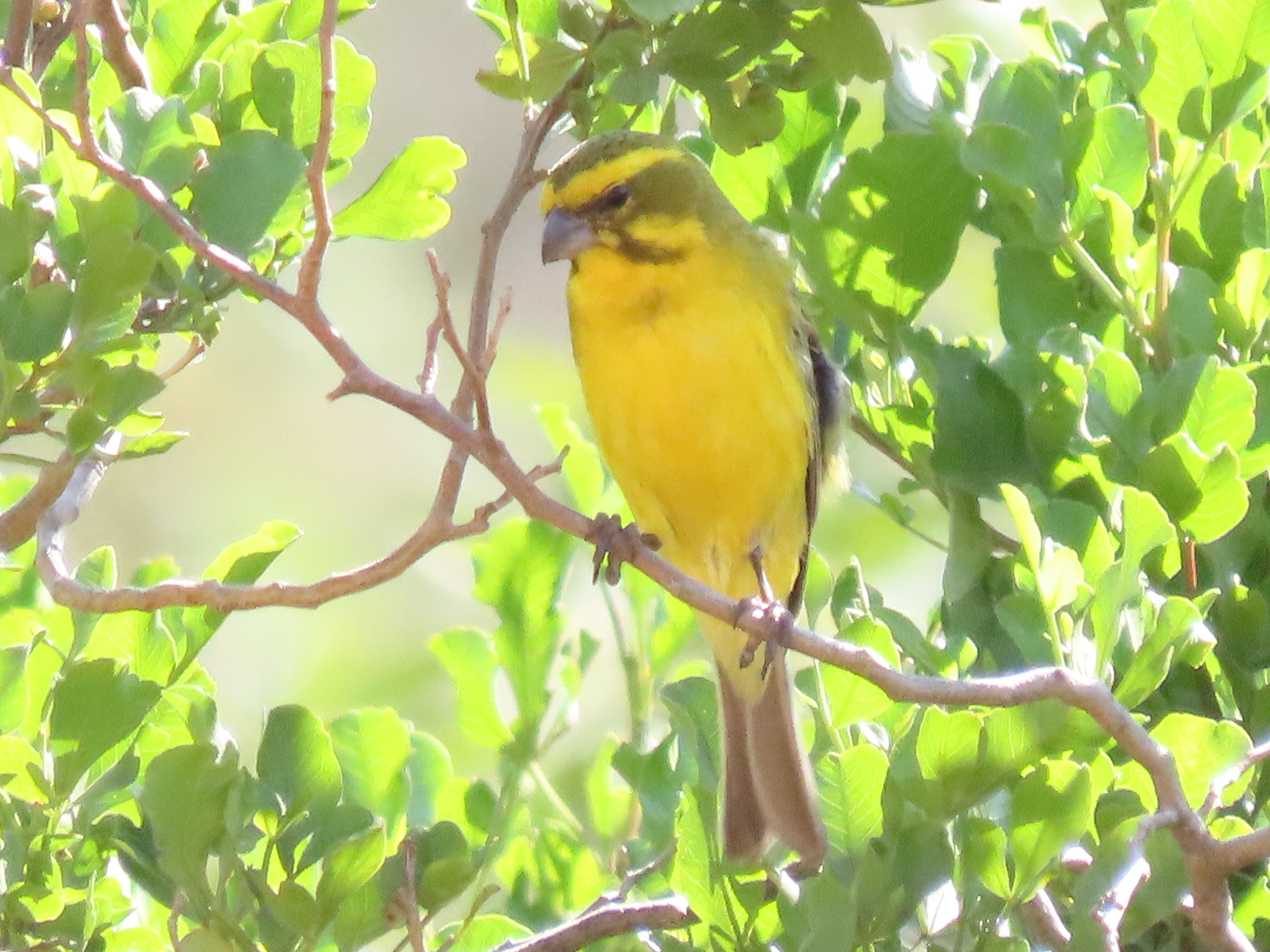

Given the complexity of the itinerary and its availability on the Field Guides website, I am organizing the trip description by habitat, which, purely coincidentally, happens to fall at an intersection of my interests in botany, biogeography, geomorphology, etc. There are many bioregion classification schemes available, but I will use my own simple one, tailored to the portions of South Africa we visited, which, extremely roughly, correspond to the southwestern 10% and eastern 30%. I distinguish ten habitat types, which I order below by increasing average elevation of the primary sites we visited.

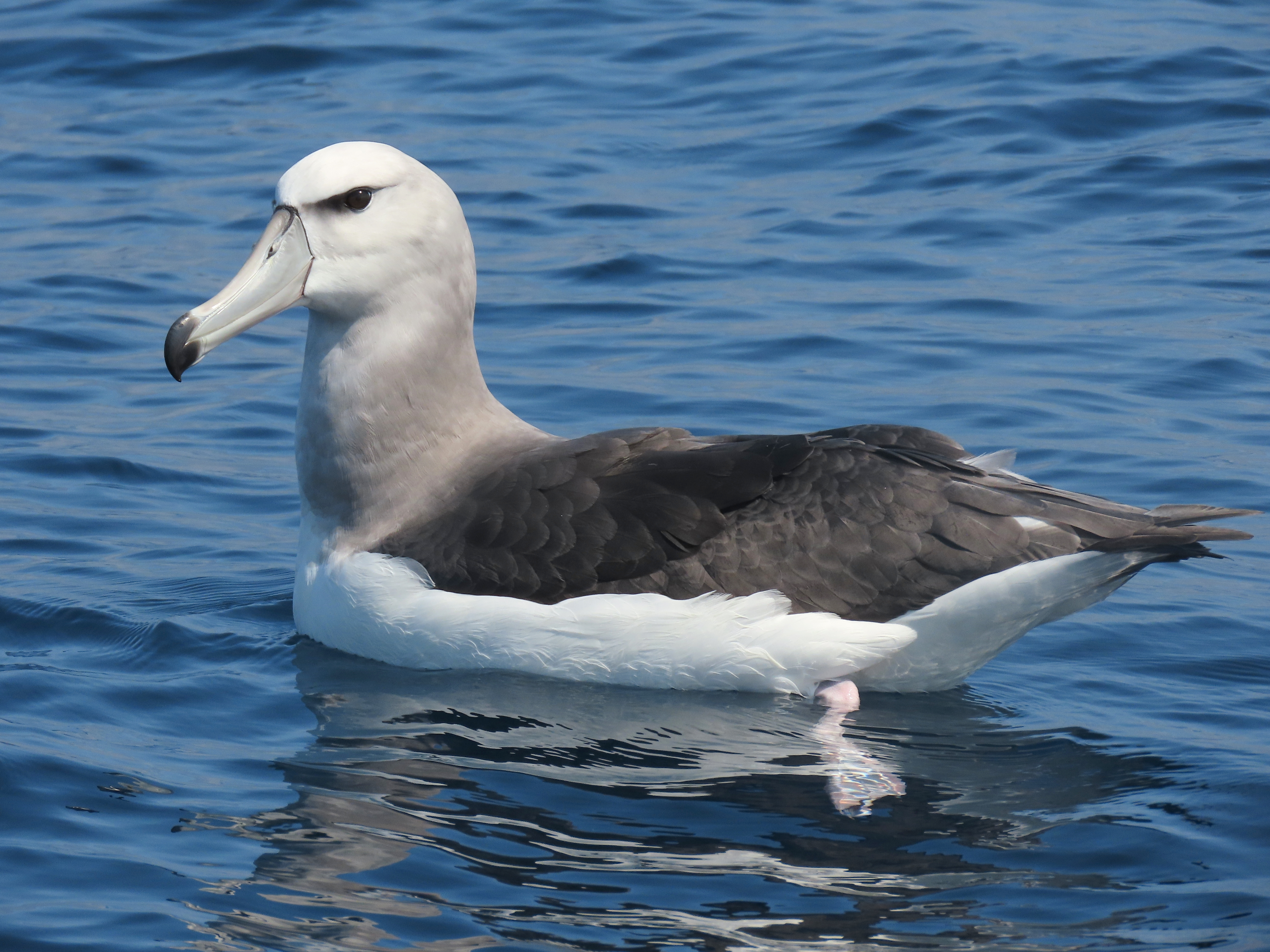
Maritime: 0 – 100 feet elevation. This category includes the Atlantic Ocean and sandy to rocky terrain in sight of salt water. We spent about 2.5 days in this habitat, with key sites being False, Betty’s, and Lambert’s Bays. Our full-day pelagic trip got about 20 miles southwest of Cape Point, the nearest land. Highlights included Southern Right Whale; four species of albatross including Atlantic Yellow-nosed; a major nesting colony of Cape Gannets with a single vagrant Australasian Gannet among them; and an African Penguin nesting colony.

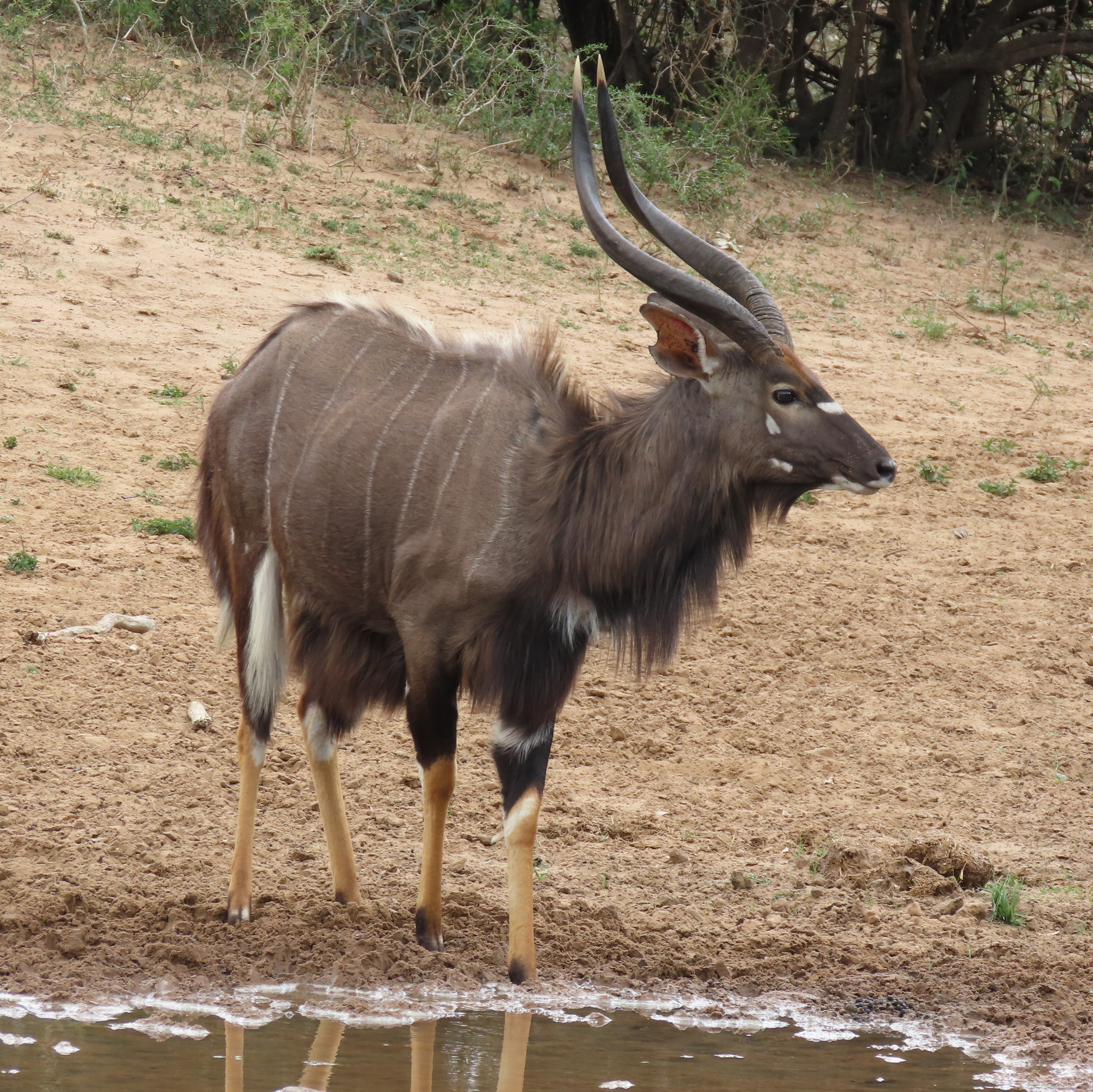
Estuaries: Ca. 100 feet elevation. Estuaries are coastal habitats where fresh water meets salt water; I include here brackish, tidal waters and immediately adjacent habitats that are probably at least occasionally inundated. Our best sites were at West Coast National Park; the Berg River; St. Lucia; and Mtunzini. The first two locations, in the Western Cape District, were particularly good for waterbirds; the last two locations, across the country on the East Coast, were primarily of interest for their land birds, in part due to unusually high water levels exposing no mudflats. Favorite sightings in this habitat included Greater and Lesser Flamingos; many shorebirds such as Bar-tailed Godwit, Ruff, and Curlew Sandpiper; Hippopotamus; and Palm Nut Vulture (over half its food consisting of the fleshy portion of palm fruits).


Lowland forest: 100 to1800 ft. elevation. There is not much forest left in South Africa. Our primary sites were at Dlinza and St. Lucia. Highlights in these areas included the metallic green Klaas’s and African Emerald Cuckoos; the very rare Spotted Ground-Thrush; a Purple-banded Sunbird constructing an elegant, lichen-covered, hanging nest (sunbirds are the Old World ecological equivalent of hummingbirds); and Red Duiker (duikers are small, principally forest-dwelling antelope that feed extensively on fruit, sometimes following troops of monkeys to forage in their aftermath).

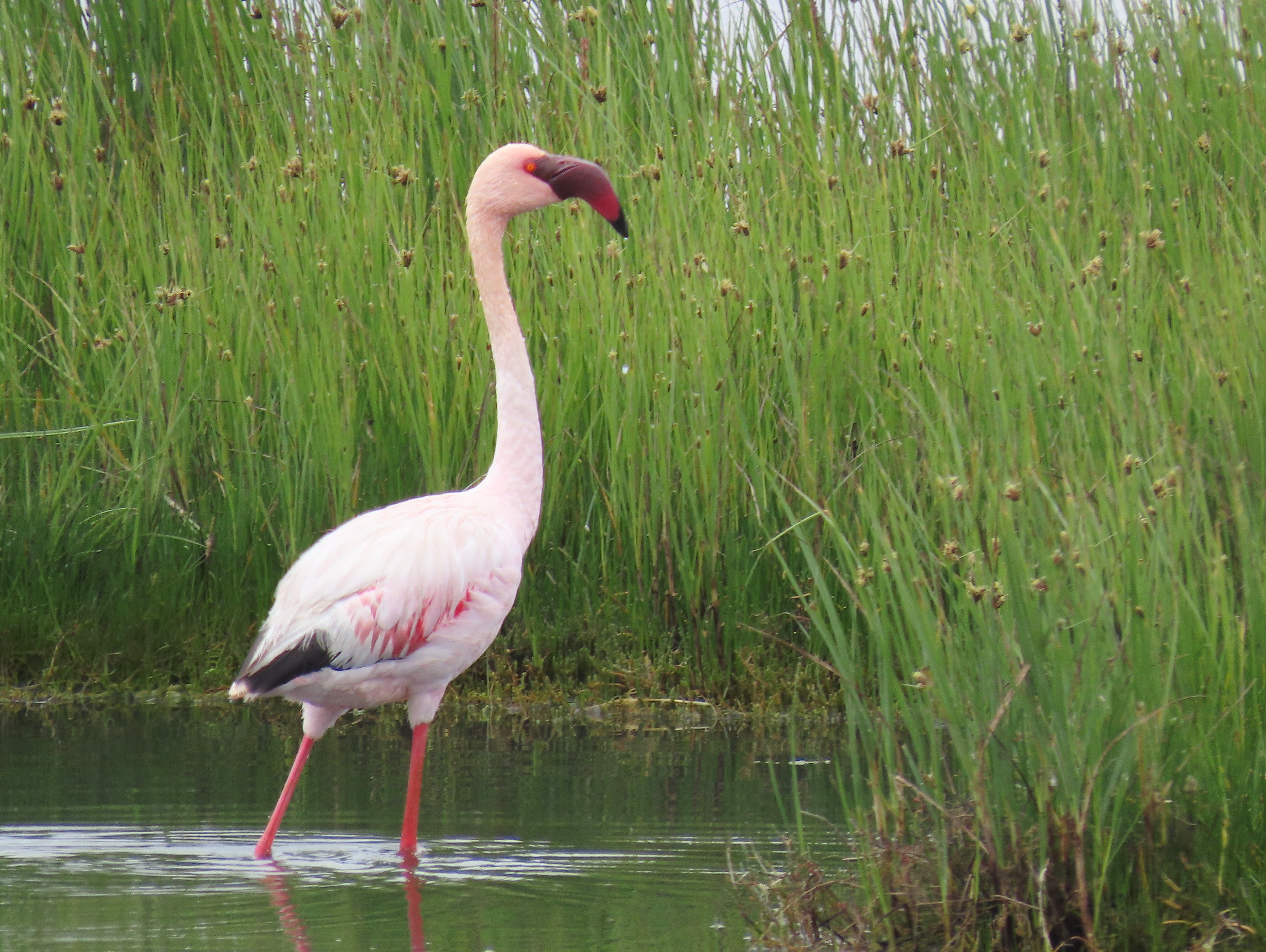
Fynbos: 100 to 3400 ft. elevation. The Cape Region of southwestern South Africa has extraordinary botanical diversity and endemism. It has a Mediterranean climate with rainy, mild winters and dry summers, and shares many similarities with the other areas having similar climate, such as coastal central California to Vancouver Island, parts of Chile, and southwestern Australia. Much of the region is occupied by fynbos (pronounced FAINboss), a low shrubland community, similar to what we call chaparral in California. It hosts about 8,500 species of plants, of which around 6,000 are endemic, astonishing numbers for such a small area (about twice the size of New Jersey). We spent much of four days in this habitat, with the finest occurrence being in West Coast National Park. Favorite sightings in this habitat included Bontebok (a handsome antelope); Black Harrier; Blue Crane; Pale Chanting- Goshawk, Klipspringer (a somewhat goat-like antelope living in rocky areas); Cape Sugarbird; Cape Rockjumper; Southern Double-collared Sunbird; and Cape Batis (an utterly adorable songbird). We were amazed to see Hopbush (Dodonaea viscosa) here; we have previously encountered it in Florida, Arizona, and Mexico. It occurs natively on five continents due to efficient dispersal of its winged fruit across oceans, a remarkably broad native distribution for a plant.

Savanna: 500 – 4300 feet elevation. This habitat consists of grassland with varying densities of trees or large shrubs, especially acacias. It provided our best sites for iconic mammals such as Lion, Leopard, Southern Giraffe, White Rhinoceros, African Savanna Elephant, Spotted Hyena, Plains Zebra, Black-backed Jackal, Cape Buffalo, and nine species of antelope. Three days were spent in savanna, the prime sites being legendary Kruger National Park and Mkuze and Polokwane Game Reserves. Some exceptionally colorful bird species were encountered here, including Purple-crested Turaco, Violet-backed Starling, Crimson-breasted Gonolek, and Lilac-breasted Roller. Our most unexpected sightings were of Honey Badger, African Wildcat, Great Spotted Cuckoo, and Green Sandpiper.
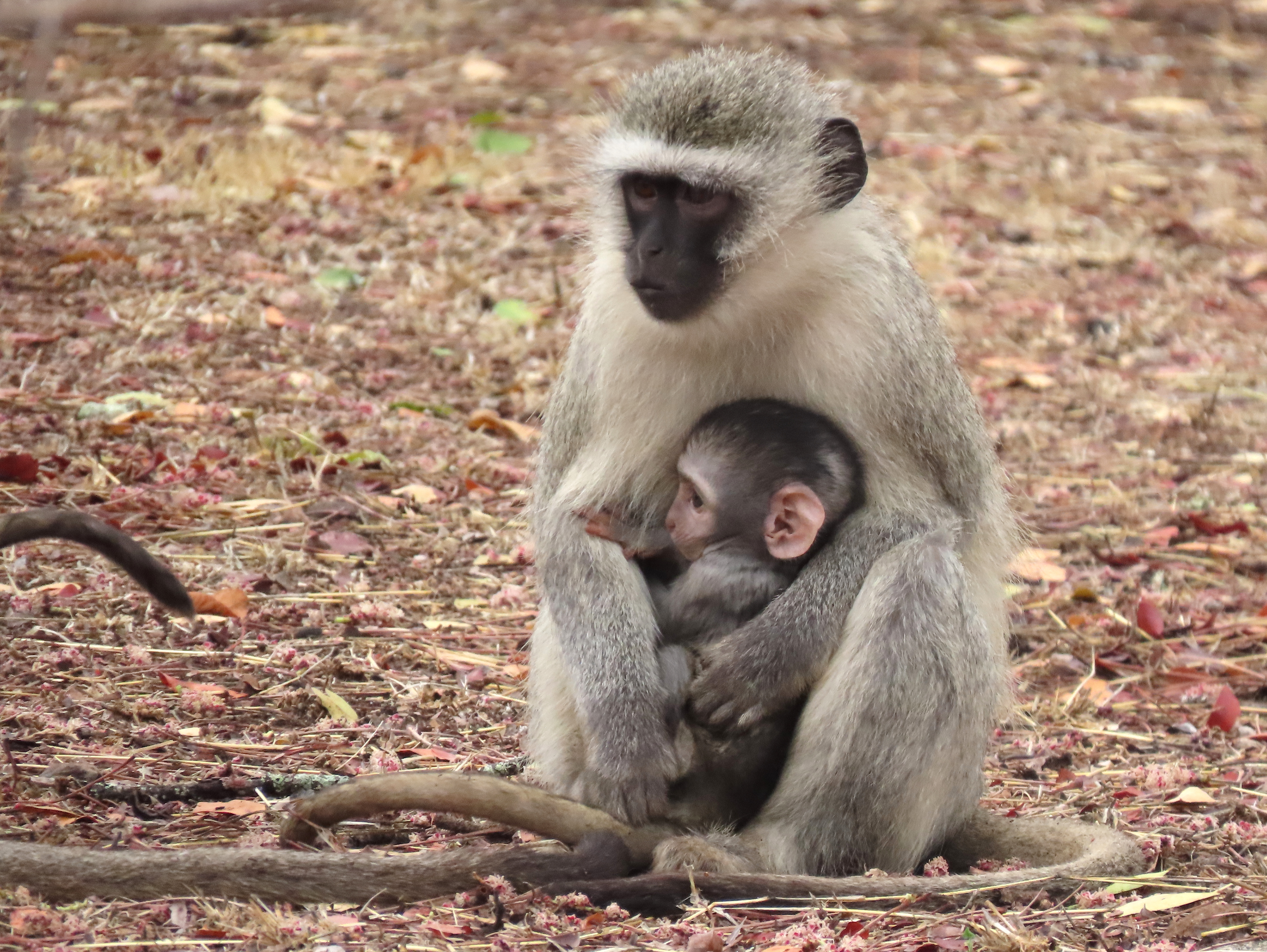
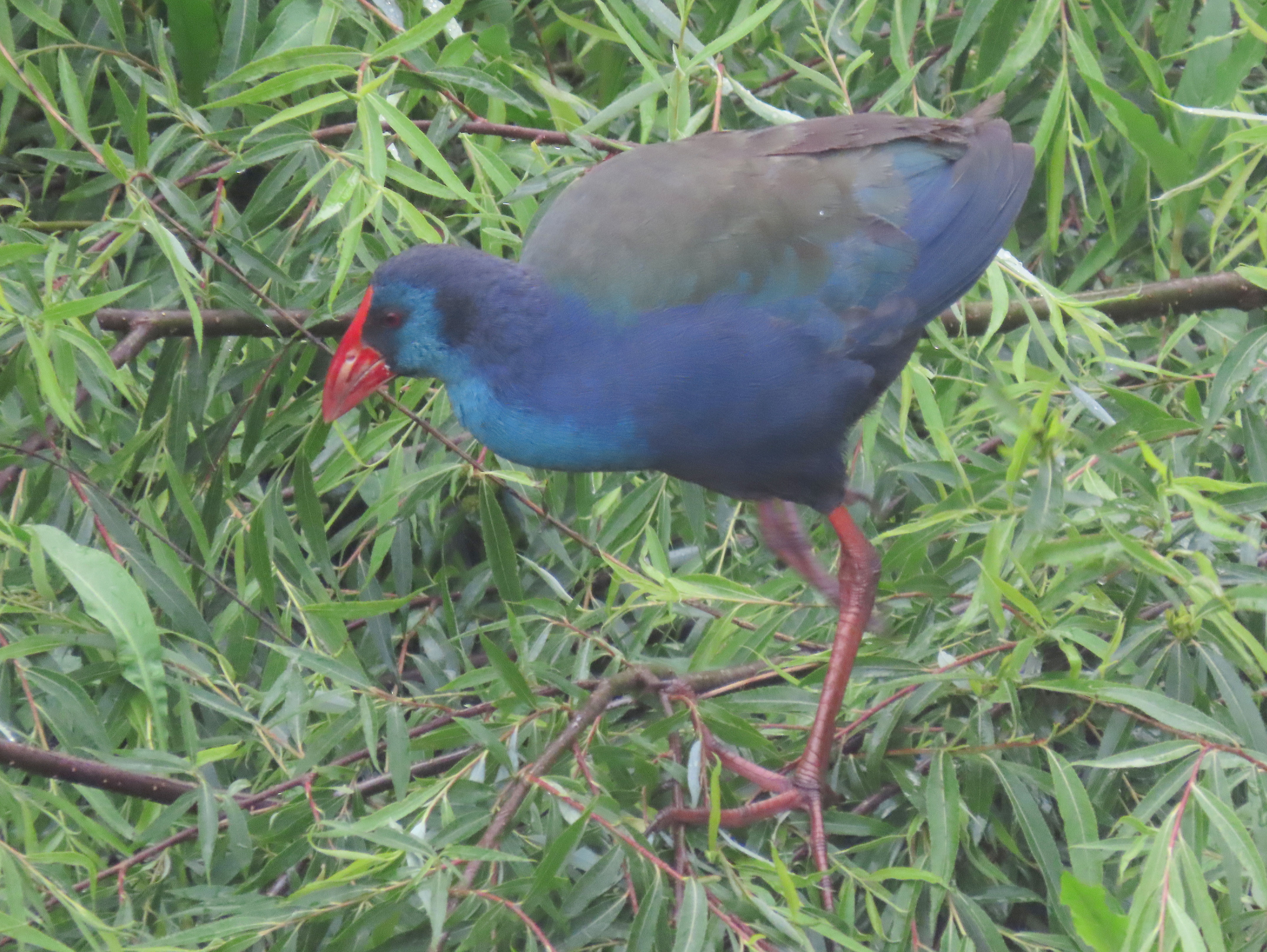
Vleis: 200 to 5900 ft. elevation. These are generally shallow, often seasonal, freshwater lakes, ponds, or marshlands. We sampled vleis in many locations but the best were near Wakkerstroom and Ceres, and in farmland 10 km SW of Mtunzini. Some favorite species here were African Pygmy-Goose and African Jacana amongst lovely Blue Star Waterlilies (Nymphaea nouchali); Little Bittern; African Rail; Greater Painted-Snipe; Cape Teal; African Snipe; and African Clawless Otter.
Karoo: Ca. 3200 ft. elevation. This semi-desert scrubland with attractive rock outcrops and hills resembles the shrub-steppe habitat of North America. The scenery frequently reminded me of the Great Basin of Utah, Nevada, and adjacent areas. This habitat harbored an impressive seven species of larks as well as Namaqua Sandgrouse, Common Ostrich, Orange-throated Longclaw, Horned Adder, and three species of bustards. The latter are large, terrestrial, somewhat turkey-like birds that are not closely related to anything else; they include among their ranks the heaviest flying bird in the world, the Kori Bustard.

Montane forest: Ca. 4800 ft. elevation. We visited two examples of this scarce habitat at Bulwer and Magoebaskloof, nine days and 650 km apart, but at essentially the same elevation. Specialty birds we saw here included Cape Parrot, Knysna Turaco (a crested, rich green bird somewhat resembling a cuckoo), Rameron Pigeon, Orange Ground-Thrush, White-starred Robin, Chorister Robin-Chat, Olive and Black-fronted Bushshrikes, and Narina Trogon.


Grassland: 4900 – 6600 ft. elevation. Fog, heavy rain, wind, and cold hampered our efforts at Wakkerstroom, the only high-quality pure grassland we visited (though Polokwane, classified as savanna, had some areas that might have been included here). We struggled to find four species of larks here, though one (Pink-billed) is very rare, and we located only one new cisticola where five or so were possible. The latter, like larks, are a large group of drab, brown songbirds that are most easily identified by their dramatic display flights and aerial songs. Quite a few songbirds that live in grasslands with no emergent perches have aerial displays so that they are seen and heard over greater distances. We once photographed a displaying Sprague’s Pipit in North Dakota, visually just a speck, and from the photo computed its height above the ground to be a staggering 700 feet! Our best experience in the grasslands was seeing the remarkable courting display of Denham’s Bustard, in which it inflates its neck and struts around, somewhat like the Greater Sage Grouse does in the western U.S.


Alpine: 5400 – 10,450 ft. elevation. Our single day in alpine terrain was along the Sani Pass Road in the Drakensberg Mountains, which form the summit of the Great Escarpment. The habitat resembled the driest tundra found in our arctic, but with greater topographic relief. We crossed into the country of Lesotho (pronounced LuhSOOtoo), the largest enclave in the world, to reach the highest elevations. The stars of the show here were the spectacular and highly restricted Drakensberg Rockjumper; Bearded Vultures, which drop bones from great height onto rocks to break them open for their marrow; Sloggett’s Vlei Rat, resembling a guinea pig; Ground Woodpecker; and Buff-streaked Chat. There were some very interesting plants as well, such as Giant Wild Anemone (Knowltonia fanninii); the purple-flowered iris Watsonia gladiolus; a treefern Cyathea dragei; and the cushion plant Euphorbia clavarioides.


Our final statistics for the trip were as follows. Eileen and I personally recorded 446 species of birds, 49 mammals, 19 plants, 18 herps (reptiles and amphibians), and three insects. The mammal list was our second best on any of our 30+ international trips, trailing only Kenya, where we had 61. The herp diversity was also excellent, tying Madagascar for our top total. We saw and enjoyed many plant species during the trip, but time precluded photographing and identifying more than a handful. Eileen added 186 birds to her life list, including her 4500th species, Orange-breasted Sunbird, and I gained 190. We each had 23 new mammal species. One highlight was seeing both rockjumper species and both sugarbird species; these two small families of birds are found only in far southern Africa. What a trip!

 Nomadic Naturalists
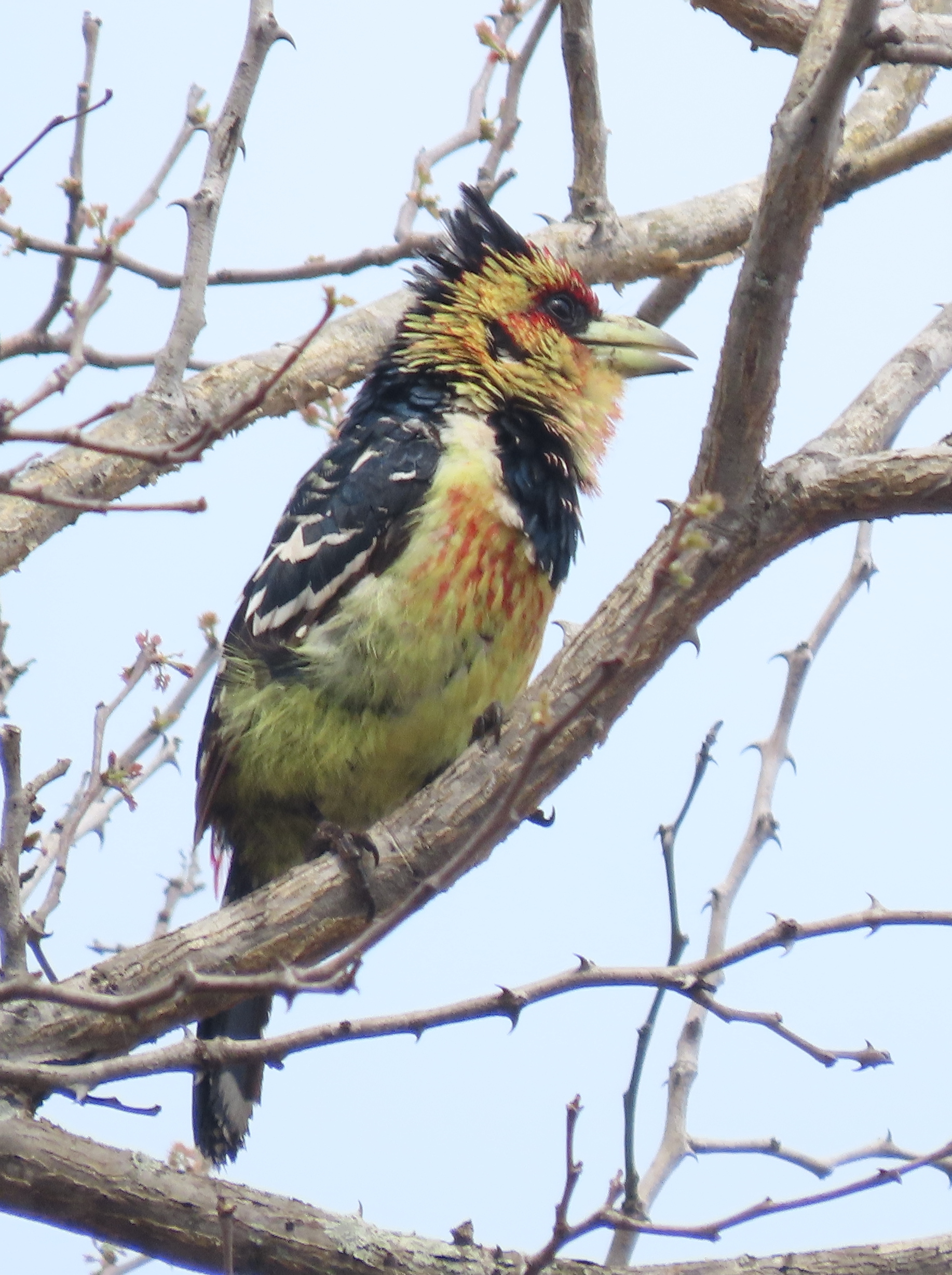
The crested barbet is the most handsome by far… Meantime, I am watching a shy titmouse try to get up the nerve to grab a seed from the feeder with me sitting nearby. It just can’t do it! Any bird anywhere near the feeder spooks it too. I don’t know how to help it. Evelyn
LikeLike
Another fabulous birding adventure! Took us back to the trips we took with Terry – always a fun, good trip. Where to next?
LikeLike
Incredible photos! I always learn something new.
Jonathan
Jonathan Thomas, CFP ®
LVW Advisors
Private Wealth Advisor
(585) 267-4957 (Phone, Text)
67 Monroe Avenue
Pittsford, NY 14534
jthomas@lvwadvisors.comjthomas@lvwadvisors.com
http://www.lvwadvisors.comhttp://www.lvwadvisors.com/
Schedule a call or meeting with me here: https://calendly.com/jthomas-585
LVW Advisors is a nationally recognized New York State based independent investment advisory firm that provides customized and comprehensive investment management solutions for institutional investors, individuals and family offices. LVW was named one of America’s Top RIAs by Financial Advisor Magazine in 2022 and 2020 and recognized by Citywire as an “RIA Future 50” firm in 2019. We are proud that our Founder and CEO, Lori Van Dusen, was named CEO of the Year for 2022 by Institutional Investor’s RIA Intel and is an inductee in both the Barron’s Advisor Hall of Fame and the Rochester Business Hall of Fame. Lori was ranked on Barron’s “Top 1200 Financial Advisors” list in 2022 and 2021; Forbes “Best-in-State Wealth Advisors” list in 2022, 2021, and 2020; Forbes “Top Wealth Advisors” list in 2022, 2021, and 2020; and Forbes “Top Women Wealth Advisors” list in 2022, 2021, and 2020. Additionally, Lori was recognized in the Rochester Business Journal’s 2020 Women of Excellence with the Circle of Excellence honor and featured on Rochester Business Journal’s Power 100 list of leaders in the community in 2022 and 2021.
CLICK BELOW FOR IMPORTANT DISCLOSURES REGARDING THE ABOVE LISTED RANKINGS
http://www.lvwadvisors.com/disclosure/
LikeLike