Quite a bit of our camping in recent years has been in areas at times of year that were quite uncomfortable, often because that was when and where interesting plants were flowering. This year we made a pretty successful attempt to travel when and where amenable climate is expected, using National Oceanic and Atmospheric Administration data to guide us. We defined temperature ranges we considered comfortable (50 – 80 F during the day, and 35 – 65 F at night) and created maps showing what areas of the Lower 48 met our criteria. For example, data is shown below for April. The upper map depicts night-time low temperatures, and the lower map day-time highs. Both maps are color coded so that dark blue is too cold, and red too warm. In April, nights are cooler than we’d like in the Northeast and in a large, vaguely triangular region bounded by Washington, New Mexico, and Michigan. Days are warmer than we’d prefer in the lower deserts of California and Arizona; southern Texas; and peninsular Florida. The remaining areas meet our criteria for being comfortable both day and night.


We just returned from a two-month fall road trip meeting our climate criteria. We spent September in the Upper Peninsula of Michigan and adjacent parts of Wisconsin and Minnesota, with an emphasis on paddling. During October we toured Missouri and bits of Iowa, Nebraska, and Arkansas, looking for fall plants in areas we had only visited in spring previously. We did experience near freezing conditions briefly in Wisconsin, and a few days of excessive heat and humidity in Missouri, but it was in fact overall a very comfortable trip, with many truly beautiful days.
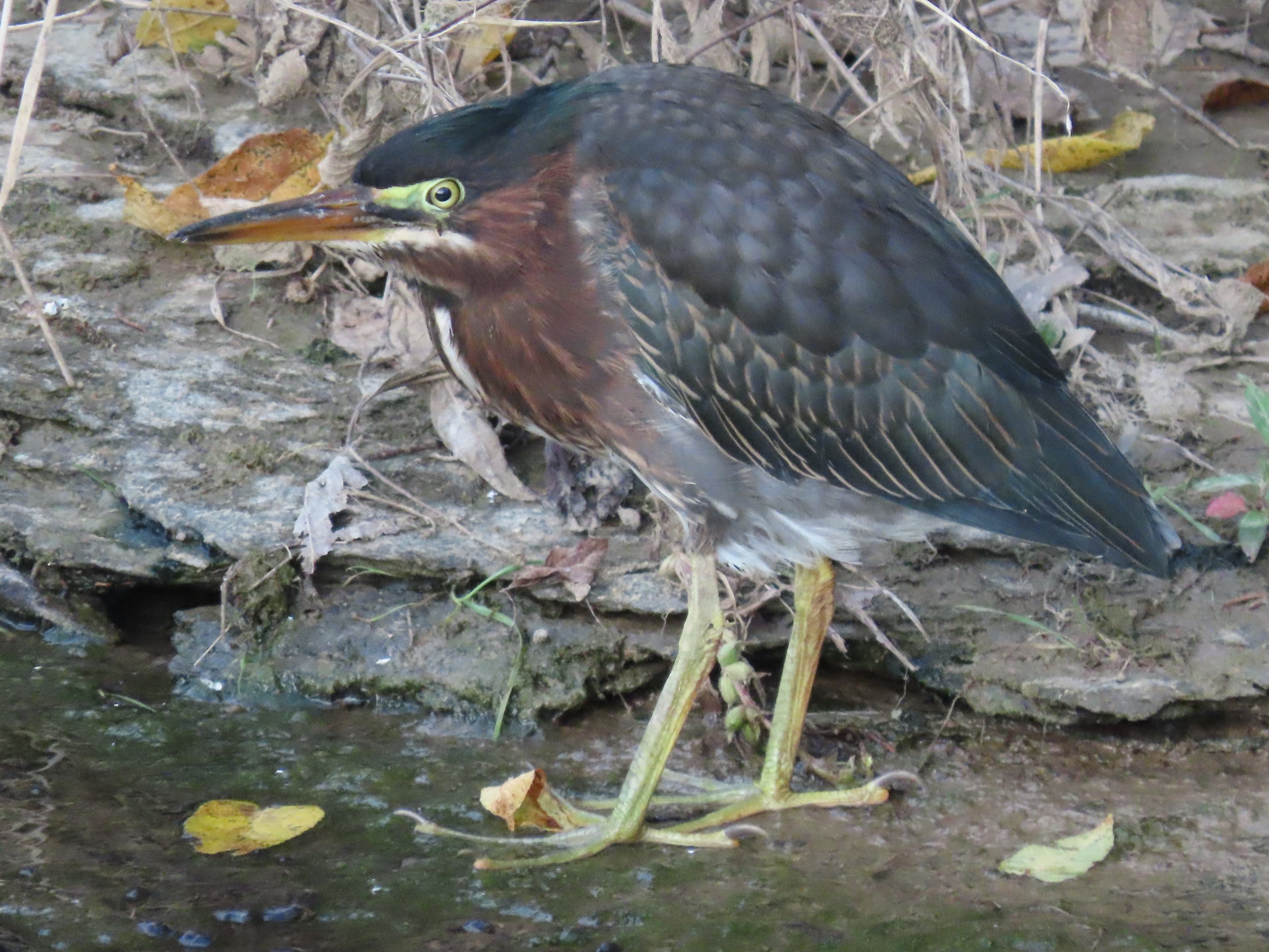
Our first destination was the Door Peninsula in Wisconsin, which projects into western Lake Michigan and is famous for its orchid diversity. It is the west end of an arc of dolostone known as the Niagara Escarpment, the eastern end of which is in Upstate New York (dolostone is essentially limestone with magnesium replacing about half of the calcium). Part of the escarpment, the Bruce Peninsula of Ontario (which divides Georgian Bay from Lake Huron) is almost a mirror image of the Door Peninsula, and is even better for orchids, and excellent for ferns. The most interesting site we visited on the Door was the Ridges Sanctuary in Bailey’s Harbor. Located at the head of a bay off Lake Michigan, it has a series of sand ridges up to about six feet high, alternating with moist to wet swales. The sand ridges represent past beaches and sandbars. Each ridge and swale is gently arcing, forming a concentric pattern. Trails provide access to seven swales within a distance of about 1700 feet of the lakeshore. The plant community composition varies markedly over very short distances from the dry, acidic ridges to the moist, alkaline swales. Interesting plants here included Solidago gillmanii, a goldenrod found only on beaches along Lakes Michigan and Huron; and Spiranthes incurva, a pretty, white orchid.

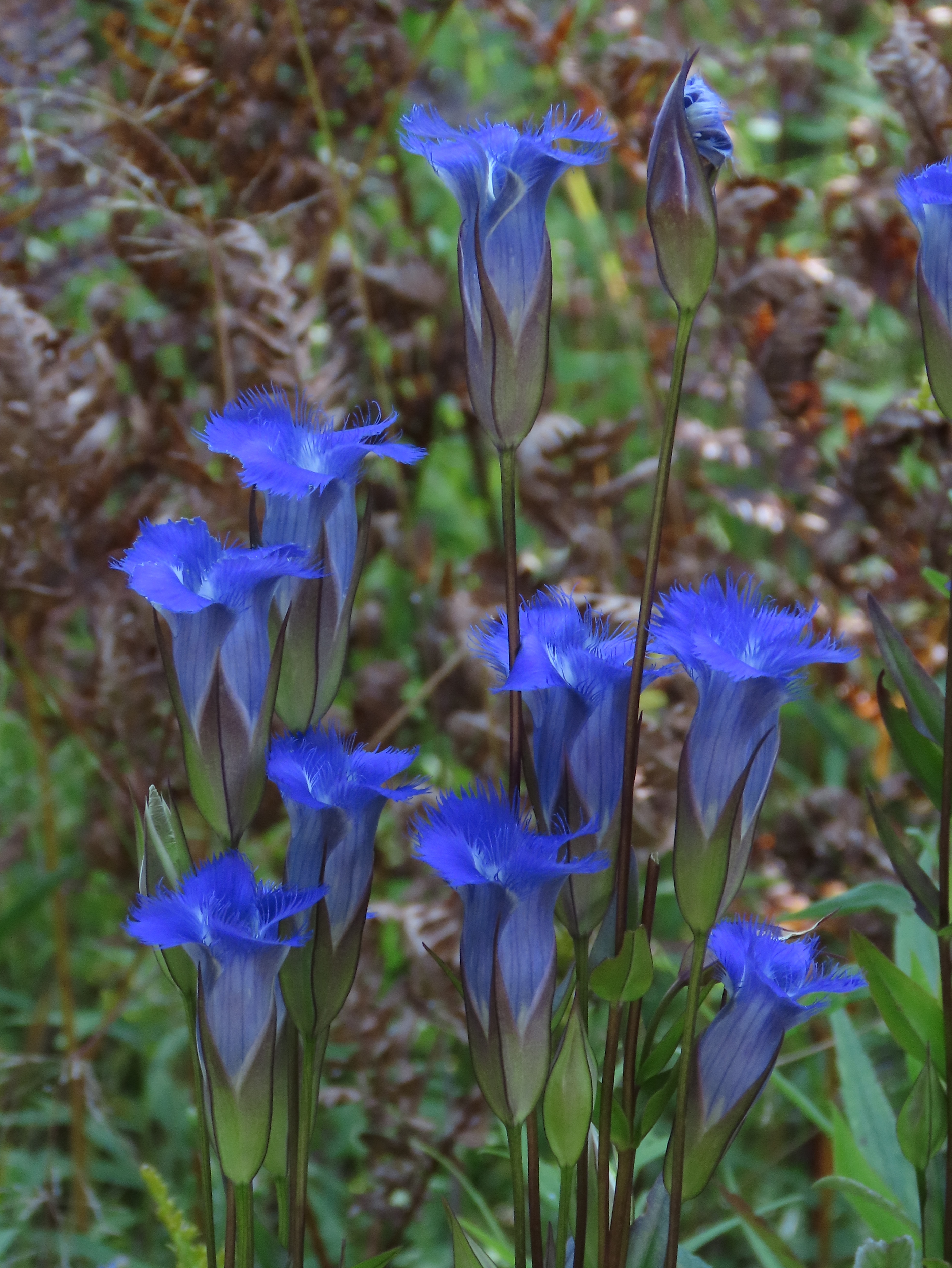
In the Upper Peninsula (UP) of Michigan, we canoed on the Sturgeon, Manistique, and Two-hearted Rivers; and Grand Sable, King, Crooked, and Clark Lakes, a total of 58 miles in 10 outings. Our favorite river paddle was on the Manistique River through Seney National Wildlife Refuge — one of the most scenic NWRs in the country, and where we saw our first Yellow Rail and our first aurora borealis in 1987! While at Seeney, we tracked down a marvelous occurrence of Gentianopsis crinita, one of eight exquisite species of fringed gentian in the U.S., six of which we have seen. Our favorite lake canoeing was on Crooked Lake, in Ottawa National Forest, where we had five species of waterfowl (including seven migrating Tundra Swans) and watched a Red Squirrel swimming ten feet from shore before it landed and shook itself off.

While in the UP, we also sampled botanically interesting shoreline habitats, such as Lake Michigan at Manistique Township Park, where we saw narrowly distributed species such as Solidago houghtonii (a goldenrod), Cirsium pitcheri (a thistle), and Tanacetum bipinnatum (a native tansy). Another fine location was the Grand Sable Dunes at Pictured Rocks National Lakeshore, on Lake Superior, where we found Botrychium simplex (a moonwort fern) and three orchids, Spiranthes lacera, Neottia convallarioides, and Dactylorhiza viride. These are one of the best examples in the world of a perched dune system; the sand was blown to the top of a bluff (formed by a glacial terminal moraine). In the middle of the dunes, at the edge of the very steep slope down Lake Superior, the sands are about 250 feet above lake level, at a distance of only 600 feet inland. We only visited one rocky shoreline on the Great Lakes, near the tip of the Keweenaw Peninsula, and there saw another range-restricted goldenrod, Solidago ontarionis.
Before leaving the north country, we visited two other areas. We spent one day hunting for the rare and obscure aquatic plant Littorella americana in Wisconsin. We were thrilled to find a substantial population in Little Carr Lake, near Lake Tomahawk, after wading in shallow water and studying the lake bottom! This species rarely flowers, only doing so soon after being stranded in mud due to a dropping water level. Although the underwater plants we saw were not flowering, they could be identified by a combination of leaf shape and internal structure, cellular patterns, and root and rhizome characteristics. The second place we explored was Sax-Zim Bog, a famous birding and mammal-watching area in Minnesota, though fall is the least interesting season there (winter is best). Highlights in the area were Black Bear, Porcupine, and Gray Jays. The stands of tamarack in this peatland were probably the most extensive we have ever seen; they were starting to turn yellow at the end of September (which they do before dropping their needles for the winter).
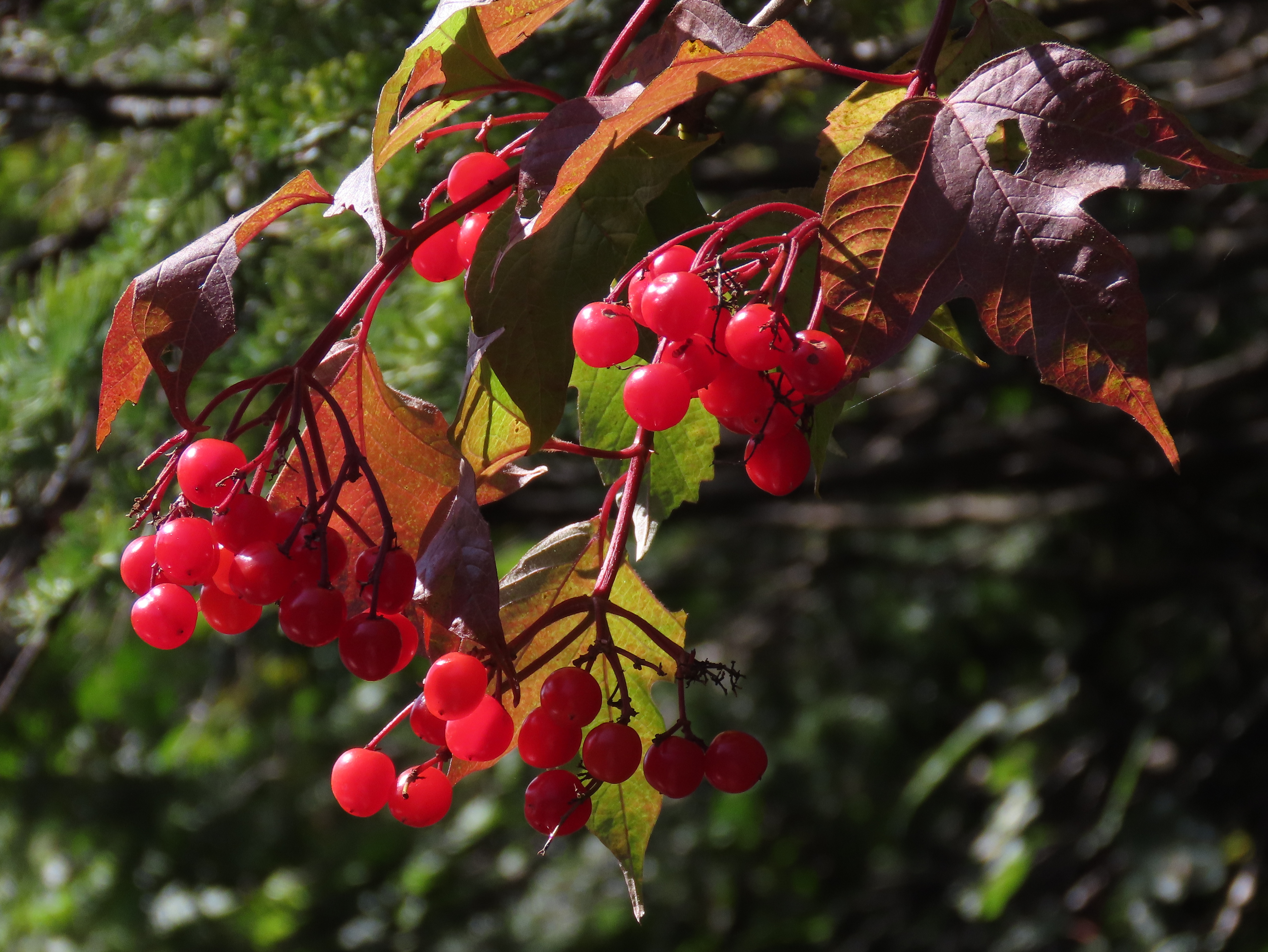
Two days of driving south brought us to the northeast corner of Missouri. The primary reason we had decided to spend about four weeks botanizing in Missouri is because it has one of the best references for plant identification of any region in North America. A work providing keys to all the higher plants in a region is called a “flora”. In addition to keys, an ideal flora would be reasonably recent (so that its taxonomy was up-to-date) and would include illustrations, range maps, and detailed descriptions of each species. Of the roughly 25 floras we use in the Continental U. S. and Canada, only the three-volume “Steyermark’s Flora of Missouri” by George Yatskievytch meets all four of these criteria. As we have had relatively little opportunity to use it, we decided to spend October in Missouri and small areas of adjoining states that would be well covered by that flora. It was rather late in the season to find flowering plants, though quite a few were in fruit. We worked hard but had fun finding and identifying a number of species.

Nearly all (99%) of surface bedrock in Missouri is carbonate, with dolostone, limestone, and intermediate compositions represented. Nonetheless, a range of habitats are represented in the state. We concentrated our efforts on tallgrass prairie, glades, and oak savannas (especially recently burned savannas, which have higher plant diversity). Glades (also known as barrens), occurring primarily in the Ozark Mountains, are the most interesting feature of the state floristically. They are areas of bedrock with little or no overlying soil, and so are nutrient-poor and subject to being saturated during and soon after rains, but bone dry in between. Carbonate rocks themselves pose further challenges, as plants growing in them must tolerate excessive calcium but be very efficient at extracting elements such as iron, phosphorus, manganese, and zinc, which are in low concentrations and/or are difficult to collect because of alkalinity (high pH). Plants largely restricted to limestone/dolostone, which outcompete other species there by virtue of special adaptations, are called calciphiles or calcicoles. As an indication of the interesting plant life found in glades, we saw four new species of plants within twenty yards of our vehicle in the first one we encountered!

The plant genus we focused on most particularly while in Missouri was Symphyotrichum. This genus contains most of the “American Asters”, which typically flower in fall. There are about 24 species in the state, which can be hard to distinguish. Ultimately, we identified 14 species in this genus, of which five were new. We also saw four new goldenrods (Solidago), another classic autumnal genus. Our most exciting new plant in Missouri was Leitneria floridana (Corkwood), which represented a new genus for us! This species has unique features and so has sometimes been placed in its own family. It has a bizarre distribution, occurring in three disjunct regions: the northern Gulf Coast of Texas; northern Florida and southern Georgia; and southeast Missouri through eastern Arkansas (and one county in adjacent Mississippi). It is classified as rare in all three regions, but there are readily accessible populations near the Missouri-Arkansas border, where I found a stand visible in Google Street View, making it easy for us to see the plants subsequently!

Some of our favorite places in Missouri were Prairie State Park and the nearby Shelton L. Cook Meadow; the Glade Top Trail in Mark Twain National Forest; the Coakley Hollow Trail and Grandglaize Arm (by canoe) in Lake of the Ozarks State Park; and Mooner’s Hollow Trail in St. Francois State Park. We did not have a lot of exciting birding experiences, but greatly enjoyed hearing and seeing many flocks of White-fronted Geese migrating south; saw a roosting flock of about 40 American White Pelicans one evening and canoed among them the next day; and had Barred Owls and Red-headed Woodpeckers in most campsites.
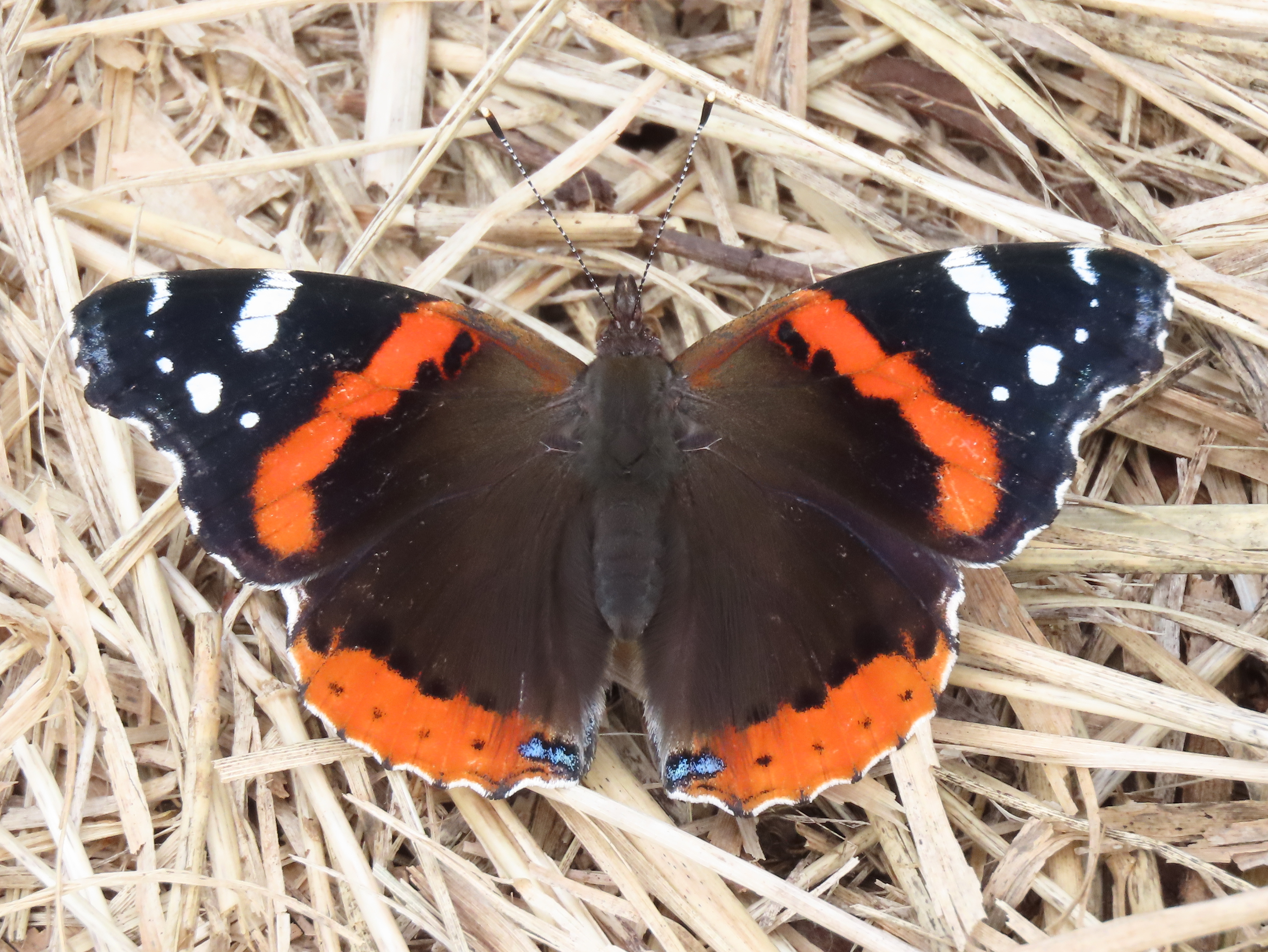
The entire road trip took 64 days and covered 6230 miles, about 97 miles per day, a typical number for us. But if eight days of nearly pure transit (Florida to Wisconsin; Minnesota to Missouri; and Missouri to Florida) are excluded, the average was a very leisurely 60 miles per day. We saw a total of 82 new taxa, about 1.3 per day, but in and near Missouri managed 2.0 per day, a respectable number so late in the season. This was a relaxing, enjoyable trip with lots of fine canoeing, botanizing, camping, scenery, hiking, and – of course – weather.
 Nomadic Naturalists
Enjoyed your trip and all your finds and photos. Going to Yellowstone in mid February stay in a yurt for five days in the park hope to see wolves as there is a pack in the valley where the yurts are. Then taking an Alaska cruise and train ride back in the end of June until July 4th. Never been in Alaska but not to late going with family who haven’t been there either. Stay safe, Gary
LikeLike
That red squirrel looks like the one I caught* in my attic last winter!
Glad all is well!
Jonathan
Jonathan Thomas, CFP ®
LVW Advisors
Private Wealth Advisor
(585) 267-4957 (Phone, Text)
67 Monroe Avenue
Pittsford, NY 14534
jthomas@lvwadvisors.com
lvwadvisors.comhttps://lvwadvisors.com/
Schedule a call or meeting with me here: Bookingshttps://outlook.office.com/bookwithme/user/d875ffd8889a449b8485f241d8a1c9d2%40LVWAdvisors.com?anonymous&ismsaljsauthenabled=true
LVW Advisors is a nationally recognized New York State based independent investment advisory firm that provides customized and comprehensive investment management solutions for institutional investors, individuals, and family offices.â LVW Advisors was named one of Americaâs Top RIAs by both Forbes/SHOOK Research and Financial Advisor magazine in 2025. Founder and CEO Lori Van Dusen was ranked the #1 Private Wealth Advisor in New York State by Forbes/SHOOK Research in 2025.
Forbes/SHOOK Americaâs Top RIA Firms awarded October 2025 based on data as of March 31, 2025. Financial Advisor Magazine Americaâs Top RIAs awarded July 2025 based on data as of December 31, 2024. Forbes/SHOOK Best-In-State Wealth Advisors awarded April 2025 based on data as of June 30, 2024. For this ranking list, New York State excludes New York City. No compensation was paid to be considered for these awards. LVW Advisors paid a fee to promote the Forbes/SHOOK Best-in-State award. Additional information at lvwadvisors.com/disclosurehttps://lvwadvisors.com/disclosure/.
[cid:bdd91db7-2252-490b-9c07-a442561e7438]https://outlook.office.com/bookwithme/user/d875ffd8889a449b8485f241d8a1c9d2@LVWAdvisors.com?anonymous&ep=signature&ismsaljsauthenabled
Book time to meet with mehttps://outlook.office.com/bookwithme/user/d875ffd8889a449b8485f241d8a1c9d2@LVWAdvisors.com?anonymous&ep=signature&ismsaljsauthenabled
LikeLike